Search Fellows
Click on a Fellow below to view more information or create your own search.
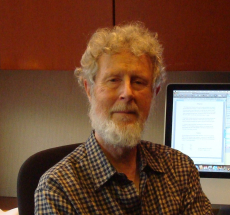
James R. Flynn
University of Otago
Visiting Scholar
2008 to 2009
William T. Dickens, Professor, Northeastern University, and Non-Resident Senior Fellow at the Brookings Institution, James R. Flynn, Emeritus Professor at the University of Otago, New Zealand, and Richard E. Nisbett, Theodore M. Newcomb Distinguished University Professor at the University of Michigan, will form a working group to develop a multi-level model of intelligence that explains the role of genes and physiology along with the role of environment in making individuals intellectually able..
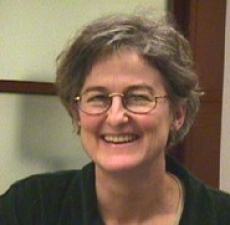
Nancy Folbre
University of Massachusetts, Amherst
Visiting Scholar
2005 to 2006
Nancy Folbre, Professor of Economics at the University of Massachusetts, Amherst, will extend her previous estimates of the economic value of family work by comparing the time devoted to family care in four English-speaking countries and examining the amount of labor (both paid and unpaid) that Americans supply in caring for others. Folbre will parse data from several recent surveys on people’s incomes and their use of time to get a more accurate picture of the differences in standards of living between households with and without children.
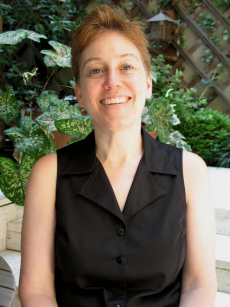
Erica Gabrielle Foldy
New York University
Visiting Scholar
2007 to 2008
Tamara Buckley, Assistant Professor, Educational Foundations and Counseling Programs, at Hunter College, and Erica Gabrielle Foldy, Assistant Professor of Public and Nonprofit Management at the Wagner School of Public Service, New York University, form a working group that will bring the insights of both psychology and management to bear on fostering learning and effectiveness in culturally diverse teams. They theorize that acknowledging and engaging cultural differences facilitates team learning better than a “color-blind” approach.
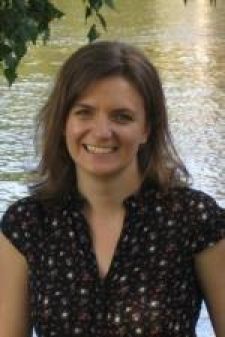
Cybelle Fox
University of California, Berkeley
Visiting Scholar
2013 to 2014
Fox will write a book on the causes and consequences of the rise of restrictions on immigrants’ access to social welfare. She will compare three seminal moments of federal policymaking when the issue of non-citizens’ access to social assistance came to the fore: FDR’s New Deal, Nixon’s legal status restrictions, and Clinton’s welfare reforms.
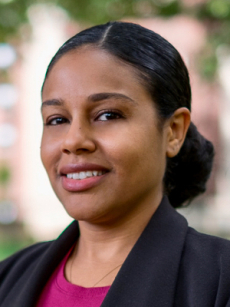
Brittany Fox-Williams
Lehman College, City University of New York
Visiting Scholar
2024 to 2025
Fox-Williams will work on a book examining trust as an overlooked dimension of racial inequality in education. Her mixed-methods study draws on longitudinal data from the New York City Department of Education and 90 interviews conducted in NYC public high schools to investigate the racial dynamics of trust in schools and to identify strategies for fostering trusting school climates for racially minoritized youth.
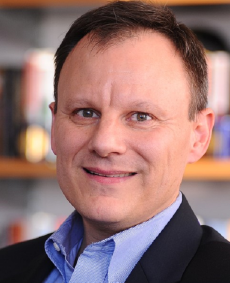
Timothy Frye
Columbia University
Visiting Scholar
2019 to 2020
Frye will explore the conditions under which employers mobilize their workers during elections using administrative data and post-election surveys in nine countries. He will explore the causes, consequences and prevalence of this form of workplace mobilization
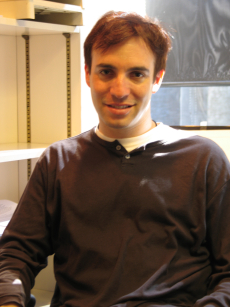
Paul Frymer
University of California, Santa Cruz
Visiting Scholar
2007 to 2008
Paul Frymer, Associate Professor of Politics, University of California, Santa Cruz, will complete a book on the efforts by the U.S. government to racially integrate and diversify labor unions in the mid-twentieth century. Frymer acknowledges that the exponential increase in the numbers of African American union members between 1930 and 1980 was a significant civil rights accomplishment. But he argues that the federal government’s use of litigation to accomplish this goal played a major role in weakening the U.S.
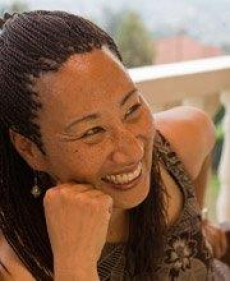
Lee Ann Fujii
University of Toronto
Visiting Scholar
2013 to 2014
Fujii will investigate the process that drives people to join in brutal forms of violence against neighbors in their communities. Using data from intensive interviews and primary documents, Fujii will research the public display of violence in three contexts: the Bosnian War, the Rwandan genocide, and Jim Crow Maryland.
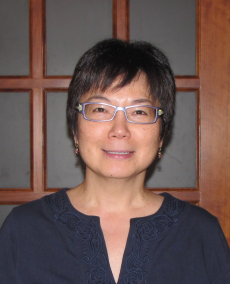
Joan H. Fujimura
University of Wisconsin-Madison
Visiting Scholar
2010 to 2011
Fujimura will write a book exploring the role of race in recent biomedical genetics studies. She will analyze laboratory and institutional data from various sites to understand how genomics researchers are struggling to develop concepts of genetic history and ancestry that define medically important population differences without becoming entangled in socially constructed racial categories.
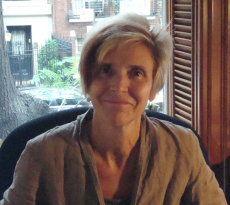
Donna R. Gabaccia
University of Minnesota
Visiting Scholar
2008 to 2009
Donna R. Gabaccia, Professor of History at the University of Minnesota, will write a book about how and why the U.S. came to consider itself “a nation of immigrants.” Interestingly, other countries marked by similar demographic histories of immigration – such as Argentina, Germany, France, and South Africa – do not label themselves in this way. Gabaccia will trace this key metaphor of U.S. nation-building in comparative historical perspective.
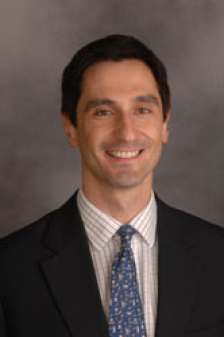
Xavier Gabaix
Massachusetts Institute of Technology
Visiting Scholar
2002 to 2003
Xavier Gabaix, assistant professor of economics at Massachusetts Institute of Technology, will research a model of bounded rationality for use in economics, finance, and policy. In the traditional rational model, people think without limitations, have a perfect understanding of the world around them, and pursue their goals under optimal circumstances. In reality, however, people do not always make the best possible decisions; they usually make an educated guess and hope for the best, especially when time constraints preclude a complete analysis of every conceivable option.
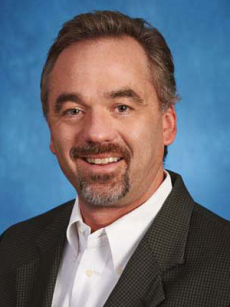
David A. Gamson
Pennsylvania State University
Visiting Scholar
2015 to 2016
Gamson will research the history of “equal educational opportunity” and how its definition in the U.S. has changed over time. Using archival source materials, he will examine the ways in which conceptions of equal educational opportunity have been mutually reinforcing, overlapping, or contradictory. He will also examine the extent to which prevailing notions of academic ability have undermined many efforts to improve educational quality.
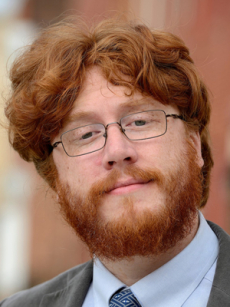
Philip ME Garboden
University of Hawai’i at Mānoa
Visiting Scholar
2022 to 2023
Garboden (together with Eva Rosen) will co-author a book examining the supply-side dynamics of low-end rental housing markets in four cities. They will use over 150 semi-structured interviews with landlords and property managers, ethnographic observations, and administrative data from the U.S. Department of Housing and Urban Development to better understand low-end rental markets.
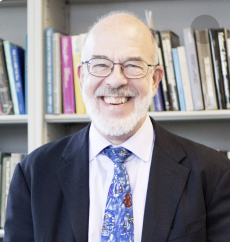
Irwin Garfinkel
Columbia University
Visiting Scholar
2005 to 2006
Irwin Garfinkel, Mitchell I. Ginsberg Professor of Contemporary Urban Problems at Columbia University, will be at the Foundation during the fall semester to co-author a book about the U.S. welfare state that will measure the size and scope of welfare expenditure, document its historical development, and provide international comparisons. The book will be intended for a lay audience and will explore issues such as whether welfare states undermine or support economic productivity and whether government transfers crowd out private assistance.
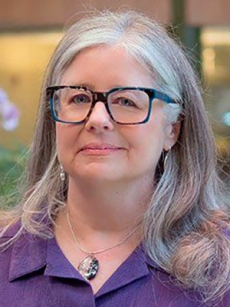
Arline T. Geronimus
University of Michigan
Visiting Scholar
1995 to 1996
Arline T. Geronimus, associate professor in the department of public health policy and administration, and research affiliate at the Population Studies Center, University of Michigan, completed a manuscript setting forth her "weathering" thesis--that early childbearing among impoverished African American women may be an adaptive response to the prospect of deteriorating health as they age.
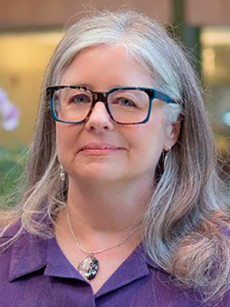
Arline T. Geronimus
University of Michigan
Visiting Scholar
2021 to 2022
Geronimus and John Bound will examine how stagnating economic prospects among moderate-income households impact increasing inequities in life expectancy. Their research project will test the weathering hypothesis, which indicates that structurally-rooted stress causes wear and tear on cellular integrity and thus accelerates biological aging, hastens the onset of chronic diseases, increases the incidence of disability, and causes excess death in affected individuals and communities.
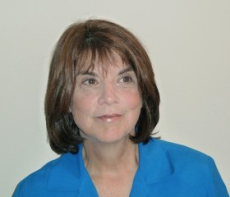
Naomi R. Gerstel
University of Massachusetts, Amherst
Visiting Scholar
2011 to 2012
Gerstel and Dan Clawson will write a book examining how workplace time—scheduled hours, flex time, overtime, and vacation—is controlled and allocated. This working group will utilize data on the hours and schedules of low-wage nursing assistants, higher-wage emergency medical technicians and nurses, and high-income doctors. They will analyze how work time is regulated from the above by the state, firms, and management; negotiated or resisted by workers; and impacted by forces outside the workplace, such as family obligations and labor markets.
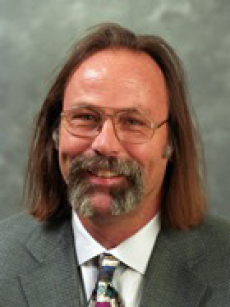
James L. Gibson
Washington University in St. Louis
Visiting Scholar
2012 to 2013
Gibson and Milton Lodge will examine the use of judicial symbols (robes of judges, the honorific forms of address, the temple-like buildings in which courts are usually housed) to inculcate democratic values in different cultural contexts. They will test their hypothesis that citizens who positively view judicial symbols are more likely to accept court decisions they disagree with. They hope to understand why people obey the law and whether judicial symbols enhance the efficacy of courts.
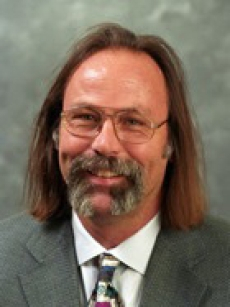
James L. Gibson
Washington University in St. Louis
Visiting Scholar
2001 to 2002
James L. Gibson, Sidney W. Souers Professor of Government at Washington University, St. Louis, will address the relationship among truth commissions, retributive justice, and the legitimacy of legal institutions in South Africa. One of the most difficult problems facing regimes attempting a transition from authoritarianism to democracy is the problem of retributive justice.
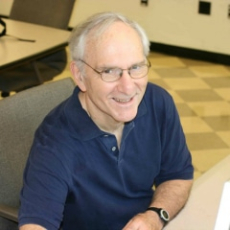
Herbert P. Ginsburg
Teachers College, Columbia University
Visiting Scholar
2000 to 2001
Herbert P. Ginsburg, professor of psychology and education at Teachers College, Columbia University, will complete an extensive review of the long-running Literacy project, which the Russell Sage Foundation has partnered with the Andrew W. Mellon Foundation. The project has sought to develop and disseminate practical measures for improving literacy among disadvantaged schoolchildren. Ginsburg will write a report and organize a conference reflecting upon the general lessons that can be drawn from the project.