Search Fellows
Click on a Fellow below to view more information or create your own search.
Brian Gratton
Arizona State University
Visiting Scholar
2003 to 2004
Brian Gratton, professor of history at Arizona State University, will write a book describing the experience of a wide range of immigrant groups to the United States from 1850 to 2000. Using census data to trace the progress of ethnic groups over three generations, Gratton will search for possible ethnic differences in family structure, intermarriage, geographic settlement, and socioeconomic success. His preliminary analysis challenges the commonly held view that the most recent wave of Asian and Latino immigrants are not faring as well as earlier European immigrants.
Samuel Gross
University of Michigan
Visiting Scholar
2007 to 2008
Phoebe Ellsworth, Frank Murphy Distinguished University Professor of Psychology and Law at the University of Michigan, and Samuel Gross, Thomas and Mabel Long Professor of Law at the University of Michigan Law School, will write a book investigating the causes and consequences of false convictions in criminal cases in the United States.
Herschel I. Grossman
Brown University
Visiting Scholar
2000 to 2001
Herschel I. Grossman, professor of economics at Brown University, will compare the usefulness of two competing visions of the state and the economic policies it pursues. The state can be conceptualized as an agent of the citizenry, allocating public resources according to the collective interest. Alternatively, the state can be thought of as an instrument of a ruling elite who claim the tax revenues of the state, much as the owners of a proprietary enterprise claim the profits.
Judith M. Gueron
Manpower Demonstration Research Corporation
Visiting Scholar
2004 to 2005
Judith Gueron, Outgoing President of the Manpower Demonstration Research Corporation, will author a book profiling the development of randomized trials as a tool in the assessment of social programs and an important factor in policy making, focusing specifically on evaluations of welfare reform programs. She will highlight the role played by Congress, the individual states, private philanthropy, and the MDRC in turning these demonstration projects from a stigmatized research design to a fundamental component in the construction of social policy.
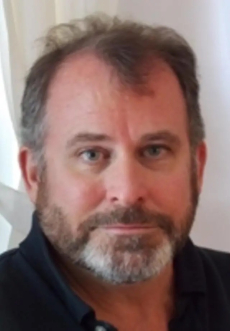
Timothy Guinnane
Yale University
Visiting Scholar
2000 to 2001
Timothy W. Guinnane, professor of economics at Yale University, will write a book examining the history and logic of institutions that provided credit and insurance to poor people in Europe and America from the 18th century to the present. Drawing upon the economics of information, game theory, and contract theory, Guinnane will mount a systematic study of how poor people in different periods and places have managed risk. He will also explain why some of the early credit unions eventually became formal, profit-seeking institutions, while others remained non-profit.
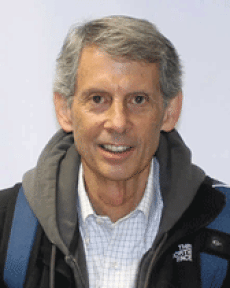
John Hagan
Northwestern University
Visiting Scholar
2001 to 2002
John Hagan, the John D. MacArthur Professor of Sociology and Law at Northwestern University, will write a book on the International Criminal Tribunal for the former Yugoslavia (ICTY). His study will include an analysis of the factors leading to the transformation of a social movement into a functioning legal institution. What effect, for example, did the political climate have on both the lag in global human rights enforcement since Nuremberg and on the new opportunities for enforcement arising at century's end?
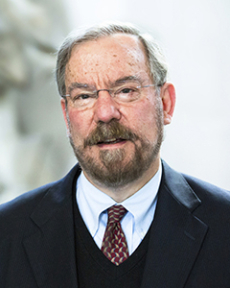
Peter A. Hall
Harvard University
Visiting Scholar
2018 to 2019
Hall will study growth regimes, or the social and economic policies implemented by governments that, in combination with the strategies deployed by firms, are used to foster economic growth. He will use cross-national electoral data and historical case studies to examine how different growth regimes in the United States and the other developed democracies arise and to explain why they have changed from the 1950s to present day.
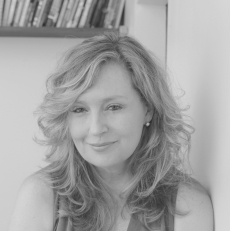
Lynne Haney
New York University
Visiting Scholar
2017 to 2018
Haney will study the relationship between mass incarceration and the enforcement of child support at the federal, state, and local levels. She will use an ethnographic study of child support courts in three states and interviews with 150 formerly incarcerated fathers to explore how both child support debt and ongoing contact with the criminal justice system contribute to cycles of disadvantage and shape their identities as fathers.
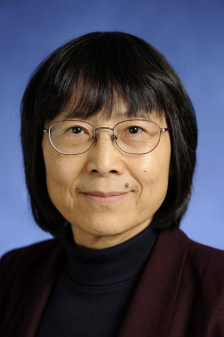
Lingxin Hao
Johns Hopkins University
Visiting Scholar
2002 to 2003
Lingxin Hao, associate professor of sociology at The Johns Hopkins University, will undertake a project on the impact of welfare on the social mobility of immigrant parents and children. The shift in countries of origin from Europe to Asia and Latin America has contributed to lower educational and skill levels among recent immigrants and a greater need for public assistance on their part. Yet, as part of welfare reform, the federal government has sharply reduced the public safety net for immigrants.
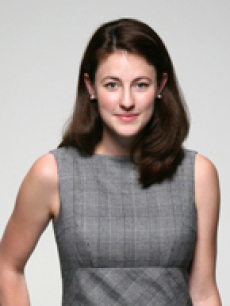
Kathryn Paige Harden
University of Texas at Austin
Visiting Scholar
2015 to 2016
Harden and Elliot M. Tucker-Drob will analyze data from the Texas Twin Project, a study of over 1,000 twins, to examine how genetic and social factors interact to shape child and adolescent development. Harden will focus on how biological and social determinants may lead to the early onset of puberty and sexual development among low-income adolescents. She will test whether stress associated with poverty can induce physiological changes that “override” genetic influences on the timing of puberty.
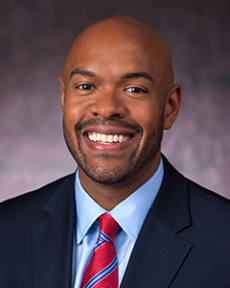
Bradley L. Hardy
American University
Visiting Scholar
2018 to 2019
Hardy will investigate how historical racial segregation in different geographical areas of the U.S. has affected contemporary socioeconomic outcomes for racial minorities. By combining data on economic mobility from the Equality of Opportunity Project with new data on segregation between 1880 and 1940, he will analyze the extent to which long-standing racial disparities in wealth, income, and health outcomes have continued to shape intergenerational inequality over the long term.
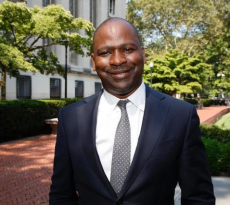
Fredrick C. Harris
University of Rochester
Visiting Scholar
1998 to 1999
Frederik C. Harris, assistant professor of political science at the University of Rochester, will compare strategies of collective action among non-white populations in the United States, Britain, and South Africa. Although these democratic societies share a history of racial exclusion, their minority populations have differed in how they employ racial solidarity and a shared sense of deprived status as a resource and political instrument to challenge socioeconomic inequities.
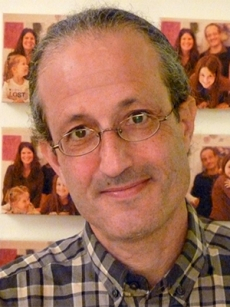
Ran R. Hassin
The Hebrew University of Jerusalem
Visiting Scholar
2010 to 2011
Hassin is part of a working group (with Alexander Todorov), which will use recent findings in cognitive neuroscience to better understand the significant role unconscious processes play in human decision-making. Individually, Hassin will focus on how unconscious states of mind associated with specific ideologies or beliefs trigger certain social behaviors.
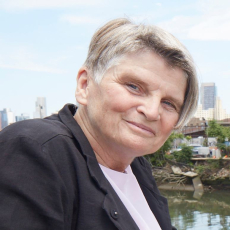
Victoria C. Hattam
The New School
Visiting Scholar
1997 to 1998
Victoria C. Hattam, associate professor and chair of the department of political science at the New School for Social Research, studied the emergence and growth of racism within organized labor in the late nineteenth century. Hattam focused on the American Federation of Labor's profound shift from biracial union organizing in the postbellum era to the adoption of its policies of racial exclusion by the turn of the century.
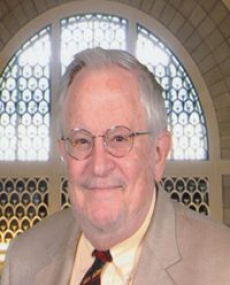
Robert M. Hauser
University of Wisconsin-Madison
Visiting Scholar
2001 to 2002
Robert M. Hauser, the Vilas Research Professor of Sociology, Center for Demography and Ecology at the University of Wisconsin, Madison, will explore the relationship between the economic and social resources of families and the educational outcomes of their children. As part of the Foundation's social inequality project, the study assesses the overall distribution of completed schooling, key transitions in the schooling process, and the pace at which students pass through the educational system.
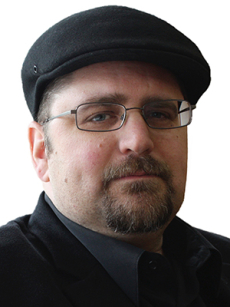
Joseph Heathcott
The New School
Visiting Scholar
2024 to 2025
Heathcott will examine life in three urban communities in St. Louis, Detroit, and Philadelphia, all of which have suffered from neglect, disinvestment, concentrated poverty, and legacies of racial segregation. He will examine how residents mitigate poor conditions, repair damage, create new opportunities, knit together community, and assert their rights and interests in building a more just future.
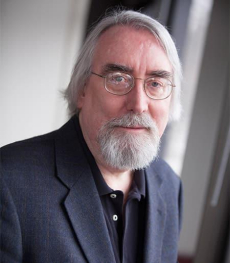
Douglas Heckathorn
Cornell University
Visiting Scholar
2004 to 2005
Douglas Heckathorn, Professor of Sociology at Cornell University, will work on a book describing the theoretical underpinnings, methods, and applications of respondent-driven sampling (RDS), a statistical method for researching hard to reach populations. The book will explore how RDS can be used to study the assimilation of immigrants in New York and New Jersey, their workplace integration, and the integration of their children into mainstream American society.
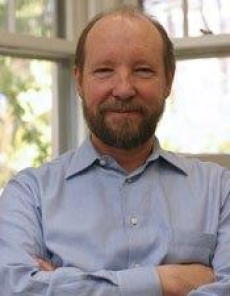
Larry V. Hedges
Northwestern University
Visiting Scholar
2013 to 2014
Hedges will write a reference book on the design, analysis, and interpretation of randomized field experiments. He will consolidate more than a decade of experience in experimentation and discuss common problems in field experimentation that require adjustments to planned designs and analyses.
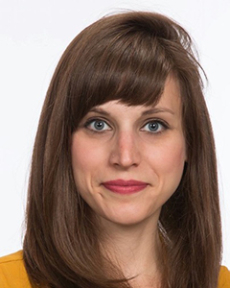
Jen Heerwig
State University of New York, Stony Brook
Visiting Scholar
2018 to 2019
Heerwig will track the evolution of American corporate elites’ political preferences and behavior from 1980 to present day. She will analyze the extent to which these elites have influenced deregulation, the rollback of social welfare programs, and the reduction in income tax rates. She will also draw from a new longitudinal database that links corporate executives, directors, and board members to federal political donations to determine the extent to which individual contributions from corporate elites affect policy outcomes.
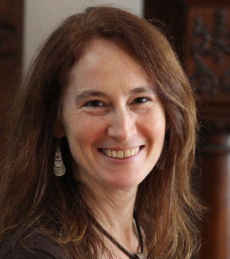
Rachel Heiman
The New School
Visiting Scholar
2006 to 2007
Rachel Heiman, Assistant Professor of Anthropology at The New School, will write a book on the middle class paradox of the 1990s: the dramatic escalation of what defines the suburban American dream at the same time that the possibilities of achieving the dream diminished. Based on fieldwork in a suburban New Jersey town, the book will address class anxiety in suburban America.