Search Fellows
Click on a Fellow below to view more information or create your own search.
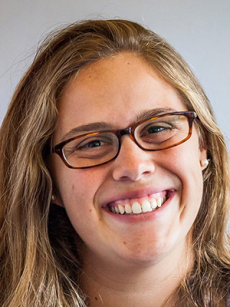
Elizabeth Jacobs
University of Connecticut
Visiting Scholar
2026 to 2027
Jacobs will examine skilled migration as a central and growing hallmark of U.S. migration policy. Using LinkedIn employment histories in tandem with longitudinal in-depth interviews, she will analyze how migration policy shapes the spatial and occupational mobility of skilled migrants moving between the United States and India. The project situates student and work visas within the complex maze of the U.S. migration system and articulates an institutional framework for understanding how state and corporate actors regulate and constrain opportunities for migrants and institutions alike.
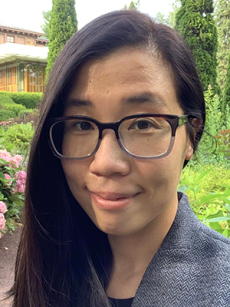
Christine Jang-Trettien
City University of New York
Visiting Scholar
2026 to 2027
Jang-Trettien will examine housing markets in segregated neighborhoods in Baltimore. Using over 400 interviews, she describes the emergence of unregulated markets, probing the institutional actors and real estate practices that become prevalent in such markets. This project builds on the idea of “institutional marginalization” and how it perpetuates disadvantage in segregated communities.
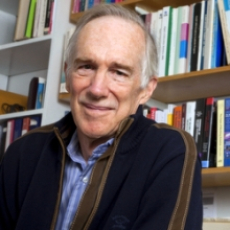
Christopher Jencks
Harvard University
Margaret Olivia Sage Scholar
Christopher Jencks is Malcolm Wiener Professor of Social Policy at Harvard University. He was a visiting scholar at the Russell Sage Foundation (1991–1992) and a Fellow of the Institute for Policy Studies (1963–1967). He is a member of the editorial board of the American Prospect and the author or co-author of several books, including The Academic Revolution (1968), Rethinking Social Policy (1992), The Homeless (1994), and The Black-White Test Score Gap (1998).
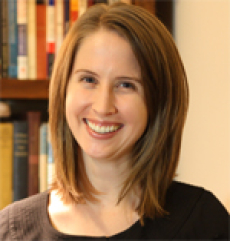
Jennifer Jennings
Princeton University
Visiting Scholar
2017 to 2018
Jennings will examine the barriers to access to high-quality high schools for low-income students. Using a decade of administrative data from the New York City Department of Education, she will analyze how students’ school choices and placements are influenced by their families, their proximity to good schools, and schools’ admissions policies. She will also explore the extent to which providing low-income families with resources such as fact sheets on high-performing schools can increase their placement at those schools.
Christian Joppke
International University Bremen
Visiting Scholar
2002 to 2003
Christian Joppke, professor of political and social sciences at the European University Institute, will write a book on the ways in which racial and ethnic selection criteria for immigrants are at odds with the precepts of liberal states. Joppke will compare the immigration policies of "liberal" states and "ethnic" states (such as Japan) with respect to public neutrality on immigration and the principle of equality.
Arne L. Kalleberg
University of North Carolina, Chapel Hill
Visiting Scholar
2016 to 2017
Kalleberg will trace the historical evolution of corporate power and inequality in the United States. He will examine how shifts in the balance of power among corporations, labor, and government have led to changes in economic and social inequality throughout different periods, especially since World War II. He will explore the relationship between increasing corporate power and the rise of low-wage jobs, polarization of the economy, and the shrinking of the middle class.
Arne L. Kalleberg
University of North Carolina, Chapel Hill
Visiting Scholar
2000 to 2001
Arne L. Kalleberg, professor of sociology at the University of North Carolina at Chapel Hill, will study flexible staffing arrangements - such as temporary, part-time, and contract work - looking at the quality of such jobs, employers' motivations for creating them, and workers' reasons for taking them. Employers may use flexible staffing to cut costs or to cope with labor shortages. If they aim to cut costs, job quality is likely to be low. On the other hand, if they face a labor shortage, they will have to make flexible jobs more appealing.
Philip Kasinitz
City University of New York
Visiting Researcher
Kasinitz is Professor of Sociology at the CUNY Graduate Center. He will work on a book with RSF author and former board chair Mary Waters (Harvard University) that explores the changing landscape of racial and ethnic stratification in American society.
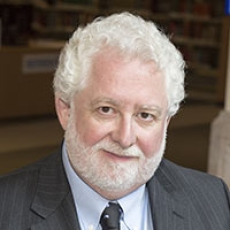
Philip Kasinitz
City University of New York
Visiting Scholar
2000 to 2001
Philip Kasinitz and John Mollenkopf, professors of sociology and political science at the Graduate Center of the City University of New York, will analyze the findings of a major study of the new second generation of immigrants in metropolitan New York, which they are directing with Professor Mary Waters of Harvard University.
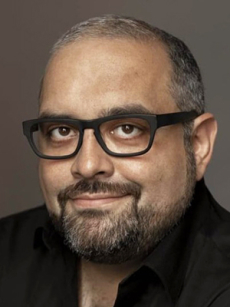
Shamus Khan
Columbia University
Visiting Researcher
Khan will write a book, Exceptional: The Astors, Elite New York, and the Story of American Equality, that traces the history of American inequality from the 1790s to 2006 by focusing on the position and experiences of the elite in New York City.
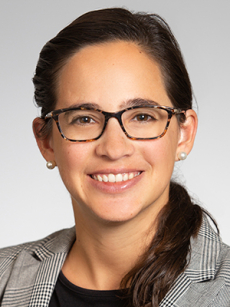
Gabriela Kirk-Werner
Syracuse University
Visiting Scholar
2026 to 2027
Kirk-Werner and Mary Ellen Stitt will examine the operation and impact of programs that promise alternatives to criminal prosecution and punishment, including court-mandated mental and behavioral health and drug treatment, community service hours, and electronic monitoring. Despite the popularity of such programs, little is known about how they shape criminal legal processes or the daily lives of the millions of people assigned to them every year.
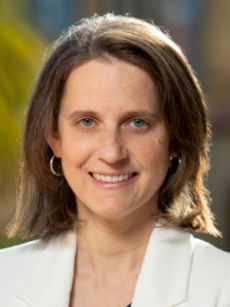
Barbara Kiviat
Stanford University
Visiting Scholar
2023 to 2024
Kiviat will analyze the 30-year battle over whether car insurers should be able to raise prices on drivers with low credit scores. She will draw on documents from public policy debates, interviews with insurance company executives and insurance regulators, and participant observation to explore the moral justifications for using algorithmic predictions of behavior to offer individuals different products and prices.
Gail Kligman
University of California, Los Angeles
Visiting Scholar
2004 to 2005
Gail Kligman, Professor of Sociology at the University of California, Los Angeles, and Katherine Verdery, Eric R. Wolf Professor of Anthropology at the University of Michigan, will conduct a joint study of how a nation’s concept of property as being either private or public influences people’s sense of identity.
Issa Kohler-Hausmann
Yale University
Visiting Scholar
2017 to 2018
Kohler-Hausmann will complete a book on how New York City’s signature policing tactics—including “broken windows” and “quality-of-life” policies—have contributed to mass misdemeanor arrests. Drawing from three years of fieldwork, unique datasets, and interviews with prosecutors, judges, defense attorneys and defendants, she will study how misdemeanor cases contribute to racial and class inequalities despite the fact that they often do not result in criminal convictions or jail sentences.
Roberto Patricio Korzeniewicz
University of Maryland, College Park
Visiting Scholar
2006 to 2007
Roberto Korzeniewicz, Associate Professor of Sociology at the University of Maryland, College Park, and Timothy Moran, Assistant Professor of Sociology at SUNY, Stony Brook form a working group that will be at the Foundation in the fall to write a book examining inequality from a global perspective, focused on rising economic disparities among countries around the world. They will argue that trends in the last century have led to reduced inequality within wealthy nations, but accentuated inequality between rich and poor nations.
Maria Krysan
Pennsylvania State University
Visiting Scholar
1998 to 1999
Maria Krysan, assistant professor of sociology at Pennsylvania State University, will study the role of residential preferences in perpetuating racial segregation. Whereas research on segregation has often focused on discrimination in the housing search process, Krysan employs survey research to investigate the role of white and minority attitudes toward living in racially mixed or homogeneous neighborhoods. She explores how groups differ in their preferences, and the degree to which such preferences arise from racial bias, fear of harassment, or other causes.
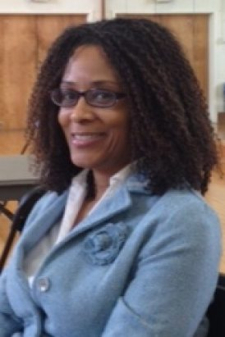
Karyn Lacy
Emory University
Visiting Scholar
2003 to 2004
Karyn Lacy, assistant professor of sociology at Emory University, will write a book that examines the formation of class-based identity among participants in an elite African American mothers' organization and the cultural consequences for their children. Many of these organizations were originally created to counteract the effects of segregation and to surround children with appropriate role models.
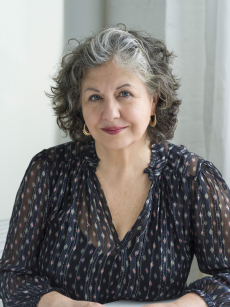
Michèle Lamont
Harvard University
Visiting Scholar
2019 to 2020
Lamont will work on a book that explores how Americans conceive of their self-worth in the context of growing economic inequality. Drawing from interviews with individuals from across the class spectrum, she will explore whether Americans increasingly understand their own “worthiness” through their socioeconomic success, self-reliance, and competitiveness, and analyze implications for the hardening of class and ethno-racial boundaries. She will propose ways to foster greater social inclusion by promoting more hopeful narratives and meaningful engagement of stigmatized groups.
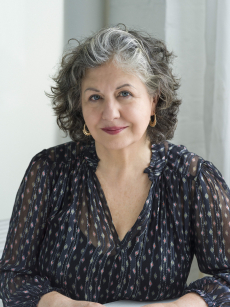
Michèle Lamont
Princeton University
Visiting Scholar
1996 to 1997
Michele Lamont, associate professor of sociology at Princeton University, worked on a book that will examine the class, racial, and cultural differences among low-status white-collar and blue-collar workers residing in the suburbs of New York and Paris. She completed the analysis of 150 interviews, on which the work is based, and wrote two RSF working papers, "The Rhetoric of Racism and Anti-Racism in France and the United States" and "Above People Above: Status and Worth among White and Black Workers."
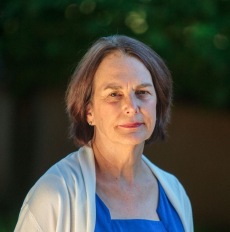
Annette Lareau
University of Pennsylvania
Visiting Scholar
2012 to 2013
Lareau will explore how parents of young children choose where to live and where to send their children to school. She argues that school selection is not a matter of individual parents making a decision in isolation but instead a socially-shaped dynamic through which parents seek to transmit advantages to their school-aged children. She will draw on interviews with parents in three suburban neighborhoods to analyze school-choice decisions.