Search Fellows
Click on a Fellow below to view more information or create your own search.
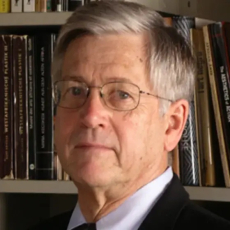
Kenneth Prewitt
Columbia University
Visiting Scholar
2007 to 2008
Kenneth Prewitt (Fall 2007), Carnegie Professor of Public Affairs at Columbia University, will work on a book tracing the history of racial classification in the U.S. census. He will chart the evolution of the underlying purpose of the “race question” from one of overt discrimination against slaves, ethnic minorities, and immigrants in the eighteenth and nineteenth centuries through more recent efforts to ensure that historically undercounted groups are accurately counted and thus receive a fair allotment of federal funding.
Kenneth Prewitt
Columbia University
Visiting Scholar
2002 to 2003
Kenneth Prewitt, Carnegie Professor of Public Affairs at the School of International and Public Affairs, Columbia University, will spend the fall semester at Russell Sage working on two books for the Russell Sage Foundation census series. The first book will be an overview of the political economy of census taking, with a focus on Census 2000. A second book, co-authored with Norman Nie, will be an empirical analysis of the civic mobilization effort that increased cooperation rates in the 2000 census.
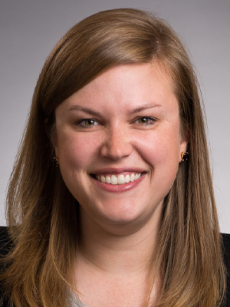
Natasha Quadlin
University of California, Los Angeles
Visiting Scholar
2022 to 2023
Quadlin will work on a book about the effects of gender, race/ethnicity, field of study, and academic achievement on the employment outcomes of recent college graduates. She will use résumé audit studies and survey experiments to better understand the underlying mechanisms behind gender and racial/ethnic inequalities in labor market outcomes.
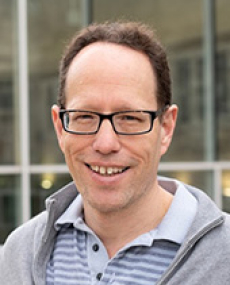
Lincoln Quillian
Northwestern University
Visiting Scholar
2012 to 2013
Quillian will write a series of papers that examine the causes of racial and ethnic residential segregation in America. He will develop a simulation model of the urban residential system that will estimate the importance of factors such as housing market discrimination, individual preferences, affordability, and population characteristics in producing residential segregation.
Matthew Rabin
University of California, Berkeley
Visiting Scholar
2012 to 2013
Rabin and Erik Eyster will investigate the nature of learning and information transmission in social and economic settings. Rabin will complete a book on psychology and economics that examines the psychology behind the exchange of information.
Wendy M. Rahn
University of Minnesota
Visiting Scholar
2011 to 2012
Rahn will work on a book manuscript examining the parallel between rising economic inequality and the growing political clout of citizen investors. She will show how the historical trends of rising inequality, the "financialization" of the American economy, and Americans’ expanded participation in the financial market have helped shape and condition citizen’s policy preferences and political behavior.
S. Karthick Ramakrishnan
University of California, Riverside
Visiting Scholar
2006 to 2007
S. Karthick Ramakrishnan, Assistant Professor of Political Science at University of California, Riverside, will spend the fall at the Foundation analyzing immigrant civic engagement and its implications for social and political inequality in several U.S. and Canadian cities. He will look at immigrant participation in mainstream and ethnic organizations, asking whether such behavior serves as a way for immigrants to combat inequality and improve their social position.
S. Karthick Ramakrishnan
University of California, Riverside
Visiting Scholar
2011 to 2012
Ramakrishnan will write a book that examines the contours and determinants of American public opinion on immigration. Using survey data and embedded survey experiments from 2006 through 2010, he will analyze the relative importance of racial prejudice, partisanship, economic anxiety, and rule-of-law concerns in shaping American attitudes towards immigrants and immigration policy. His project will also consider the ways in which public opinion on immigration may be similar to opinion on race-related issues such as affirmative action, and economic issues such as trade and offshoring.
James E. Rauch
University of California, San Diego
Visiting Scholar
1995 to 1996
James E. Rauch, associate professor of economics at the University of California, San Diego, and research associate, National Bureau of Economic Research, engaged in a study of what he terms the "network/search view of trade" as applied to the difficulties African Americans experience in gaining a foothold in inner-city retail trade. Many connections between buyers and sellers, he argues, are made through a "search" process conditioned by proximity and pre-existing ties ("networks"), rather than through centralized markets.
Alexandrea Ravenelle
University of North Carolina at Chapel Hill
Visiting Scholar
2023 to 2024
Ravenelle will work on a book examining the longer-term impact of the COVID-19 pandemic on precarious workers. She has conducted in-depth interviews with more than 70 workers to better understand how low-wage and restaurant workers and gig workers make sense of their experiences with the pandemic and how they assess risk.
Rose Razaghian
Yale University
Visiting Scholar
2004 to 2005
Ira Katznelson, Ruggles Professor of Political Science and History at Columbia University, John Lapinski, Assistant Professor of Political Science at Yale University, and Rose Razaghian, Assistant Professor of Political Science at Yale University, form a working group that will examine the entire history of Congressional roll call votes to study how the type of policy at stake in legislative debate determines political relationships and outcomes.
Sean Reardon
Stanford University
Visiting Scholar
2014 to 2015
Reardon will write a book about the recent patterns in racial and socioeconomic academic achievement gaps in the U.S., focusing on achievement trends in metropolitan school districts. He will assess the extent to which achievement gaps can be attributed to socioeconomic disparities between groups. He will also estimate the effects of a set of education policies on ameliorating these gaps.
Adam Reich
Columbia University
Visiting Scholar
2022 to 2023
Reich will explore the changing prevalence and organization of work among incarcerated people during the era of mass incarceration from the 1970s to the present. He will analyze data from the Survey of Inmates in State Correctional Facilities and in-depth interviews with state correctional administrators and formerly incarcerated people. He will explain the decline of prison labor since 1970 and variation in how prison labor has been and continues to be understood and organized across the states.
Cordelia Reimers
Hunter College
Visiting Scholar
1996 to 1997
Cordelia W. Reimers, professor of economics at Hunter College and the Graduate School of the City University of New York, studied changes in the wage structure of ethnic and racial minority groups in the United States, especially African Americans and Mexican Americans. She completed a paper on "Unskilled Immigration and Changes in Wage Distribution of Black, Mexican American, and Non-Hispanic White Male Dropouts" and also wrote a chapter on "Compensation for the Latino Worker" for the National Council of La Raza's State of Hispanic America 1997.
Ricardo A. M. R. Reis
Columbia University
Visiting Scholar
2011 to 2012
Reis will research the impact of social transfer programs, including unemployment and disability insurance, Medicaid, and pensions, on employment and economic activity during a recession. He will analyze whether such programs—and the increased government spending that accompanies them—are effective at lowering unemployment and if they help or hinder economic recovery.
Christopher Rhomberg
Yale University
Visiting Scholar
2006 to 2007
Christopher Rhomberg, Associate Professor of Sociology at Yale University, will write a book on the current crisis of American unions, focusing on the breakdown of collective bargaining. Using archival and interview research, he will explore the Detroit newspaper strike of the 1990s as a key example of modern industrial relations and social movements.
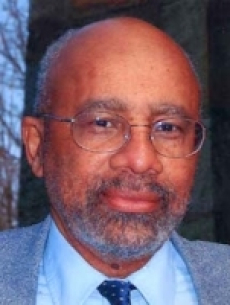
Wilbur C. Rich
Wellesley College
Visiting Scholar
2000 to 2001
Wilbur Rich, professor of political science at Wellesley College, will work on a book about the role of the press in shaping public conceptions of U.S. city mayors, including David Dinkins, former mayor of New York, and Thomas Menino, mayor of Boston. Both mayors were the first of their ethnic group to lead their cities, and both owe their public image to the press. Mayors who boast a popular public image, due to favorable press coverage, can exercise control and influence far beyond the limited powers of their office.
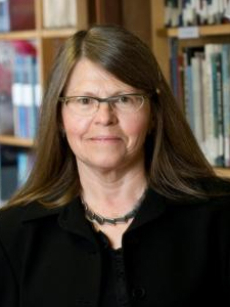
Cecilia L. Ridgeway
Stanford University
Visiting Scholar
2016 to 2017
Ridgeway will investigate the ways that social status functions as a de facto system of inequality and how this system is related larger structures of inequality. She will analyze a broad range of empirical evidence to understand how status matters to people and how hierarchies are formed. She will also study how these processes help transform group differences based on power or resources into systems of inequality based on gender, race, and class.
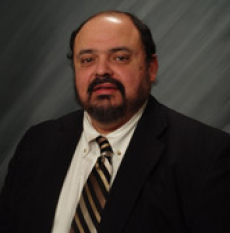
Francisco L. Rivera-Batiz
Columbia University
Visiting Scholar
2003 to 2004
Francisco L. Rivera-Batiz, professor of economics and education at Columbia University, will write a book that examines the changing demographics, socioeconomic status, and racial identity of the nearly 7 million Puerto Ricans living in the United States—both on the island and the mainland—during the 1990s. Rivera-Batiz will analyze the forces that contributed to the drop of migration to the mainland, the sharp drop in national Puerto Rican poverty levels and the persistence of poverty among Puerto Ricans living in New York City.
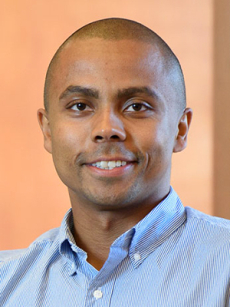
Steven O. Roberts
Stanford University
Visiting Scholar
2021 to 2022
Roberts will integrate research from the social sciences and humanities to identify the psychological bases of racism and suggest strategies for dismantling racial bias. His research will build on previous findings that the belief in white supremacy emerges early in childhood. He will work on three projects to advance the social scientific understanding of racism: a theoretical paper on descriptive-to-prescriptive reasoning, a theoretical paper on white supremacy, and three empirical papers on white supremacy in psychological science.