Seen but Not Heard
Books

Seen but Not Heard

What Medical Records Don’t Tell Us About Women’s Lives
Authors
Jennifer M. Silva
Annemarie G. Hirsch
Paperback
$37.50
Add to Cart
Publication Date
6 in. × 9 in. 224 pages
ISBN
978-0-87154-867-2

About This Book

Medical clinicians, who are already overworked and burned out, are increasingly expected to understand and treat systemic social issues like poverty and racism. One aspect of this is documenting patient’s social risk factors in electronic health records (EHRs). But EHRs do not always give the full story. Critically, they omit patients’ voices and perspectives about their lives, their care, and whether their needs are being met. In Seen but Not Heard, sociologist Jennifer M. Silva and epidemiologist Annemarie G. Hirsch explore the gaps between what clinicians document in EHRs and women’s lived experiences.

Drawing on interviews with 87 non-college-educated, economically disadvantaged women living in rural America and their health records from a large, nonprofit health system, Silva and Hirsch find that the stories that medical records provide and the stories that women tell about themselves differ dramatically. Medical charts often translate women’s suffering into sterile diagnostic codes, prescriptions, and treatment plans. Some women felt heard by their clinicians and believed they received adequate care. Many of these women thought their clinicians went above and beyond to help meet their needs by offering them information on how to apply for benefits like food stamps or childcare subsidies and helping them obtain necessary items like mattress covers and winter coats. More often, however, women felt that clinicians were detached from their everyday struggles to survive, whether that meant keeping their families intact even in the face of violence or finding money to pay the never-ending string of bills.

Silva and Hirsch argue that because the system of healthcare delivery interprets social problems as individual failings, it often reproduces long-standing injurious stereotypes of women as hysterical, recalcitrant, impure, and gluttonous. For some healthcare providers, knowledge about patients’ social risk factors can become a source of control and punishment, such as denying patients care or reporting patients to child welfare services. Patients described clinicians mobilizing harmful stereotypes about marriage and motherhood, race, and poverty during their appointments. Some of the women’s most traumatic experiences in the healthcare system were completely missing from their EHRs. These troubling experiences ultimately deter women from accessing healthcare, discourage them from sharing their experiences with clinicians, and in some cases, make their health and social problems worse. Silva and Hirsch offer several policies and practices that would improve women’s experiences in clinical encounters, such as training clinicians in trauma-informed and culturally responsive care, as well as making national investments in housing, food security, transportation, and environmental research.

Seen but Not Heard is a disturbing but necessary examination of the ways vulnerable women are often failed by the healthcare system and offers solutions that will allow healthcare workers to better address the structural barriers faced by their patients.

About the Author

JENNIFER M. SILVA is associate professor at the Paul H. O’Neill School of Public and Environmental Affairs at Indiana University.

ANNEMARIE G. HIRSCH is professor and co-director of the Geisinger-Johns Hopkins Bloomberg School of Public
Health Environmental Health Institute.

RSF Journal
View Book Series
Sign Up For Our Mailing List
Apply For Funding
Gender Flashpoints
Books

Gender Flashpoints

The Power of Dialogue
Author
Abigail C. Saguy
Paperback
$35.00
Add to Cart
Publication Date
6 in. × 9 in.
ISBN
978-0-87154-851-1

About This Book

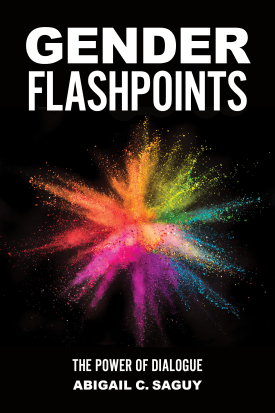
Americans are deeply divided about gender. Like other issues in the US, debates about gender are extremely polarized and can spark intense anger and conflict. These “gender flashpoints” include gender identity, gender and parenting, gender-neutral restrooms, the use of identifying pronouns, and participation in women’s sports. Even the term gender itself has become contested. In this divisive social context, advocates on both sides have reduced complex issues to all-or-nothing propositions. Many people are confused about these topics, embarrassed about what they do not know, or afraid that they will be called bigots if they say the “wrong thing.” In Gender Flashpoints, sociologist Abigail C. Saguy gets to the root of these major disagreements about gender.

Saguy interviews activists across the full political spectrum about a wide range of contemporary debates over gender to better understand points of contention as well as surprising areas of agreement. She finds that at the crux of many of these debates are disputes about the goals of gender-related advocacy, the strategies to achieve these goals, and whose rights are being advocated for. For example, when activists discuss pregnancy-related policy issues, there is disagreement as to whether the term pregnant person or pregnant woman should be used. While some believe pregnant person affirms the existence of nonbinary people and trans men, others believe it erases women. These differences often appear to be simply about language, but they are, in fact, disagreements about worldviews, identities, and legitimacy.

One of the conflicts Saguy dives into is the issue of genderneutral restrooms. She finds when interviewing different activists about what they thought of the topic that they initially repeated the familiar, mainstream polarized discourse. LGBTQ+ activists and mainstream feminists emphasized the importance of restroom access, especially for transgender and gender-nonconforming people. Conservatives and gender-critical feminists emphasized women’s and girls’ vulnerability and need for privacy and safety in public restrooms. Across the political spectrum, activists spoke about how those on the “other side” were unwilling to engage in productive dialogue. However, Saguy also finds that activists on both sides recognized the complexity of the issue and agreed on the need for public bathrooms that provide everyone with greater safety and privacy. Activists across the spectrum showed enthusiasm for desegregated public restrooms that include an open space for sinks and mirrors—along with toilets with European style, floor-to-ceiling doors. Saguy advocates for engaging in dialogue about charged issues, such as gender-neutral bathrooms, in order to help identify workable solutions to seemingly intractable social problems.

Gender Flashpoints is a fascinating and comprehensive view of the deeply personal and divisive topic of gender that offers hope for finding common ground and a path forward.

About the Author

ABIGAIL C. SAGUY is professor of sociology at UCLA with a courtesy appointment in Gender Studies.

RSF Journal
View Book Series
Sign Up For Our Mailing List
Apply For Funding
Normalizing Inequality
Books

Normalizing Inequality

How Californians Make Sense of the Growing Divide
Authors
G. Cristina Mora
Tianna S. Paschel
Paperback
$42.50
Add to Cart
Publication Date
6 in. × 9 in.
ISBN
978-0-87154-536-7

About This Book

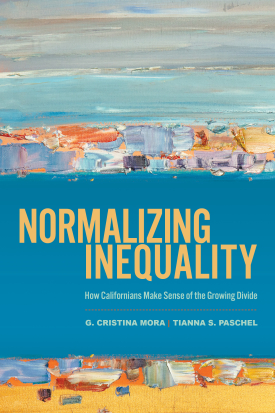
California has long been mythologized as the quintessential land of opportunity and reinvention—a place where anyone, regardless of origin, can forge a new life and realize their aspirations. Yet beneath this gilded narrative lies a starker reality: California ranks among the most unequal states in one of the world’s most unequal countries, where the middle class finds itself increasingly squeezed. Economic inequality is not an anomaly but part of a broader global phenomenon, as disparities deepen across the world. While we know a lot about its contours, its evolution over time, and its intersections with race and immigration, we understand far less about how ordinary people interpret and internalize it. In Normalizing Inequality, sociologists G. Cristina Mora and Tianna S. Paschel illuminate how middle-class Californians perceive and come to accept the inequalities that surround them.

Drawing on extensive interviews and surveys, Mora and Paschel uncover a profound paradox at the heart of middle-class consciousness. They find that Californians are keenly aware of the systemic causes of inequality—they recognize policies engineered to benefit the wealthy, and they acknowledge how structural racism makes it hard for some groups to get ahead—yet they consistently minimize these forces. Instead, they gravitate toward explanations rooted in individualism, moral character, and the idea that things are worse in other places. Racism and racial inequality in California become palatable when framed as “not as bad as the South.” Immigrant exploitation, however severe, transforms into evidence of the American Dream fulfilled simply upon arrival. Economic pressures that displace others become surmountable through personal industriousness and forbearance.

These beliefs about inequality grow more troubling still. Middleclass Californians sometimes blame disempowered people for their circumstances—acknowledging structural barriers facing homeless and undocumented populations while simultaneously faulting them for insufficient drive or criminal behavior that compounds their difficulties. When contemplating California’s future, interviewees envision economic prosperity propelled by technological innovation, yet remain curiously unconcerned with how present inequalities might shape that tomorrow. Their imagined future is one where White and Asian American populations thrive, while Black, Latino, and economically marginalized Californians either vanish through displacement or fade into irrelevance. As respondents use these interpretive frameworks to make sense of inequality, they lean heavily on California’s foundational narratives of opportunity, sanctuary, and multiracial promise.

Normalizing Inequality offers an incisive examination of how ordinary citizens make sense of inequality and, through that very process of sense-making, how they tolerate and passively reproduce the conditions they often claim to deplore.

About the Author

G. CRISTINA MORA is Chancellor’s Professor of Sociology and co-director of the Institute of Governmental Studies, University of California, Berkeley.

TIANNA S. PASCHEL is an associate professor, Department of African American Studies and Sociology, University of California, Berkeley.

RSF Journal
View Book Series
Sign Up For Our Mailing List
Apply For Funding
Inside Jobs
Books

Inside Jobs

Prison Work in the American Labor Market
Author
Adam Reich
Paperback
$35.00
Add to Cart
Publication Date
6 in. × 9 in.
ISBN
978-0-87154-854-2

About This Book

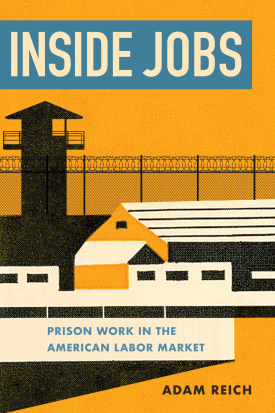
From the stone quarries of Sing Sing that supplied marble for early New York City landmarks to twenty-first-century construction projects staffed by formerly incarcerated workers, Inside Jobs traces the relationship between prison work and the labor market over the past two hundred years. Sociologist Adam Reich demonstrates how prison labor has repeatedly been used to solve economic problems—disciplining workers, lowering labor costs, managing unemployment—revealing unexpected connections that challenge our assumptions about freedom, coercion, and labor itself.

Reich examines the history of work in prisons to understand how it has related to the free labor market. He finds that the organization of prison work, and debates over it, have changed dramatically over time. In the mid- to late nineteenth century, prisons helped shape the emerging factory system as the apprentice-based labor market gave way to industrial production. Labor unions opposed prison labor as immoral, and in the early to mid-twentieth century, the moral character of the workforce became central to economic life within the prison and without. Therapeutic professionals worked in prisons to rehabilitate the incarcerated and determine what motivated them to work. Following prison uprisings in the late twentieth century, prison work became a tool of population control. Yet, paradoxically, work programs were remodeled to mirror the free labor market, requiring applications and hiring processes.

Blending archival research, political economy, and sociological theory, Inside Jobs offers a powerful new framework for understanding mass incarceration and reentry today. Reich examines how the dynamics of mass incarceration have begun to shift. He explores how the “mark of a criminal record”—the stigma traditionally associated with felony convictions—has given way to a “market” for criminal records, as employers discover advantages in hiring disadvantaged, dependent, and disciplined workers recently released from prison. Looking toward the future, Reich focuses on promising efforts to transform this system.

Inside Jobs is an illuminating examination of prison work’s history, its relationship to work outside prison walls, and how the criminal justice system disempowers workers both behind bars and beyond.

RSF Journal
View Book Series
Sign Up For Our Mailing List
Apply For Funding
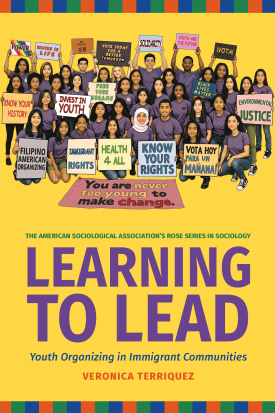
Learning to Lead
Books

Learning to Lead

Youth Organizing in Immigrant Communities
Author
Veronica Terriquez
Paperback
$39.95
Add to Cart
Publication Date
6 in. × 9 in.
ISBN
978-0-87154-852-8

About This Book

Children of immigrants make up more than one in four people in the United States under the age of thirty. Amid today’s multipronged attacks on immigrant communities and growing threats to democratic participation, these young people often encounter significant barriers to political participation. Despite these challenges, some children of immigrants and refugees engage in nonpartisan grassroots campaigns, addressing issues such as education, health, environmental justice, immigrant rights, housing, and voting rights. In Learning to Lead, sociologist Veronica Terriquez examines how youth organizing groups facilitate the civic and political engagement of low-income, second-generation immigrant adolescents, enabling them to collectively exercise power alongside their non-immigrant peers and adult allies.

Drawing on extensive surveys, semi-structured interviews, and other data, Terriquez shows that nonprofit youth organizing groups strengthen adolescents’ capacity to address the systemic challenges facing their communities through political engagement. These groups generally share a commitment to supporting young people’s healthy development, offer a critical form of civics education, and provide extensive guidance on how to participate in civic life. They adapt their programming in response to local demographic and political dynamics.

Many adolescents who join grassroots organizing groups face overlapping stresses related to poverty, immigration status, neighbor-hood violence, and other hardships. In response, youth organizing groups create spaces that support emotional well-being while also encouraging academic success and job readiness. They help young people develop a critical understanding of social inequality, power, and public policy. This education often motivates immigrant and refugee youth to work with their non-immigrant Black and Indigenous peers and deepens their understanding of the historical, economic, and political roots of community problems, as well as potential policy solutions. Organizing groups also provide these youth with sustained, hands-on training in how to collectively exercise their voice in policy debates and government elections, effectively offering civic apprenticeships. Staff and experienced members mentor newer participants in basic civic skills such as public speaking, event planning, and community out-reach, while also coaching them on strategies for mobilizing peers and adult allies to contribute to nonpartisan campaigns.

Adolescents who participate in youth organizing during high school tend to remain highly active in civic life into early adulthood. Terriquez concludes that these groups offer important lessons for schools and other youth-serving institutions seeking to strengthen engagement in a multiracial democracy.

Learning to Lead offers a thorough examination of how young people acquire the capacities to become a meaningful political force.

About the Author

VERONICA TERRIQUEZ directs the UCLA Chicano Studies Research Center and is a professor of Chicana/o and Central American Studies and Urban Planning

RSF Journal
View Book Series
Sign Up For Our Mailing List
Apply For Funding
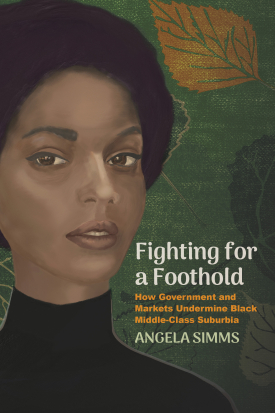
Fighting for a Foothold
Books

Fighting for a Foothold

How Government and Markets Undermine Black Middle-Class Suburbia
Author
Angela Simms
Paperback
$39.95
Add to Cart
Publication Date
6 in. × 9 in. 334 pages
ISBN
978-0-87154-825-2

About This Book

"Prince George’s County is a Wakanda of sorts. Its majority-Black residents enjoy higher incomes, stronger homeownership, and longer life expectancy than residents in many places—indeed, more than those in many non-Black-majority areas. As a resident, I affectionately call it ‘Black bougie heaven,’ proudly celebrating its strengths. Angela Simms’s rigorous work shows, however, that as remarkable as PG County is, it could be even better in a world without racism. Fighting for a Foothold invites readers from all places to remove the drags of racism that throttle growth that would otherwise occur."
—ANDRE M. PERRY, senior fellow and director, Center for Community Uplift, Brookings Institution

"Fighting for a Foothold reveals the connection between a long legacy of racist policies in America and the struggle among local leadership in an iconic middle-class Black suburb to provide residents with the kinds of amenities that are taken for granted in neighboring middle-class White suburbs. In doing so, Angela Simms shows middle-class Black homeowners and their elected officials face an uphill battle as they attempt to reap the benefits of living in one of the most coveted spaces in the country—the suburbs."
—KARYN LACY, associate professor of sociology, University of Michigan

Prince George’s County, Maryland, is a suburban jurisdiction in the Washington, D.C., metropolitan area and is home to the highest concentration of Black middle-class residents in the United States. As such, it is well positioned to overcome White domination and anti-Black racism and their social and economic consequences. Yet Prince George’s does not raise tax revenue sufficient to provide consistent high-quality public goods and services. In Fighting for a Foothold, sociologist Angela Simms examines the factors contributing to Prince George’s financial troubles.

Simms draws on two years of observations of Prince George’s County’s budget and policy development processes, interviews with nearly 60 Prince George’s leaders and residents, and budget and policy analysis for Prince George’s County and its two Whiter, wealthier neighbors, Montgomery County, Maryland, and Fairfax County, Virginia. She argues legacy and ongoing government policies and business practices—such as federal mortgage insurance policy prior to 1968, local government reliance on property taxes, and private investment patterns—have resulted in disparities in wealth accumulation between Black and White Americans, not only for individuals and families but local jurisdictions as well. Prince George’s County has a lower cost of living than its Whiter, wealthier neighbors. As the most affordable county bordering D.C., it attracts a disproportionate share of the region’s core middle-class, lower middle-class, working class, and low-income residents, resulting in greater budget pressure.

Prince George’s uses the same strategies as majority-White jurisdictions to increase revenue, such as taxing at similar rates and vying for development opportunities but does not attain the same financial returns. Ultimately, Simms contends Prince George’s endures “relative regional burden” and that the county effectively subsidizes Whiter counties’ wealth accumulation. She offers policy recommendations for removing the constraints Prince George’s County and other majority-Black jurisdictions navigate, including increased federal and state taxes on wealthy Americans and corporations, which will enhance the capacity for government to distribute and redistribute resources equitably; increased state-level funding of public goods and services, which would decrease local jurisdictions’ reliance on locally-generated tax revenue; and the creation of equity funds to remediate harms inflicted upon Black Americans.

Fighting for a Foothold is an in-depth analysis of the fiscal challenges experienced by Prince George’s County and by the suburban Black middle-class and majority-Black jurisdictions, more broadly. The book reveals how race, class, and local jurisdiction boundaries in metropolitan areas interact to create different material living conditions for Americans.

About the Author

ANGELA SIMMS is Assistant Professor of Sociology and Urban Studies, Barnard College, Columbia University.

RSF Journal
View Book Series
Sign Up For Our Mailing List
Apply For Funding