Previous research has focused on white Christian nationalism as a factor shaping reactionary, and racially exclusive, political mobilization on the right. Less attention has been paid to how Christian nationalist beliefs promote racialized understandings of “deservingness” and views of economic inequality and the welfare state. Sociologist Penny Edgell will examine the following questions: 1) How does Christian nationalism interact with racial identity for White, Black and Hispanic Americans to shape attitudes toward economic inequality, the welfare state, and welfare recipients?
Given the role of racial prejudice in justifying and exacerbating systemic racial inequalities, scholars have long been puzzled by how to effectively influence public opinion in support of policies that would strengthen racial equity. Social welfare scholar Kristen Brock-Petroshius and her colleagues Neil Lewis (social psychology) and Jeff Niederdeppe (communications) will seek to better understand how communication about racialized policy issues operates.
Microtask platforms like MTurk provide a unique work context, where gender and race are hidden. This anonymity largely eliminates the possibility of differential treatment based on gender or race. However, preliminary work by sociologist Jeremy Reynolds and others show that this anonymity has not eliminated gender differences in earnings or racial differences in stress. Existing evidence suggests that the typical focus on worker characteristics may overlook the role of peer support among gig workers in generating these inequalities.
Books
RSF: Severe Deprivation in America
Publication Date
7 in. × 10 in.
192, 212 pages
ISBN
978-0-87154-501-5
About This Book
DOWNLOAD A FREE DIGITAL COPY - Part 1
DOWNLOAD A FREE DIGITAL COPY - Part 2
Widening inequality has received much attention recently, but most of the focus has been on the top one percent or the middle class. The problems of those at the very bottom of society remain largely invisible. Along with the Great Recession, factors such as rising housing costs, welfare reform, mass incarceration, suppressed wages, and pervasive joblessness have contributed to deepening poverty in America. In this inaugural double issue of RSF: The Russell Sage Foundation Journal of the Social Sciences, a distinguished roster of poverty scholars from multiple disciplines focuses on families experiencing “severe deprivation”: acute, compounded, and persistent economic hardship.
Over 20 million families in America live in deep poverty, on incomes below half the federal poverty threshold, yet Liana Fox and colleagues find that government taxes and transfers lift millions of families out of deep poverty each year. Searching even further below the poverty line, Luke Shaefer, Kathryn Edin, and Elizabeth Talbert find that the number of children in households experiencing chronic extreme poverty—living on $2 or less per day—increased by over 240 percent between 1996 and 2012. Focusing on the elderly, Helen Levy shows that failing health exacerbates low-income seniors’ hardship by driving up their out-of-pocket medical spending.
Other contributors examine the relationship between violence and severe deprivation. Through longitudinal interviews with former prisoners in Boston, Bruce Western reveals the ubiquity of violence in the life course of disadvantaged young men. And Laurence Ralph draws on years of ethnography in Chicago to document how families and communities cope with the trauma of gun violence. Other studies in this issue show that mass incarceration has changed the nature of poverty in recent decades, with consequences ranging from increased levels of deprivation among children of incarcerated parents to housing insecurity among parolees, which increases their risk for recidivism.
Finally, several papers devise novel methods and concepts relevant to the study of severe deprivation. Kristin Perkin and Robert Sampson develop an innovative measure of “compounded disadvantage” that groups individual and ecological hardship, while Megan Comfort and colleagues pioneer a new approach to ethnographic fieldwork that combines embedded social work with participant observation.
This issue provides in-depth analyses of the causes and human costs of extreme disadvantage in one of the richest countries in the world and offers a new paradigm for understanding the changing face of poverty in America. In an age of economic extremes, understanding how and why severe deprivation persists will be vital for policymakers and practitioners attempting to deliver relief to the nation’s most marginalized families.
RSF Journal
View Book Series
Sign Up For Our Mailing List
Apply For Funding
Books
RSF: The Elementary and Secondary Education Act at Fifty and Beyond
Publication Date
7 in. × 10 in.
240 pages
ISBN
978-0-87154-673-9
About This Book
The Elementary and Secondary Education Act (ESEA) of 1965, a key component of President Johnson’s War on Poverty, was designed to aid low-income students and to combat racial school segregation. Over the last several decades, the ESEA has become the federal government’s main source of leverage on states and school districts to enact its preferred reforms, including controversial measures such as standardized testing. In this issue of RSF, edited by David Gamson, Kathryn A. McDermott, and Douglas Reed, an esteemed group of education scholars examine the historical evolution of the ESEA, its successes and pitfalls and what they portend for the future of education policies.
The ESEA has historically enabled the federal government to address educational inequality at the local level. Among the nine articles in the issue, Erica Frankenberg and Kendra Taylor discuss how the ESEA in conjunction with the Civil Rights Act accelerated desegregation in the South in the 1960s by withholding federal funding from school districts that failed to integrate. Rucker C. Johnson shows that higher ESEA spending in school districts between 1965 and 1980 led to increased likelihood of high school graduation for students, and low-income students in particular. Students in districts with higher spending were also less likely to repeat grades or to be suspended from school. Yet, as Patrick McGuinn shows, the institutional and administrative capacity of the U.S. Department of Education has never been sufficient to force instructional changes at the school level. This was particularly true with the 2001 renewal of the ESEA, the No Child Left Behind Act, which linked federal funding to schools’ test-score outcomes rather than to programs designed to combat social inequalities.
The issue also investigates the unintended consequences of the ESEA and offers solutions for offsetting them. As Patricia Gándara and Gloria Ladson-Billings demonstrate, ESEA reforms have, in some circumstances, led to the neglect of the needs of minority students and second-language learners. Gándara shows that No Child Left Behind requires “bilingual” education programs to focus on rapid acquisition of English, often to the detriment of those learning English as a second language. Similarly, Ladson-Billings shows that the ESEA’s standardized testing mandates may suppress innovative teaching methods, and argues for reforms that use multidisciplinary approaches to craft new curricula.
Bringing together research on the successes and shortcomings of the ESEA, this issue of RSF offers new insights into federal education policy and demonstrates that this landmark legislation remains a powerful force in the lives of educators and students fifty years after its initial implementation.
RSF Journal
View Book Series
Sign Up For Our Mailing List
Apply For Funding
Books
RSF: Higher Education Effectiveness
Publication Date
7 in. × 10 in.
272 pages
ISBN
978-0-87154-992-1
About This Book
The American system of higher education includes over 5,000 degree granting institutions, ranging from small for-profit technical training schools up to the nation’s elite liberal arts colleges and research universities. Over 20 million students are enrolled, with federal, state, and local governments spending almost 3 percent of GDP on higher education. Yet how can we evaluate the effectiveness of such a large, fragmented system? Are students being adequately prepared for today’s labor market? Is the system accessible to all? Are new business methods contributing to greater efficiency and better student outcomes? In this issue of RSF, editors Steven Brint and Charles Clotfelter and a group of higher education experts address these questions with new evidence and insights regarding the effectiveness of U.S. higher education.
Beginning with the editors’ authoritative introduction, the contributors assess the effectiveness of U.S. higher education at the national, state, campus, and classroom levels. Several focus on the effects of the steep decline in state funding in recent years, which has contributed to rising tuition at most state universities. Steven Hemelt and David Marcotte find that the financial burdens of attendance, even at public institutions, is a significant and growing impediment for students from low-income families. John Witte, Barbara Wolfe, and Sara Dahill-Brown analyze 36 years of enrollment trends at the University of Wisconsin, Madison, and find increased enrollment of upper-income students, suggesting widening inequality of access.
James Rosenbaum and his coauthors examine the effectiveness of “college for all” policies and find that on a wide range of economic and job satisfaction measures, holders of sub-baccalaureate credentials outperform those who start but do not complete four-year colleges. Two papers—by Kevin Dougherty and coauthors and Michael Kurlaender and coauthors – find that the use of new regulatory mechanisms such as performance funding and rating systems are plagued by unintended consequences that can provide misleading measures of institutional effectiveness. Lynn Reimer and co-authors examine the effectiveness of the “promising practices” in STEM education (science, technology, engineering, and mathematics) promoted by the National Academy of Sciences, and find that they can increase completion rates among low-income, first-generation, and under-represented students.
Expanding college access and effectiveness is a key way to pro-mote economic mobility. The important findings in this issue illuminate the strengths and weaknesses of the U.S. system of higher education and suggest new avenues for improving student outcomes.
Download
RSF Journal
View Book Series
Sign Up For Our Mailing List
Apply For Funding
Books
RSF: Opportunity, Mobility, and Increased Inequality
Publication Date
7 in. × 10 in.
208 pages
ISBN
978-0-87154-991-4
About This Book
Equality of opportunity—the idea that everyone should have the same chance at success, regardless of family background—has long been a bedrock American belief. Yet, as economic inequality has increased over the last several decades, it has become harder for many to climb the economic ladder. This issue of RSF, edited by Katharine Bradbury and Robert K. Triest of the Federal Reserve Bank of Boston, brings together a distinguished group of the nation’s leading social scientists to examine the extent of and the barriers to opportunity that exist today.
Several contributors investigate how rising inequality in parental investments in children, lack of public resources for low-income families, and the high cost of post-secondary education limit the futures of many. Janet L. Yellen, Chair of the Federal Reserve Board, reviews trends in income and wealth inequality since the 1980s and shows how lack of access to key resources such as high-quality childhood education, affordable college, private business ownership, and inheritances for those in the lower half of the wealth distribution has significantly restricted economic opportunity in the U.S. Isabel Sawhill and Richard Reeves find that the socioeconomic status of one’s parents strongly predicts where one will end up on the income ladder as an adult, particularly for those at the very bottom and top of the income distribution. Timothy Smeeding shows that black men, children of never-married mothers, and children of parents lacking high school diplomas are likely to both begin life in the bottom quartile of the income distribution and remain there as adults.
Other contributors explore how inequality of opportunity begins in childhood, where family conditions and neighborhood quality influence children’s life outcomes. Katherine Magnuson and Greg Duncan show that even prior to kindergarten, low-income children lag behind their affluent peers in math and reading skills, in part because they lack access to high-quality preschool education. Greg Duncan and Richard Murnane find that affluent children’s advantages are further amplified during their school years, in part because their parents invest more time and resources in their educational and extra-curricular activities. They also show that increased residential segregation has led to higher concentrations of children with behavioral problems in low-income areas, which negatively affects their classmates’ ability to learn. Patrick Sharkey reviews research on the correlation between child neighborhood conditions and adult economic outcomes and confirms that the longer low-income children reside in bad neighbor-hoods, the more their disadvantages are compounded.
This issue of RSF offers new insights into how, despite our persistent belief in the American Dream, economic opportunity and mobility have stagnated for a growing number of citizens.
RSF Journal
View Book Series
Sign Up For Our Mailing List
Apply For Funding

Books
RSF: Immigrants Inside Politics/Outside Citizenship
Publication Date
7 in. × 10 in.
248 pages
ISBN
978-0-87154-990-7
About This Book
In recent years, immigration has been an issue in most U.S. national elections, sparking heated debate across the political spectrum. But how do immigrants themselves make sense of and participate in U.S. politics? In this issue of RSF, editors James McCann and Michael Jones-Correa and an interdisciplinary team of leading immigration scholars examine political engagement among Latinos. The eleven articles in this issue analyze data from a survey of the Latino population during the 2012 presidential campaign and focus on the political activity of both native-born and immigrant Latinos—including the undocumented.
Several articles examine the incorporation of the foreign-born into American politics. Katharine Donato and Samantha Perez track differences in Latinos’ political ideologies by gender and find that among new immigrants, women tend to hold more conservative political views than men. However, after living in the U.S. for five years, Latinas report themselves as more liberal; after fifteen years of U.S. residence, Latino men view themselves as more conservative. Frank D. Bean and Susan K. Brown show that due to “membership exclusion”—or significant relegation to the margins of society—undocumented immigrants have less political knowledge than those with green cards or driver’s licenses, regardless of how long they have resided here. Melissa Michelson explores how politicians’ expanded outreach to Latino communities during the 2012 election season helped reverse a decades-long trend of declining trust in the government among Latinos.
Other articles compare the political behavior of Latinos to that of other ethnic groups. Jan Leighley and Jonathan Nagler find that while the demographic patterns central to predicting whites’ political engagement—such as income and education levels—do not predict Latinos’ voting turnout, increased political outreach to Latinos has led to greater turnout. Leonie Huddy, Lily Mason, and Nechama Horwitz find that, similar to African Americans, Latino immigrants who both strongly identify with a minority group (in this case, Hispanic) and perceive discrimination against that group are more likely to align themselves with the Democratic Party.
With Latinos constituting an increasing percentage of the population, understanding how and when they participate in our political system is vital for policymakers, scholars, and advocates. The analyses in this issue of RSF provide contribute to our understanding of how immigrants and their descendants navigate American democracy.
RSF Journal
View Book Series
Sign Up For Our Mailing List
Apply For Funding
Books
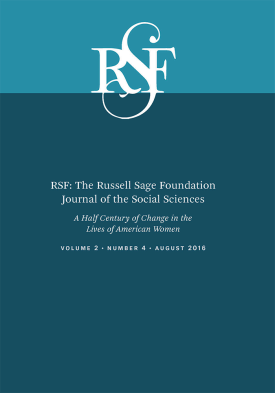
RSF: A Half Century of Change in the Lives of American Women
Publication Date
7 in. × 10 in.
272 pages
ISBN
978-0-87154-047-8
About This Book
Over the last fifty years, American women have made considerable social and economic gains. They now make up half of the workforce, enroll in college at higher rates than men, and hold a larger share of the most prestigious jobs and political offices than in the past. Yet, their collective progress has slowed or stalled in other ways, including an enduring gender wage gap and continued underrepresentation in STEM occupations and other fields. In this special issue of RSF, edited by Martha J. Bailey and Thomas A. DiPrete, a multidisciplinary group of social scientists explores half a century of women’s changing work and family roles and analyzes the implications of these shifts for gender equality.
The contributors examine trends in women’s participation in the labor market, focusing on how working both shapes and is shaped by women’s roles within their families. Tanya Byker investigates the so-called “opt-out revolution” and finds that, surpringly,, the rate of “opting out” has been constant for the last twenty years even as women’s labor-force participation and pay has increased. Ipshita Pal and Jane Waldfogel show that the “motherhood penalty” is shrinking and may even reversing for mothers who are married, white, or highly educated. And while marriages in which women out-earned their husbands were once more susceptible to divorce, Christine Schwartz and Pilar Gonalons-Pons show that this relationship has essentially disappeared, suggesting that the growing economic advantage of a high-earning wife has facilitated a revolution in traditional gender roles. Despite these gains, Kim Weeden and co-authors show that the growth of jobs requiring more than 50 hours of work per week, which are disproportionately filled by men, has played an increasing role in perpetuating the gender pay gap. Similarly, Katherine Michelmore and Sharon Sassler find that within STEM fields, a gender pay gap persists partly because women are still more likely to work in lower-paid occupations.
The rapid advancement of women in education and the workforce was a distinguishing feature of the twentieth century, even though barriers to opportunities for women still exist. Together, the articles in this issue of RSF provide insightful context for these achievements and describe women’s evolving status in society.
RSF Journal
View Book Series
Sign Up For Our Mailing List
Apply For Funding
Books
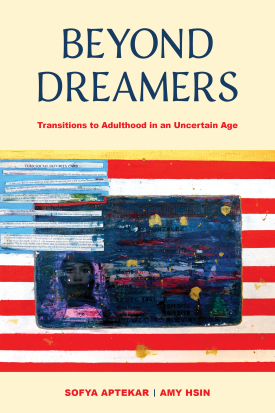
Beyond Dreamers
Transitions to Adulthood in an Uncertain Age
Paperback
Publication Date
6 in. × 9 in.
504 pages
ISBN
978-0-87154-869-6
About This Book
The typical image of a Dreamer is an undocumented Latinx youth—brought to the U.S. through no choice of their own—who excels academically and aspires to contribute to the U.S. economy. This image has engendered political good will and helped push through an executive order that created Deferred Action for Childhood Arrivals, but it is limited. It fails to account for the full spectrum of diversity among undocumented youth. It also leaves the Dreamer figure stuck in a stage of youth and innocence waiting for immigration reform to allow them to finally transition to adulthood. There is little room in the Dreamer narrative for navigating complex family obligations, employment, entering adult relationships, or other markers of adulthood. In Beyond Dreamers, sociologists Sofya Aptekar and Amy Hsin examine how undocumented young adults navigate the transition to adulthood.
Drawing on more than one hundred interviews with a racially and ethnically diverse group of undocumented college students in New York City, with and without DACA authorization, Aptekar and Hsin show that there is no single undocumented experience. They find that while legal status matters enormously, its impacts are influenced by race, national origin, gender, class, sexuality, family resources, educational institutions, neighborhood contexts, and access to local and transnational co-ethnic communities and labor markets. These forces not only shape the kinds of opportunities available to undocumented young adults, but how they choose to approach disclosing their undocumented status and interact with family, peers, employers, professors, and police.
Aptekar and Hsin pay particular attention to the effect of one’s mode of entry into the United States, highlighting the distinction between visa overstayers and those who entered the country without inspection. This highly consequential divide shapes early experiences of illegality, labor market options, exposure to surveillance and precarity, and the possibility of adjusting status. Individuals who overstay their visas have more avenues to adjust their undocumented status, including family sponsorship and marriage to U.S. citizens. Opportunities for legalization are much more restricted for those who made unauthorized border crossings. If these immigrant youth want to adjust their status, they are required to leave the country and remain abroad for at least ten years to do so. Other methods of adjusting their status, such as claiming extreme hardship on their American families or trying to obtain visas for victims of crime or parental abuse or neglect, are extremely difficult to obtain, costly, and can lead to division in families, making legalization all but impossible and, therefore, limiting youths’ opportunities. Thus, mode of entry strongly influences how some young adults imagine their future lives in the U.S. and beyond.
Beyond Dreamers deftly underscores how deeply legal uncertainty continues to structure the lives of undocumented young adults.