Cover image of the book Loan Sharks and Loan Shark Legislation in Illinois
Books

Loan Sharks and Loan Shark Legislation in Illinois

Author
Earle Edward Eubank
Ebook
Publication Date
13 pages

About This Book

Published in 1917 in the Journal of the American Institute of Criminal Law and Criminology, this article presents the legal work and legislation being made to combat usury in the state of Illinois at the time. It includes provisions for a proposed law for meeting the loan shark situation.

EARLE EDWARD EUBANK was professor of sociology, Young Men’s Christian Association College, Chicago.

RSF Journal
View Book Series
Sign Up For Our Mailing List
Apply For Funding
Cover image of the book The Loan Shark Campaign
Books

The Loan Shark Campaign

Author
Malcolm W. Davis
Ebook
Publication Date
4 pages

About This Book

Presents the work of the National Federation of Remedial Loan Associations, founded in 1909, which gathered information and published bulletins in an effort to drive the loan shark out of business, with the help of the Russell Sage Foundation’s Division of Remedial Loans.

MALCOLM W. DAVIS, Division of Remedial Loans, Russell Sage Foundation

RSF Journal
View Book Series
Sign Up For Our Mailing List
Apply For Funding
Cover image of the book Relation of Playgrounds to Juvenile Delinquency
Books

Relation of Playgrounds to Juvenile Delinquency

Author
Allen Burns
Ebook
Publication Date
12 pages

About This Book

This 1909 paper traces data on Chicago’s South Park Playgrounds to argue that the presence of parks and playgrounds in a neighborhood correlates to a decrease in the number of cases of juvenile delinquency.

ALLEN BURNS, Department of Child Hygiene, Russell Sage Foundation

RSF Journal
View Book Series
Sign Up For Our Mailing List
Apply For Funding
Cover image of the book Industrial Conditions in Topeka
Books

Industrial Conditions in Topeka

Author
Zenas L. Potter
Ebook
Publication Date
276 pages

About This Book

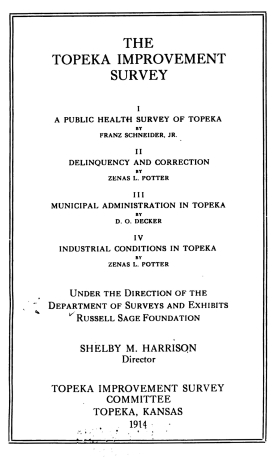
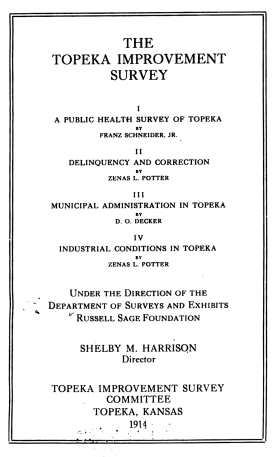
A volume of the Topeka Improvement Survey, a survey of health conditions in Topeka, Kansas, in 1914, this report studies the labor conditions of the industrial trades found in Topeka, particularly the automotive industry. Published with A Public Health Survey of Topeka by Franz Schneider, Jr., Delinquency and Corrections by Zenas L. Potter, and Municipal Administration in Topeka by D. O. Decker.

ZENAS L. POTTER, Department of Surveys and Exhibits, Russell Sage Foundation

RSF Journal
View Book Series
Sign Up For Our Mailing List
Apply For Funding
Cover image of the book Delinquency and Correction
Books

Delinquency and Correction

Author
Zenas L. Potter
Ebook
Publication Date
276 pages

About This Book

A volume of the Topeka Improvement Survey, a survey of health conditions in Topeka, Kansas, in 1914, this report examines the courts, police departments, and city and county jails. Juvenile delinquency and preventative work are explored. Published with A Public Health Survey of Topeka by Franz Schneider, Jr., Municipal Administration in Topeka by D. O. Decker, and Industrial Conditions in Topeka by Zenas L. Potter.

ZENAS L. POTTER, Department of Surveys and Exhibits, Russell Sage Foundation

RSF Journal
View Book Series
Sign Up For Our Mailing List
Apply For Funding
Cover image of the book A Public Health Survey of Topeka
Books

A Public Health Survey of Topeka

Author
Franz Schneider, Jr.
Ebook
Publication Date
276 pages

About This Book

A volume of the Topeka Improvement Survey, a survey of health conditions in Topeka, Kansas, in 1914, this report focuses on the sanitary conditions of the city, as well as the organization and work of the city health department. Published with Delinquency and Corrections in Topeka by Zenas L. Potter, Municipal Administration in Topeka by D. O. Decker, and Industrial Conditions in Topeka by Zenas L. Potter.

FRANZ SCHNEIDER, JR. was sanitarian at the Department of Surveys and Exhibits of the Russell Sage Foundation.

RSF Journal
View Book Series
Sign Up For Our Mailing List
Apply For Funding
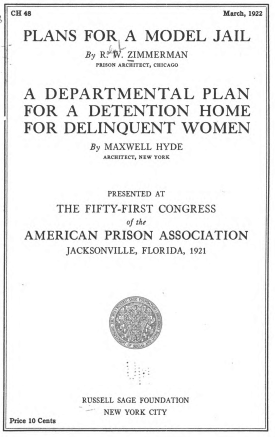
Cover image of the book A Departmental Plan for a Detention Home for Delinquent Women
Books

A Departmental Plan for a Detention Home for Delinquent Women

Author
Maxwell Hyde
Ebook
Publication Date
18 pages

About This Book

Presented at the fifty-first congress of the American Prison Association in 1921, this pamphlet attempts to develop proper, universal plans for a detention home for women. Arguing that each prison would have specific building requirements and characteristics, the author presents several well-established canons of architecture and building which should be followed in any jail, emphasizing humane conditions and required needs. Printed with Plans for a Model Jail by R. W. Zimmerman.

MAXWELL HYDE, architect, New York

RSF Journal
View Book Series
Sign Up For Our Mailing List
Apply For Funding
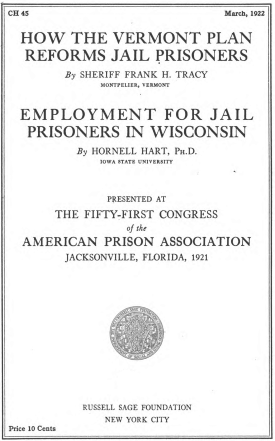
Cover image of the book Employment for Jail Prisoners in Wisconsin
Books

Employment for Jail Prisoners in Wisconsin

Author
Hornell Hart
Ebook
Publication Date
106 pages

About This Book

Presented at the fifty-first congress of the American Prison Association in 1921, this paper presents a practice adopted by Wisconsin at the turn of the century that involved finding employment for county jail prisoners with farmers and other employers in the immediate vicinity of the jail. Printed with How the Vermont Plan Reforms Jail Prisoners by Frank H. Tracy.

HORNELL HART, Iowa State University

RSF Journal
View Book Series
Sign Up For Our Mailing List
Apply For Funding
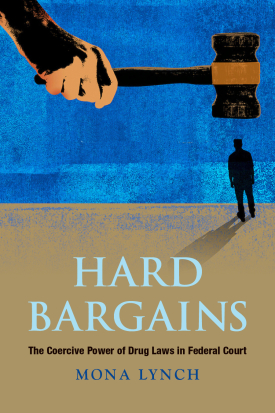
Cover image of the book Hard Bargains
Books

Hard Bargains

The Coercive Power of Drug Laws in Federal Court
Author
Mona Lynch
Paperback
$29.95
Add to Cart
Publication Date
6 in. × 9 in. 220 pages
ISBN
978-0-87154-511-4
Also Available From

About This Book

Winner of the 2017 Michael J. Hindelang Award from the American Society of Criminology

“In this timely and engaging book, Mona Lynch exposes and examines how draconian federal drug laws operate on the ground. Drawing upon extensive and meticulous research, Lynch paints a disturbing portrait of a flawed system of justice in which Congress has provided remarkable power to prosecutors to induce guilty pleas in drug cases by threatening additional charges that in many cases would double or triple the sentence imposed after conviction at trial. The failure of prosecutors to exercise discretion is matched by the inability of judges to do so, because decades-long sentences are usually mandated by Congress itself. Original, accessible, and critically important, Hard Bargains is a must-read for scholars, lawmakers, lawyers, and citizens interested in achieving more proportional and equitable federal drug policies.”

KATE STITH, Lafayette S. Foster Professor of Law, Yale Law School

“Mona Lynch demonstrates convincingly how changes in U.S. sentencing and drug laws have concentrated the power to punish in the hands of prosecutors. Through on-the-ground research in three contrasting districts, Hard Bargains portrays region-specific ways in which such power is deployed. Weakened due process and the destruction of myriad lives, especially among African American men, is the outcome everywhere. This thoroughly researched and most readable book reveals the urgency of law reform.”

JOACHIM J. SAVELSBERG, professor of sociology and law, Arsham and Charlotte Ohanessian Chair, University of Minnesota

The convergence of tough-on-crime politics, stiffer sentencing laws, and jurisdictional expansion in the 1970s and 1980s increased the powers of federal prosecutors in unprecedented ways. In Hard Bargains, social psychologist Mona Lynch investigates the increased power of these prosecutors in our age of mass incarceration. Lynch documents how prosecutors use punitive federal drug laws to coerce guilty pleas and obtain long prison sentences for defendants—particularly those who are African American—and exposes deep injustices in the federal courts.

As a result of the War on Drugs, the number of drug cases prosecuted each year in federal courts has increased fivefold since 1980. Lynch goes behind the scenes in three federal court districts and finds that federal prosecutors have considerable discretion in adjudicating these cases. Federal drug laws are wielded differently in each district, but with such force to overwhelm defendants’ ability to assert their rights. For drug defendants with prior convictions, the stakes are even higher since prosecutors can file charges that incur lengthy prison sentences—including life in prison without parole. Through extensive field research, Lynch finds that prosecutors frequently use the threat of extremely severe sentences to compel defendants to plead guilty rather than go to trial and risk much harsher punishment. Lynch also shows that the highly discretionary ways in which federal prosecutors work with law enforcement have led to significant racial disparities in federal courts. For instance, most federal charges for crack cocaine offenses are brought against African Americans even though whites are more likely to use crack. In addition, Latinos are increasingly entering the federal system as a result of aggressive immigration crackdowns that also target illicit drugs.

Hard Bargains provides an incisive and revealing look at how legal reforms over the last five decades have shifted excessive authority to federal prosecutors, resulting in the erosion of defendants’ rights and extreme sentences for those convicted. Lynch proposes a broad overhaul of the federal criminal justice system to restore the balance of power and retreat from the punitive indulgences of the War on Drugs.

MONA LYNCH is Professor of Criminology, Law & Society at the University of California, Irvine.
RSF Journal
View Book Series
Sign Up For Our Mailing List
Apply For Funding

Recent research has expanded our knowledge about the social, economic and political realities faced by the foreign-born and their children, and about the effects that immigrants have on the communities in which they settle. Some studies find that immigrants, and communities with a large immigrant presence, are associated with lower police-recorded crime rates.