About This Book
This booklet examines transportation as a form of charitable aid, its effects on recipients, and better ways of helping.
This booklet examines transportation as a form of charitable aid, its effects on recipients, and better ways of helping.
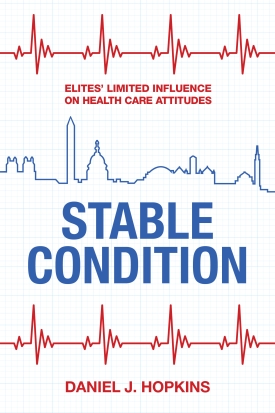
"The elite-level battle over the Affordable Care Act has consumed a decade, the ACA has transformed millions of lives—mostly for the better—and yet Daniel Hopkins’s brilliant new book, Stable Condition, shows that all this has barely moved a polarized public. What does this ‘stable condition’ mean for politicalscience and policymaking alike? Read this fascinating book to find out."
—JACOB S. HACKER, Stanley B. Resor Professor of Political Science, Yale University
The Affordable Care Act (ACA), the sweeping health care reform enacted by the Obama Administration in 2010, continues to be a contentious policy at the center of highly polarized political debates. Both before and after the law’s passage, political elites on both sides of the issue attempted to sway public opinion through two traditional approaches: messaging and policymaking itself. They operated under the assumption that the public’s personal experiences toward the law would make them more favorable. Yet these tried-and-true methods have had limited influence on public attitudes toward the ACA. Public opinion towards the ACA remained stable from 2010 to 2016, with more Americans opposing the law than supporting it. It was only after Donald Trump was elected in 2016 and the prospect of the law being repealed became a reality that public opinion swung in favor of the ACA. If traditional methods of influencing public opinion had little impact on attitudes towards the ACA, what did? In Stable Condition, political scientist Daniel J. Hopkins draws on survey data from 2009 to 2020 to assess how a variety of factors such as personal experience, political messaging, and partisanship did or did not affect public opinion on the ACA.
Hopkins finds that although personal experience with the ACA’s Medicaid expansion increased favorability among low-income Americans, it did not have a broader overall impact on public opinion. Personal experience with the Health Insurance Marketplace did not increase wider support for the ACA either. Due to the complex nature of the law, users of the Marketplace often did not realize they were benefiting from the ACA. Therefore, perceptions of the Marketplace were shaped by high-profile issues with the enrollment website and opposition to the individual mandate. These experiences ultimately offset one another, resulting in little discernable change in public opinion overall. Hopkins argues that political polarization was also responsible for elite’s limited influence and that public opinion on the ACA was largely determined by partisanship and political affiliation. Americans quickly aligned with their party’s stance on the law and were resistant to changing their beliefs despite the efforts of political elites.
Stable Condition is an illuminating examination of the limits of elites’ influence and the forces that shaped public opinion about the Affordable Care Act.
DANIEL J. HOPKINS is a professor of political science at University of Pennsylvania.
In this pamphlet, Joseph Lee explains why playgrounds are necessary, how they should be constructed, and how to get people in the community interested in creating them.
JOSPEH LEE was known as the “Father of the Playground Movement.” He is the author of “The Home Playground,” published by the Russell Sage Foundation.
In this pamphlet, reprinted from the Proceedings of the Second Annual Playground Congress of the Playground Association of America, Joseph Lee discusses the ideal home playground.
JOSPEH LEE is considered the “Father of the Playground Movement.” He is the author of “Play and Playgrounds,” available on the Russell Sage Foundation site.
This booklet provides advice on reforming Independence Day celebrations. It includes illustrated descriptions of safe celebrations; a list of state laws and city ordinances regulating the manufacture, sale, and use of explosives; and a collection of programs and suggestions.
LEE F. HANMER was associate director of the Department of Child Hygiene at the Russell Sage Foundation.
This report, by the Russell Sage Foundation’s Department of Child Hygiene, provides an account of the department’s activities and lists its pamphlets and books, as well as the foundation’s other publications.

“Voices in the Code is essential reading for anyone interested in civil rights, the biases of data, and holding algorithmic systems accountable. Robinson compellingly draws lessons from the struggle to fairly allocate transplant organs to grapple with the moral work of algorithmic governance.”
—DANAH BOYD,Georgetown University
“How do we share the moral burden of high-stakes digital decision-making? David Robinson’s gripping account of the development of the U.S. kidney allocation system offers promising ways forward: we must promote participation by design, center lived experience, and share power to protect community values. Voices in the Code passionately demonstrates how ethical algorithms, like democracy itself, require constant tending. A must-read.”
—VIRGINIA EUBANKS, University at Albany, SUNY
“Voices in the Code by David Robinson asks the most urgent question about technology at the appropriate level of abstraction: how do we make algorithms that impact the public accountable to the public? Robinson insists, correctly, that this is not a new question, just a new level of complexity. Dodging the fad appeal of techno-solutionism, he points the reader to profound lessons from publicly accountable algorithms that have been largely resolved, such as kidney transplant lists.”
—CATHY O’NEIL,O’Neil Risk Consulting & Algorithmic Auditing (ORCAA)
Algorithms–rules written into software–shape key moments in our lives: from who gets hired or admitted to a top public school, to who should go to jail or receive scarce public benefits. Today, high stakes software is rarely open to scrutiny, but its code navigates moral questions: Which of a person’s traits are fair to consider as part of a job application? Who deserves priority in accessing scarce public resources, whether those are school seats, housing, or medicine? When someone first appears in a courtroom, how should their freedom be weighed against the risks they might pose to others?
Policymakers and the public often find algorithms to be complex, opaque and intimidating—and it can be tempting to pretend that hard moral questions have simple technological answers. But that approach leaves technical experts holding the moral microphone, and it stops people who lack technical expertise from making their voices heard. Today, policymakers and scholars are seeking better ways to share the moral decisionmaking within high stakes software — exploring ideas like public participation, transparency, forecasting, and algorithmic audits. But there are few real examples of those techniques in use.
In Voices in the Code, scholar David G. Robinson tells the story of how one community built a life-and-death algorithm in a relatively inclusive, accountable way. Between 2004 and 2014, a diverse group of patients, surgeons, clinicians, data scientists, public officials and advocates collaborated and compromised to build a new transplant matching algorithm – a system to offer donated kidneys to particular patients from the U.S. national waiting list.
Drawing on interviews with key stakeholders, unpublished archives, and a wide scholarly literature, Robinson shows how this new Kidney Allocation System emerged and evolved over time, as participants gradually built a shared understanding both of what was possible, and of what would be fair. Robinson finds much to criticize, but also much to admire, in this story. It ultimately illustrates both the promise and the limits of participation, transparency, forecasting and auditing of high stakes software. The book’s final chapter draws out lessons for the broader struggle to build technology in a democratic and accountable way.
DAVID G. ROBINSON is a visiting scholar at the Social Science Matrix at the University of California, Berkeley, and a member of the faculty at Apple University. From 2018 to 2021, he developed this book as a Visiting Scientist at Cornell’s AI Policy and Practice Project. Earlier, Robinson co-founded and led Upturn, an NGO that partners with civil rights organizations to advance equity and justice in the design, governance, and use of digital technology.
Preemption is when a higher level of government eliminates or reduces the authority of a lower level of government. Since 2010, preemption has increasingly been used by state governments to intentionally thwart local action or punish localities for implementing progressive policies that would disproportionately benefit Black and Latinx workers. Preemption targeting worker-related local policies is most common in the South and is tied to a history of state sanctioned efforts to impede political and economic power among people of color.
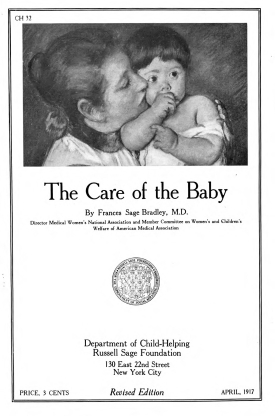
This paper, a revised 1917 edition of a 1913 report published by the Department of Child-Helping of the Russell Sage Foundation, offers concise advice on early child-rearing to expectant mothers.
Frances Sage Bradley was chairman for Georgia of the Committee for Public Health Education Among Women of the American Medical Association and state chairman, Publich Health Committee, Georgia Federation of Women's Clubs.
Political scientist Matthew Baum and his colleagues hypothesize that the COVID-19 pandemic will permanently change the trajectory of our social, economic, and political systems. They will conduct two additional monthly surveys in a series of state surveys conducted since April 2020 with previous NSF support. The January and March 2021 monthly waves will capture opinions, behaviors, and circumstances in the post-election period.