Cover image of the book The Future of the Church and Independent Schools in Our Southern Highlands
Books

The Future of the Church and Independent Schools in Our Southern Highlands

Author
John C. Campbell
Ebook
Publication Date
19 pages

About This Book

This booklet discusses schools in the North and Lowland South known as “mountain mission schools” as distinguished from public schools and from well-endowed private schools. After describing the character of these schools, it describes how these schools can have a positive impact on generations of people in the region.

JOHN C. CAMPBELL was the secretary of the Southern Highland Division of the Russell Sage Foundation.

RSF Journal
View Book Series
Sign Up For Our Mailing List
Apply For Funding
Cover image of the book The Fight for the Bureau of Education
Books

The Fight for the Bureau of Education

Author
Glen Edwards
Ebook
Publication Date
4 pages

About This Book

This article from The Journal of Education, also published as a longer RSF pamphlet, reports on the request for funds from Congress to enlarge and increase the efficiency of the Bureau of Education. The article discusses the intended use of the funds and presents the main arguments from those opposed to granting the funds.

GLEN EDWARDS worked for the Russell Sage Foundation.

RSF Journal
View Book Series
Sign Up For Our Mailing List
Apply For Funding
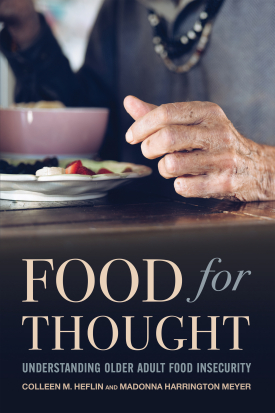
Food for Thought
Books

Food for Thought

Understanding Older Adult Food Insecurity
Authors
Colleen M. Heflin
Madonna Harrington Meyer
Paperback
$39.95
Add to Cart
Publication Date
6 in. × 9 in.
ISBN
978-0-87154-858-0

About This Book

“Colleen M. Heflin and Madonna Harrington Meyer provide the most comprehensive mixed-methods analysis of food insecurity facing older adults to date. The detailed descriptive data are expertly complemented with rich contextual experiences of those seniors facing food hardship in their daily lives. The authors offer keen insights into the policy environment these vulnerable seniors must navigate and present a set of provocative recommendations to improve federal, state, and local policies. Food for Thought is a must-read for any scholar or policymaker interested in confronting the public health challenge of senior food insecurity.”
—JAMES P. ZILIAK, University of Kentucky

“Colleen M. Heflin and Madonna Harrington Meyer lift the veil on an unfolding crisis in America but one that is hidden from view. Simply put, as America ages, more and more of our fellow citizens will reach retirement age only to find that they must embark on a perilous quest just to get enough food to eat. With precision, the authors describe the myriad dimensions of the crisis and the multiple failures of both public and private strategies to address it to date. Food for Thought offers clear, tractable policy solutions to alleviate food insecurity so that more elderly Americans can live with the dignity they deserve.”
—KATHRYN J. EDIN, Princeton University

“This book combines the immense talents of two well-known scholars, one who studies aging and the other who studies food insecurity, stressing the importance of consistent access to a nutritious diet to maintain health in old age. The result is an eminently readable, understandable, and fact-filled volume about the seven million older adults in the United States who are food insecure. There are rich descriptions of how financial problems lead to competing claims on funds, with food often losing out to medicine or housing costs among older Americans. Food for Thought soberly assesses the limits to feeding programs, food-support programs, and income-support programs, concluding that many cost-effective policies could help seniors avoid having to choose between food and other needs, suggesting once again, if we just have the political will, the problem is solvable.”
—TIMOTHY M. SMEEDING, University of Wisconsin–Madison

While food insecurity among households with children often makes the headlines, a quieter issue that receives much less attention is the food insecurity faced by older adults. In 2023, over nine percent of Americans age sixty and older were food insecure. Without policy intervention, that number is only expected to grow as the U.S. population continues to age. In Food for Thought social policy scholar Colleen M. Heflin and sociologist Madonna Harrington Meyer illuminate the challenges faced by food-insecure older adults.

Through analysis of national data sets and interviews with lower-income older adults, Heflin and Harrington Meyer describe why many older adults do not have enough money to afford food and other essentials. As a result of chronic economic disadvantage, food insecure older adults are often forced to make budget trade-offs between food and other expenses. In these trade-offs, food typically ranks below housing and energy costs and competes with other household bills, such as medical costs, transportation, and phone and internet coverage. While finances play a large role, nonfinancial factors, such as poor physical, cognitive, and mental health; lack of access to healthy food; and transportation challenges, also contribute to food insecurity in old age. In the
face of these difficulties, food insecure older adults may go hungry, skip meals, or eat unhealthy foods to help make ends meet.

While SNAP and community-based programs, such as food pantries and home-delivered meals, are intended to help address the issue of food insecurity, they are typically inadequate to address the needs of food-insecure older adults. SNAP has enrollment and maintenance procedures that are particularly difficult for older adults to navigate, pays out an insufficient amount of money to cover food costs, and varies greatly by state. Availability of community programs varies by municipality, and these programs often lack nutritious foods that are complementary to health conditions common among older adults. They also can be difficult to access due to a lack of reliable transportation, disability, or cost. Heflin and Harrington Meyer advocate for addressing all the issues that increase older adults’ risk of food insecurity, not just financial barriers. They suggest updating screening tools to include these factors, increasing SNAP benefits and income support for older adults, and implementing other policies to help combat food insecurity in older adults. 

Food for Thought highlights the increasingly important issue of food insecurity in old age and lays bare the overlooked challenges faced by food-insecure older adults.

About the Author

COLLEEN M. HEFLIN is a professor of public administration and international affairs, Syracuse University.

MADONNA HARRINGTON MEYER is a university professor, Syracuse University.

RSF Journal
View Book Series
Sign Up For Our Mailing List
Apply For Funding
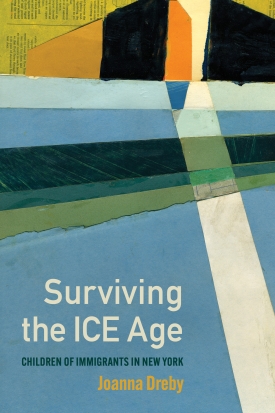
Cover image of the book Surviving the ICE Age
Books

Surviving the ICE Age

Children of Immigrants in New York
Author
Joanna Dreby
Paperback
$42.50
Add to Cart
Publication Date
6 in. × 9 in. 248 pages
ISBN
978-0-87154-532-9

About This Book

“The 1.2 million US deportations from 2014 to 2024 are more than a statistic. They are a compendium of 1.2 million tragedies. In Surviving the ICE Age, Joanna Dreby harnesses her formidable ethnographic skills to vividly depict the pain, suffering, and trauma inflicted on the children of New York’s immigrants, most of whom are US citizens. It offers a sobering chronicle of the damage being done to the next generation of Americans that should be read by all.”
—DOUGLAS S. MASSEY, Henry G. Bryant Professor of Sociology and Public Affairs, School of Public and International Affairs, Princeton University

“Joanna Dreby and her team powerfully illuminate the profound generational burdens of immigration enforcement. Surviving the ICE Age reveals how silencing, disruption of childhood relationships, and challenges to belonging shape development long after enforcement episodes occur. As we face increasingly virulent anti-immigrant policies, this compassionate and urgent book reveals what is truly at stake for the next generation when we prioritize deportation over humane immigration reform.”
—CAROLA SUÁREZ-OROZCO, professor in residence and director, Immigration Initiative, Harvard Graduate School of Education

“Joanna Dreby’s Surviving the ICE Age is a compelling and deeply textured exploration of the profound and often overlooked effects of immigration enforcement on immigrant children’s lives and futures. Timely and essential, this book offers a powerful account of a critical issue, making a major contribution to our understanding of its human cost—and to the migration literature. An important work from a distinguished social scientist.”
—MICHAEL FIX, senior fellow and former president, Migration Policy Institute

For the past three decades, U.S. immigration policy has become increasingly restrictive, focused on enforcement both at the southern border and across the country. A shift in emphasis from status regularization to criminalization has had rippling effects for families and communities. While we know much about how immigration enforcement impacts the undocumented, we know less about longstanding effects on U.S. citizens. In Surviving the ICE Age, sociologist Joanna Dreby draws on interviews with young adults with foreign-born parents to better understand what it was like to grow up during a time of heightened U.S. migratory control.

Dreby shows that a restrictive approach to immigration creates problems over time and across generations. These issues occur regardless of one’s citizenship status and go beyond deportations. Despite having pride in their heritage, her interviewees did not talk much about immigration. She refers to this unwillingness—and at times, inability—to speak about immigration as silencing. Silencing in a community or family is often intended to protect children, but this can leave them with little information about their backgrounds and status, leading to fear and anxiety instead. Self-silencing often resulted from traumatic experiences tied to enforcement episodes, which sometimes took the form of memory loss or emotional withholding. Dreby finds that experiences with the immigration system that disrupted relationships in a child’s household arising from family separations, moves, or changing roles in the family had especially long-term effects, causing, at times, ongoing mental health issues. Even the risk of immigration involvement left some young adults feeling vulnerable and undermined their sense of safety and security as U.S. citizens.

Dreby also highlights stories that offer hope. Young adults developed strategies to persevere, and children who grew up in communities and families that openly talked about migration felt empowered and fared much better, especially when they had access to resources, such as adequate food and shelter, mental health services, and community support. Dreby calls for policies and practices to mitigate the harms of restrictive migratory control on children’s wellbeing, such avoiding the arrest of parents in front of children and ensuring that U.S. citizen children’s interests are considered in immigration court without their direct involvement.

Surviving the ICE Age details the generational harms caused by U.S. immigration policy and offers suggestions for a better way forward.

JOANNA DREBY is professor of sociology at the University of Albany, State University of New York

RSF Journal
View Book Series
Sign Up For Our Mailing List
Apply For Funding
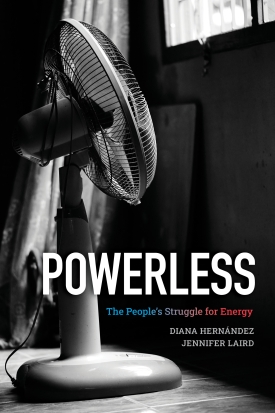
Cover image of the book Powerless
Books

Powerless

The People’s Struggle for Energy
Authors
Diana Hernández
Jennifer Laird
Paperback
$45.00
Add to Cart
Publication Date
6 in. × 9 in. 280 pages
ISBN
978-0-87154-914-3

About This Book

“In Powerless: The People’s Struggle for Energy, Diana Hernández and Jennifer Laird provide a deeply researched and urgent account of energy insecurity, a pervasive yet overlooked crisis that forces millions of Americans to choose between basic needs like heating their homes or feeding their families. Through rigorous analysis and poignant personal narratives, they highlight the far-reaching impacts of energy insecurity and offer practical, equitable solutions to provide affordable, reliable energy in a rapidly changing world.”
—JASON BORDOFF, professor of professional practice in international and public affairs, and founding director, Center on Global Energy Policy, Columbia University School of International and Public Affairs

“‘Energy security’ is not merely a problem for nation states. In Powerless, Diana Hernández and Jennifer Laird show how the high cost of core utilities makes everyday life more difficult and dangerous in poor communities across the United States. This book is an important contribution to the emerging field of energy studies and to larger debates about inequality as well.”
—ERIC KLINENBERG, professor of sociology, Helen Gould Shepard Professor in Social Science, Director of the Institute for Public Knowledge, New York University

Energy serves as the lifeblood of our daily experiences. It permeates virtually every aspect of our existence, facilitating nourishment, safety, and productivity. When affordability threatens energy’s availability, a family’s living situation can become untenable—too cold, too hot, too dark, and too often, unhealthy and unsafe. In Powerless, sociologists Diana Hernández and Jennifer Laird reveal the hidden hardship of “energy insecurity” – the inability to adequately meet household energy needs.

Approximately one in ten households in the U.S. are energy insecure and four in ten are at risk for energy insecurity. These statistics alone do not convey the acute pain of utility shutoffs, or the relentless toll of chronic energy hardships marked by difficult choices and harsh living conditions. Drawing on survey data and interviews with one hundred energy-insecure individuals and families, Hernández and Laird detail the experience of energy insecurity. Individuals and families suffering from energy insecurity endure economic hardships, such as difficulty paying utility bills, utility debt, and disconnection from utility services. They also struggle with physical challenges, such as poor housing conditions and poor or dysfunctional heating and cooling systems. They are often forced to make difficult choices about what bills to pay. These decisions are sometimes referred to as “heat or eat?” choices, as families cannot afford to pay for heating and food at the same time. Energy insecure individuals and families employ a variety of strategies to keep energy costs down to avoid having to make these hard choices. This includes deliberate underconsumption of energy, enduring physical discomfort, and using dangerous alternatives such as open flames, ovens, or space heaters to try to maintain a comfortable temperature in their home. To be energy insecure is to suffer. Despite the heavy toll of energy insecurity, most people confront these difficulties behind closed doors, believing it is a private matter. Thus, the enormous social crisis of energy insecurity goes unnoticed.

Hernández and Laird argue that household energy is a basic human right and detail policies and practices that would expand access to consistent, safe, clean, and affordable energy. Their proposals include improving the current energy safety net, which is limited and often does not serve the most energy insecure due to stringent program requirements and administrative burdens. They also suggest redesigning rates to accommodate income, promoting enrollment and expansion of discount programs, reforming utility disconnection policies, improving energy literacy, and ensuring an equitable shift to renewable energy resources.

Powerless creates a comprehensive picture of the complex social and environmental issue of energy insecurity and shows how energy equity is not just an aspiration but an achievable reality.

About the Author

DIANA HERNÁNDEZ is an associate professor of sociomedical sciences, Columbia University.

JENNIFER LAIRD is an assistant professor in the department of sociology, Lehman College.

RSF Journal
View Book Series
Sign Up For Our Mailing List
Apply For Funding
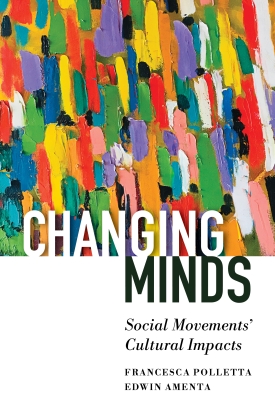
Cover image of the book Changing Minds
Books

Changing Minds

Social Movements’ Cultural Impacts
Authors
Francesca Polletta
Edwin Amenta
Paperback
$37.50
Add to Cart
Publication Date
6 in. × 9 in. 298 pages
ISBN
978-0-87154-853-5

About This Book

“Many studies of social movement influence focus on policy and legislative victories. Changing Minds brilliantly widens the aperture, asking how movements change beliefs and popular culture. This enlightening work illuminates how notable movements of the twentieth century altered the topology of the possible by making resonant claims that transformed the wider contours of American life. Francesca Polletta and Edwin Amenta offer a refreshing view of how struggles gain prominence and provide a lens to understand our unsettled times.”
—WALTER W. POWELL, Jacks Family Professor of Education (and by courtesy) professor of sociology, organizational behavior, management science and engineering, and communication, Stanford University

“Drawing on two lifetimes of research on social movements, Francesca Polletta and Edwin Amenta join forces to illuminate the important interface between social movements and the diffusion of meanings that lead to social and cultural change. The abundant examples they provide from many corners of society help us make sense of the impact change agents can have on the public sphere. These accomplished sociologists also bring together what we know (and more) about various processes that help explain how public opinion changes. I strongly recommend Changing Minds as a most useful contribution that should be read widely.”
—MICHÈLE LAMONT, professor of sociology and of African and African American studies, and Robert I. Goldman Professor of European Studies, Harvard University

“It could be argued that the most consequential and enduring effects of social movements are cultural. And yet, social movement scholars have devoted comparatively little attention to theorizing these effects and the processes and factors that produce them. In Changing Minds, Francesca Polletta and Edwin Amenta have gone a long way toward addressing this lacuna.”
—DOUGLAS McADAM, Ray Lyman Wilbur Professor of Sociology, Stanford University

Social movements—organized efforts by relatively powerless people to change society—can result in legal and policy changes, such as laws protecting same-sex marriage and tax rebates for solar energy. However, movements also change people’s beliefs, values, and everyday behavior. Such changes may help bring about new policies or take place in the absence of new policy, yet we still know little about when and why they occur. In Changing Minds, sociologists Francesca Polletta and Edwin Amenta ask why movements have sometimes had fast and far-reaching cultural influence.

Polletta and Amenta examine the trajectories of U.S. social movements, including the old-age pension movements of the 1930s and 1940s, the Black rights movement of the 1950s and 1960s, the women’s movement of the 1970s, right-wing movements in the 1980s and 1990s, and the environmental movement up to the present, to determine when, why, and how social movements change culture. They find that influential movements are featured in the news, but not only in the news. Movement perspectives may appear also in opinion and commentary outlets, on television talk shows and dramas, in movies, stand-up comedy, and viral memes. Popular culture producers remake movement messages as they transmit them, sometimes in ways that make those messages compelling. For example, while the news largely ignored feminists’ challenge to inequality in the home, popular cultural outlets turned “liberation” into a resonant demand for women’s right to self-fulfillment outside the home and within it.  Widespread attention to the movement may lead people to change their minds individually. But more substantial change is likely when companies, schools, and other organizations outside government strive to get out in front of a newly legitimate issue, whether environmental sustainability or racial equity, by adopting movement-supportive norms and practices. Eventually, ideas associated with a movement may become a new common sense—though not always the ideas that the movement intended.

Throughout Changing Minds, Polletta and Amenta provide activists with strategies for getting their message heard and acted on. They suggest how movement actors can get into the news as political players or experts rather than lawbreakers or zealots. They show when it makes sense for activists to work with popular cultural producers and when they should create their own cultural outlets. They explain why the routes to cultural influence have changed and why urging people to take one easy step to save the planet can do more harm than good.

Changing Minds is a fascinating exploration of why and how some social movements have caused profound shifts in society.

FRANCESCA POLLETTA is Chancellor’s Professor of Sociology, University of California, Irvine

EDWIN AMENTA is Professor of Sociology, University of California, Irvine

RSF Journal
View Book Series
Sign Up For Our Mailing List
Apply For Funding
Cover image of the book The Returned
Books

The Returned

Former U.S. Migrants’ Lives in Mexico City
Authors
Claudia Masferrer
Erin R. Hamilton
Nicole Denier
Paperback
$37.50
Add to Cart
Publication Date
6 in. × 9 in. 228 pages
ISBN
978-0-87154-913-6

About This Book

“Written with a strong theoretical background and based in in-depth interviews, The Returned explores the complex and often contradictory experiences of return migration to Mexico. It reveals the mixed emotions of individuals who find themselves trapped between two worlds—one left behind with lost economic opportunities and the other not fully embraced. The authors illuminate the challenges and transformations that shape the lives of returnees, providing a nuanced perspective on the forces that drive and define migration within a complex policy framework.”
—MARÍA DOLORES PARÍS POMBO, profesora-investigadora, Departamento de Estudios Culturales, El Colegio de la Frontera Norte, Tijuana, B.C.

The Returned makes an important contribution to research on migration, both by focusing on the less researched reality of return migration, which has grown dramatically in recent decades, and by illuminating the struggles returnees face—the sense of being norteado (‘disoriented’ is one translation) when they go to live in Mexico City. Claudia Masferrer, Erin R. Hamilton, and Nicole Denier expertly analyze the experience of deportees and de facto deportees (those who return to Mexico with a deported spouse or family member) and trace how return migration fits into the life course. An important book.”
—ROBERT COURTNEY SMITH, professor of sociology, CUNY Graduate Center and Baruch College

The Returned tells the story of a historic turning point in which more Mexicans come back from the United States than emigrate. Lively interviews reveal how families cope with binational separation, finding work, and starting over in Mexico City. This is a highly readable contribution to understanding return migration.”
—DAVID FITZGERALD, Gildred Chair in U.S.-Mexican Relations and professor of sociology, University of California San Diego

In the first two decades of the 21st century, more than two million Mexican migrants returned to Mexico from the United States. Between 2010 and 2020, the number of people who returned to Mexico was so large that, for the first time in at least fifty years, more people entered Mexico from the United States than entered the United States from Mexico. Many of these migrants were destined for urban areas, and we know little about how they fare after they return to cities. In The Returned, sociologists Claudia Masferrer, Erin R. Hamilton, and Nicole Denier examine the experiences of returned migrants in Mexico City, one of the largest metropolitan areas in the world.

Masferrer, Hamilton, and Denier draw on interviews with former U.S. migrants living in Mexico City to better understand the experience of return migration to urban areas. Each of the migrants they spoke with lived in the United States for long periods with noncitizen status during the last four decades. During this time, U.S. immigration policy became increasingly focused on restriction and enforcement, which made it difficult for migrants to safely move back and forth across the border for work or to visit family without documentation. The authors find that upon their return, migrants in Mexico City felt disoriented and lost and had difficulty adapting to a massive urban environment where there is little support for returnees. They struggled to translate their work experience from their time in the U.S. to find quality jobs. Additionally, many found their family lives upended as they reunited with or formed families in the U.S.. Some found themselves separated from family members still in the U.S. with no ability to legally visit them. Others brought their families back to Mexico, some of whom were U.S. citizens and had never been to Mexico before. They, too, struggled to adapt and integrate to life in Mexico City.

The authors use the experiences of return migrants to discuss policies and practices that would improve their lives and ease their reintegration. To help with the disorientation they experience, returnees proposed ongoing psychological support with mental health professionals who have knowledge and training in the social and legal issues that return migrants face. Return migrants also advocated for policies to enhance skill matching, job creation, and entrepreneurship, as many felt the occupational skills they developed in the U.S. were undervalued in Mexico. To address family separation, returnees argued for legal and policy reform to accommodate family reunification.

The Returned is an illuminating account of the difficulties faced by return migrants and their families in Mexico City.

CLAUDIA MASFERRER is an associate professor, Centre for Demographic, Urban, and Environmental Studies, El Colegio de México

ERIN R. HAMILTON is a professor of sociology, University of California, Davis

NICOLE DENIER is an associate professor, Department of Sociology, University of Alberta
RSF Journal
View Book Series
Sign Up For Our Mailing List
Apply For Funding

As climate-related hazards, such as hurricanes, floods, and fires, become more common events, it is increasingly important to understand how these disasters shape employment outcomes for affected households. Economists Dania Francis and Keren Horn will examine the impacts of climate-related disasters on workers’ short-, medium-, and long-term labor market outcomes. They will analyze data from the Longitudinal Employer-Household Dynamics dataset and the Spatial Hazard Events and Losses Database for their study.

Childcare is a major expense faced by families with children in the United States. However, the Supplemental Poverty Measure – the current approach for measuring poverty rates – inadequately calculates families’ needs and resources. Sociologist Christopher Wimer, public policy scholar Jane Waldfogel, and economist Robert Hartley will create and estimate a childcare-inclusive poverty measure that reflects the recommendations of the National Academy of Sciences’ 2023 report on improvements to the measurement of poverty.

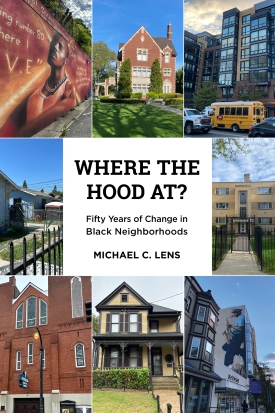
Cover image of the book Where the Hood At?
Books

Where the Hood At?

Fifty Years of Change in Black Neighborhoods
Author
Michael C. Lens
Paperback
$45.00
Add to Cart
Publication Date
6 in. × 9 in. 306 pages
ISBN
978-0-87154-818-4

About This Book

“Michael Lens provides an unprecedented systematic overview of economic and social conditions in Black neighborhoods for the past half century. By moving beyond the pathos narrative that has characterized much of the scholarship on Black neighborhoods, Where the Hood At? will help us to understand the Black neighborhood in all its complexity and diversity. Where the Hood At? is a must-read for students of neighborhoods, urban planners and policymakers, and the Black experience.”
—LANCE FREEMAN, James W. Effron University Professor of City and Regional Planning and Sociology, University of Pennsylvania

Where the Hood At? describes in impressively comprehensive terms how Black neighborhoods in America have evolved over the last half century. Rigorous statistical documentation is clothed with an accessible writing style. This is a welcome study addressing a critical gap in scholarship related to racial segregation, neighborhood effects, and ethnographies of place. It reminds us why Black neighborhoods, not just individuals, are an important locus for analyzing issues of racial equity.”
—GEORGE C. GALSTER, Clarence Hilberry Professor of Urban Affairs and Distinguished Professor, emeritus, Department of Urban Studies and Planning, Wayne State University

“Michael Lens has produced a comprehensive profile that describes the trajectory of the Black neighborhood in American cities over five decades. It is a much-needed and authoritative addition to our understanding of the Black neighborhood in American cities. Lens’s work provides ample fodder for policy debates ranging from integration and gentrification to the relative importance of place-based policymaking. We will be relying on Lens’s analysis of the Black neighborhood for a long time to come. Where the Hood At? challenges our assumptions about Black neighborhoods in American cities and their paths over the past fifty years. Just as importantly, the comprehensiveness of Lens’s analysis provides a clear and robust foundation for thinking about the future of these neighborhoods.”
—EDWARD GOETZ, professor and director, Center for Urban and Regional Affairs, Humphrey School of Public Affairs, University of Minnesota

Substantial gaps exist between Black Americans and other racial and ethnic groups in the U.S., most glaringly Whites, across virtually all quality-of-life indicators. Despite strong evidence that neighborhood residence affects life outcomes, we lack a comprehensive picture of Black neighborhood conditions and how they have changed over time. In Where the Hood At? urban planning and public policy scholar Michael C. Lens examines the characteristics and trajectories of Black neighborhoods across the U.S. over the fifty years since the Fair Housing Act.

Hip hop music was born out of Black neighborhoods in the 1970s and has evolved alongside them. In Where the Hood At? Lens uses rap’s growth and influence across the country to frame discussions about the development and conditions of Black neighborhoods. Lens finds that social and economic improvement in Black neighborhoods since the 1970s has been slow. However, how well Black neighborhoods are doing varies substantially by region. Overall, Black neighborhoods in the South are doing well and growing quickly. Black neighborhoods in the Midwest and the Rust Belt, on the other hand, are particularly disadvantaged. The welfare of Black neighborhoods is related not only to factors within neighborhoods, such as the unemployment rate, but also to characteristics of the larger metropolitan area, such as overall income inequality. Lens finds that while gentrification is increasingly prevalent, it is growing slowly, and is not
as pressing an issue as public discourse would make it seem. Instead, concentrated disadvantage is by far the most common and pressing problem in Black neighborhoods.

Lens argues that Black neighborhoods represent urban America’s greatest policy failures, and that recent housing policies have only had mild success. He provides several suggestions for policies with the goalof uplifting Black neighborhoods. One radical proposal is enacting policies and programs, such as tax breaks for entrepreneurs or other small business owners, that would encourage Black Americans to move backto the South. Black Americans migrating South would have a better chance at moving to an advantaged Black neighborhood as improving neighborhood location is higher when moving across regions. It would also help Black Americans expand their political and economic power. He also suggests a regional focus for economic development policies, particularly in the Midwest where Black neighborhoods are struggling the most. He also calls for building more affordable housing in Black suburbs. Black poverty is lower in suburbs than in central cities, so increasing housing in Black suburbs would allow Black households to relocate to more advantaged neighborhoods, which research has shown leads to improved life outcomes.

Where the Hood At? is a remarkable and comprehensive account of Black neighborhoods that helps us to better understand the places and conditions that allow them flourish or impedes their advancement.

MICHAEL C. LENS is a professor in the Luskin School of Public Affairs, departments of urban planning and public policy, University of California, Los Angeles.

RSF Journal
View Book Series
Sign Up For Our Mailing List
Apply For Funding