Black households start businesses at a lower rate than Whites, due primarily to differential capital access. Housing wealth is an important source of startup capital; however, due to historical and present-day housing segregation and discrimination, Black households accumulate less housing wealth than Whites. Public and urban policy scholar Rachel Atkins will investigate how much of the observed racial disparities in new business creation are attributable to differences in housing wealth. She will analyze data from the Panel Study of Income Dynamics for her study.
Books
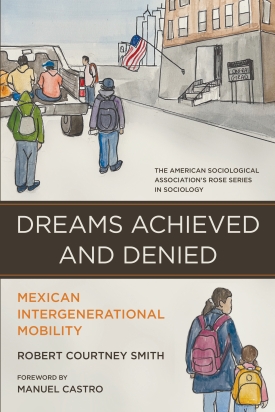
Dreams Achieved and Denied
Mexican Intergenerational Mobility
Publication Date
6 in. × 9 in.
306 pages
ISBN
978-0-87154-941-9
About This Book
“In this sequel to Mexican New York, Robert C. Smith solidifies his reputation as an intimate interpreter of social change over the life course. Dreams Achieved and Denied tells a subtle story about the upward mobility of children of Mexican immigrants striving to keep their side of the immigrant family bargain. This is a must-read to understand the experiences of the largest immigrant group in the United States.”
—David FitzGerald, Gildred Chair in U.S.-Mexican Relations and professor of sociology, University of California, San Diego
“The culmination of a two-decade study of immigrant youngsters, Dreams Achieved and Denied exemplifies the power of research that truly matters. With rigor and passion, Robert C. Smith captures experiences deeply significant to policymakers and to all who care about the multifaceted American journey.”
—Patricia Fernández-Kelly, professor of sociology, Princeton University
“A valuable contribution to contemporary debates of social mobility in the United States, Dreams Achieved and Denied shows in great detail the mechanisms that promote upward mobility and those that tragically curtail it. Based on an impressive longitudinal study, this remarkable book offers a worm’s-eye view into the experiences of adult children of Mexican immigrants pursuing their dreams in New York City. Persuasively argued and rigorously researched, this book is a timely and socially important work that deserves a wide readership.”
—Roberto G. Gonzales, Richard Perry University Professor of Sociology and Education, University of Pennsylvania
U.S.-born Mexicans in New York City have achieved perhaps the biggest single jump in mobility in American immigration history. In 2020, 42 percent of second-generation U.S.-born Mexican men and 49 percent of U.S.-born Mexican women in the city had graduated from college–versus a 13-14-percent second-generation college graduation rate for most other places in recent decades. How did this happen? In Dreams Achieved and Denied, sociologist Robert Courtney Smith (Graduate Center, City University of New York) examines the laws, policies, and individual and family practices that promoted–and inhibited–their social mobility.
For over twenty years, Smith followed the lives and mobility of nearly one hundred children of Mexican immigrants in New York City. Immigrant-inclusive and mobility-promoting measures here include enabling undocumented people to attend public colleges at in-state tuition rates and the city’s subway and school choice systems, which enabled students to attend better schools or take opportunities outside their neighborhoods.
Smith finds that keeping the immigrant bargain – whereby children of immigrants redeem their parents’ sacrifice by doing well in school, helping their parents and siblings, and becoming “good” people (in their parents’ words) – helped them achieve better adult outcomes and lives. Having mentors, picking academically strong schools and friends, and using second chance mechanisms also promoted mobility. However, lacking legal status blocked mobility, by preventing others from benefiting from these same mobility-promoting policies.
Dreams Achieved and Denied deeply analyzes the historic upward mobility of U.S.-born Mexicans in New York City.
ROBERT COURTNEY SMITH is a professor of sociology, immigration studies and public affairs at the CUNY Graduate Center
RSF Journal
View Book Series
Sign Up For Our Mailing List
Apply For Funding
Books
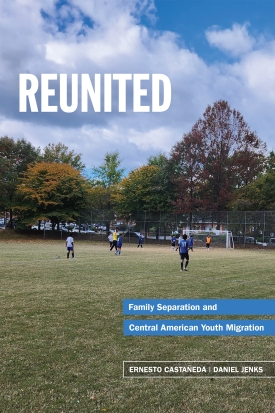
Reunited
Family Separation and Central American Youth Migration
Publication Date
6 in. × 9 in.
312 pages
ISBN
978-0-87154-499-5
About This Book
“Timely, meticulously researched and argued, Reunited deftly weaves the voices of Central American youth migrants into cutting-edge scholarly arguments to produce a compelling account that is inspiring, humane, and powerful. Essential reading for scholars, students, policymakers, and anyone interested in understanding the so-called root causes of Central American migration.”
—CECILIA MENJÍVAR, Dorothy L. Meier Chair in Social Equities and professor of sociology, University of California, Los Angeles
“Reunited captures the full complexity of contemporary Central American migration to the United States, explaining both the structural and historical forces propelling it and the ways in which families are surviving in their midst. This important book humanizes one of the most politically and morally challenging issues of our time.”
—LEAH C. SCHMALZBAUER, Karen and Brian Conway ‘80, P’18 Presidential Teaching Professor of American Studies and Sociology, Amherst College
“Reunited is an essential account of the nefarious effects of inhumane U.S. immigration policy that separates Central American children from their immigrant parents. Ernesto Castañeda and Daniel Jenks offer a nuanced and compelling portrayal of the enduring toll of these separations on child well-being and family ties, as well as the challenges and emotional labor involved in ‘picking up the pieces’ once children migrate to the United States to reunite with their parents, while also suggesting reforms that would aid their integration in U.S. society.”
—CHIARA GALLI, assistant professor, Department of Comparative Human Development, University of Chicago
Over the last dozen years, an increasing number of children from El Salvador, Honduras, and Guatemala began arriving without parents at the U.S.-Mexico border. In many cases, the parents had left for the United States years earlier. In Reunited sociologists Ernesto Castañeda and Daniel Jenks explain the reasons for Central American youth migration, describe the journey, and document how minors experienced separation from their families and their subsequent reunification.
In interviews with migrant youth, their sponsors, and social services practitioners in and around Washington, D.C., Castañeda and Jenks find that these minors migrate on their own for three main reasons: gang violence, lack of educational and economic opportunity, and a longing for family reunification. The authors note that youth who feel comfortable leaving and have feelings of belonging upon arrival integrate quickly and easily while those who experience trauma in their home countries and on their way to the United States face more challenges.
Castañeda and Jenks recount these young migrants’ journey to the U.S. border, detailing the difficulties passing through Mexico, their encounters with U.S. Customs and Border Protection officials, and staying in shelters while their sponsorship, placement, and departure are arranged. The authors also describe the tensions the youth face when they reunite with family members they may view as strangers. Despite their biological, emotional, and financial bonds to these relatives, the youth must learn how to relate to new authority figures and decide whether or how to follow their rules.
The experience of migrating can have a lasting effect on the mental health of young migrants. Although Castañeda and Jenks find that Central American youths’ mental health improves after migrating to the United States, they remain at risk of further problems. They are likely to have lived through traumatizing experiences that inhibit their integration. Difficulty integrating, in turn, creates new stressors that exacerbate PTSD, depression, and anxiety. Consequently, schools and social service organizations are crucial, the authors argue, for enhancing youth migrants’ sense of belonging and their integration into their new communities. Bilingual programs, Spanish-speaking PTA groups, message boards, mentoring of immigrant children, and after-school programs for members of reunited families are all helpful in supporting immigrant youth as they learn English, finish high school, apply to college, and find jobs.
Offering a complex exploration of youth migration and family reunification, Reunited provides a moving account of how young Central American migrants make the journey north and ultimately reintegrate with their families in the United States.
ERNESTO CASTAÑEDA is director of the Center for Latin American and Latino Studies at American University.
DANIEL JENKS is a doctoral student at the University of Pennsylvania.
RSF Journal
View Book Series
Sign Up For Our Mailing List
Apply For Funding
Books
Structured Luck
Downstream Effects of the U.S. Diversity Visa Program
Publication Date
6 in. × 9 in.
236 pages
ISBN
978-0-87154-562-6
About This Book
“In Structured Luck, Onoso Imoagene gives us an unparalleled look into the U.S. Diversity Visa Program, revealing its far-reaching effects on the life trajectories of migrants and its role as a catalyst of the migration industry in countries of origin. Through rich interviews and careful institutional analysis in the United States, Nigeria, and Ghana, she offers us a critical assessment of the program’s reputation as a windfall lottery and shows us that luck, in this case, is painstakingly made through strategic responses to policy constraints.”
Natasha Iskander, James Weldon Johnson Professor of Urban Planning and Public Service, New York University
The Diversity Immigrant Visa Program is a lottery that awards winners from underrepresented countries the chance to apply for legal permanent residence in the United States. Most lottery winners think of themselves as lucky, viewing the win as an opportunity to pursue better lives for themselves and their families. In Structured Luck, sociologist Onoso Imoagene uses immigrants’ stories to show how the program’s design often leads to their exploitation in their origin countries, the interruption of their education, and reduced potential once they are in the United States.
Combining ethnographic observation in Africa and interviews with over one hundred immigrants from Ghana and Nigeria, Imoagene demonstrates that the visa program is a process of “structured luck,” from how people hear about the lottery, who registers for it, and who participates in it to the application requirements for the visa. In Ghana and Nigeria, people often learn about the lottery through friends, colleagues, or relatives who persuade them to enter for the perceived benefits of receiving a visa: opportunities for upward mobility, permanent legal status, and the ability to bring along family members. Though anyone can enter the lottery, not everyone who wins obtains a visa. The visa application process requires proof of a high school diploma or artisan skills, a medical exam, a criminal background check, an interview with U.S. consular officers, and payment of fees. Such requirements have led to the growth of visa entrepreneurs, who often charge exorbitant fees to steer immigrants through the process. Visa recipients who were on track to obtain university degrees at home often leave in the middle of their studies for the United States but struggle to continue their education due to high U.S. tuition costs. And though their legal status allows them to escape the demoralizing situations that face the undocumented, these immigrants lack the social support that the government sometimes provides for refugees and other migrants. Ultimately, Imoagene notes, the real winner of the visa lottery is not the immigrants themselves but the United States, which benefits from their relatively higher levels of education. Consequently, she argues, the U.S. must do more to minimize the visa program’s negative consequences.
Structured Luck illuminates the trauma, resilience, and determination of immigrants who come to the United States through the Diversity Visa Program and calls for the United States to develop policies that will better integrate them into society.
ONOSO IMOAGENE is associate professor of social research and public policy at New York University, Abu Dhabi.
RSF Journal
View Book Series
Sign Up For Our Mailing List
Apply For Funding
Books
When Care Is Conditional
Immigrants and the U.S. Safety Net
Publication Date
6 in. × 9 in.
212 pages
ISBN
978-0-87154-474-2
About This Book
"When Care Is Conditional brings together trenchant analysis and deeply moving humanity to understand the barriers faced by Latinx immigrants and their strategies for well-being as they negotiate conditional care in the United States. Through nuanced research and the voices of ordinary people, Dani Carrillo shows how immigration policy, residential location, and, especially, gender shape who can get help, how much, and under what conditions. Beautifully written, this book is a must-read for scholars, policymakers, and philanthropists dedicated to advancing everyone’s well-being."
—IRENE BLOEMRAAD, Class of 1951 Professor of Sociology, University of California, Berkeley
"When Care Is Conditional is a critical reassessment of the failure of social protection in the United States through the lens of low-wage immigrants. Dani Carrillo offers a bottom-up examination of the patchwork of safety net institutions and the perennial difficulty of accessing them. In doing so, she disrupts the idyllic view of the suburbs and reveals how immigrant networks and civil society try to help fill in the gap. More than just a structural accounting, this book centers the importance of cultural narratives and stigmas in reinforcing 'conditional care' and in doing so helps us understand the dynamics of exclusion for all vulnerable racialized communities."
—SHANNON GLEESON, Edmund Ezra Day Professor and chair, Department of Labor Relations, Law, and History, Cornell University
"Dani Carrillo deftly weaves policy history with personal narratives of Latinx immigrants to lay bare how restrictive immigration policies undermine the well-being of families that too often are living in the shadows of our communities and society. The book comes at a critical time in our national, state, and local dialogue around immigration and social policy. When Care Is Conditional is critical reading for scholars, policymakers, and practitioners alike."
—SCOTT W. ALLARD, Associate Dean for Research and Engagement and Daniel J. Evans Endowed Professor of Social Policy, Evans School of Public Policy and Governance, University of Washington
From its inception, the public safety net in the United States has excluded many people because of their race, gendered roles, or other factors. As a result, they must prove their moral worthiness to get resources for themselves and their families. In When Care Is Conditional, sociologist Dani Carrillo reveals the ramifications of this conditional safety net by focusing on one particularly vulnerable population: undocumented immigrants.
Through in-depth interviews with Latinx immigrants in northern California, Carrillo examines three circumstances—place, gender, and immigration status—that intersect to influence an individual’s access to health care, food assistance, and other benefits. She demonstrates that place of residence affects undocumented immigrants’ ability to get care since more services are available in urban areas, where many immigrants cannot afford to live, than suburban areas, where public transportation is limited. She also shows that while both men and women who are undocumented have difficulty obtaining care, men often confront more challenges. Undocumented women who are pregnant or mothers are eligible for some government safety net programs and rely on informal coethnic networks or a “guiding figure”—a relative, friend, neighbor, or coworker—who explains how to get care and makes them feel confident in accessing it. Most undocumented men, in contrast, are not eligible for public programs except in a medical emergency and often lack someone to guide them directly to care. Men sometimes steer one another to jobs through worker centers—where they may learn about various services and take advantage of those that increase their employability, like English or computer classes—but a culture of masculinity leads them to downplay medical problems and seek health care only in a crisis.
As undocumented immigrants navigate this exclusionary system, Carrillo finds that they resist the rhetoric stigmatizing them as lawbreakers. Dismissing the importance of “papers” and highlighting their work ethic, they question the fairness of U.S. immigration policies and challenge ideas about who deserves care.
Carrillo offers concrete recommendations, such as improving labor conditions and reexamining benefit eligibility, to increase access to care for not only undocumented immigrants but also people who have been excluded because of their race, criminal record, gender identity, sexual orientation, or disability. She argues that working with and across populations creates a powerful form of solidarity in advocating for inclusive care.
When Care Is Conditional provides compelling insights into how safety net and immigration policies intersect to affect people’s everyday lives and calls for a cultural shift so that the United States can provide unconditional care for all.
DANI CARRILLO is a senior researcher and civic technologist.
RSF Journal
View Book Series
Sign Up For Our Mailing List
Apply For Funding
Books
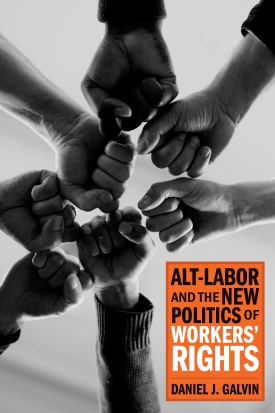
Alt-Labor and the New Politics of Workers’ Rights
Publication Date
6 in. × 9 in.
ISBN
978-0-87154-002-7
About This Book
Selected as a 2024 Noteworthy Book in Industrial Relations and Labor Economics Princeton University Industrial Relations Section
"Daniel Galvin offers readers a superbly incisive, empirically eclectic, narratively compelling analysis of the contemporary politics of workers’ rights. Alt-Labor and the New Politics of Workers’ Rights perceptively charts and contextualizes striking shifts in the American political economy that have profoundly altered the experiences of low-wage workers. What’s more is that Galvin brilliantly centers the agency and power of marginalized workers and the organizations that advance their interests in the face of significant and ongoing structural challenges. Scholars of American politics, students, organizers, and anyone who cares about the fate of American workers will find insight and inspiration in Galvin’s skillful description and analyses of the politics of alt-labor."
—JAMILA MICHENER, associate professor of government and public policy and senior associate dean of public engagement, Brooks School of Public Policy, Cornell University
"The relentless decline of U.S. unions in recent decades is both a cause and a consequence of the devolution of the bedrock New Deal–era labor law that institutionalized collective bargaining rights for broad swaths of the nation’s labor force. In this lucid, deeply researched study, Daniel Galvin analyzes the rapid expansion of state and local laws governing minimum wages, paid leave, and other conditions of employment, and exposes the challenges that shift presents for the ‘alt-labor’ groups that are increasingly leading the fight for workers’ rights."
—RUTH MILKMAN, Distinguished Professor of Sociology, School of Labor and Urban Studies and the Graduate Center, City University of New York
"Dan Galvin’s book adds exponentially to the scholarship on worker centers and ‘alt-labor’ and so much more. It masterfully traces the shift from labor law to employment law, the consequential turn toward policy and enforcement at the state and local levels, and the strategic capacity worker centers have had to build to carry it out. It thoughtfully engages the puzzle of how organizations with so little have managed to accomplish so much. Alt-Labor and the New Politics of Workers’ Rights is deeply researched, theoretically rich, full of powerful insight, and beautifully written to boot."
—JANICE FINE, professor, Rutgers School of Management and Labor Relations and Workplace Justice Lab@RU
Over the last half century, two major developments have transformed the nature of workers’ rights and altered the pathways available to low-wage workers to combat their exploitation. First, while national labor law, which regulates unionization and collective bargaining, has grown increasingly ineffective, employment laws establishing minimal workplace standards have proliferated at the state and local levels. Second, as labor unions have declined, a diversity of small, under-resourced nonprofit "alt-labor" groups have emerged in locations across the United States to organize and support marginalized workers. In Alt-Labor and the New Politics of Workers’ Rights, political scientist Daniel J. Galvin draws on rich data and extensive interviews to examine the links between these developments. With nuance and insight, Galvin explains how alt-labor groups are finding creative ways to help their members while navigating the many organizational challenges and structural constraints they face in this new context.
Alt-labor groups have long offered their members services and organizing opportunities to contest their unfair treatment on the job. But many groups have grown frustrated by the limited impact of these traditional strategies and have turned to public policy to scale up their work. They have successfully led campaigns to combat wage theft, raise the minimum wage, improve working conditions, strengthen immigrants’ rights, and more. These successes present something of a puzzle: relative to their larger, wealthier, and better-connected opponents, alt-labor groups are small, poor, and weak. Their members are primarily low-wage immigrant workers and workers of color who are often socially, economically, and politically marginalized. With few exceptions, the groups lack large dues-paying memberships and are dependent on philanthropic foundations and other unpredictable sources of funding. How, given their myriad challenges, have alt-labor groups managed to make gains for their members?
Galvin reveals that alt-labor groups are leveraging their deep roots in local communities, their unique position in the labor movement, and the flexibility of their organizational forms to build their collective power and extend their reach. A growing number of groups have also become more politically engaged and have set out to alter their political environments by cultivating more engaged citizens, influencing candidate selection processes, and expanding government capacities. These efforts seek to enhance alt-labor groups’ probabilities of success in the near term while incrementally shifting the balance of power over the long term.
Alt-Labor and the New Politics of Workers’ Rights comprehensively details alt-labor’s turn to policy and politics, provides compelling insights into the dilemmas the groups now face, and illuminates how their efforts have both invigorated and complicated the American labor movement.
DANIEL J. GALVIN is professor of political science at Northwestern University and faculty fellow at the Institute for Policy Research.
Awards
2024 Noteworthy Book in Industrial Relations and Labor Economics
Princeton University Industrial Relations Section
RSF Journal
View Book Series
Sign Up For Our Mailing List
Apply For Funding
There is a rich tradition of legislators protesting within Congress. Despite the prevalence of this behavior, protests by legislators remain understudied. Political scientists LaGina Gause and Jennifer Garcia will examine which legislators protest, their motivations for protesting, and the political consequences of protesting. They will analyze data from the Legislator Misconduct Database, newspaper coverage of legislator protests, and statements in the Congressional Record for their study.
This grant is co-funded with the Carnegie Corporation.
Universities have tried to increase socioeconomic diversity through financial aid interventions, with some success. However, we know little about the combined effects of financial aid offers, options students consider, and how they assess their alternatives on the college decisions of high-achieving, low-income students. Sociologists Stefanie DeLuca and Elizabeth Burland will investigate how high-achieving, low-income students make postsecondary education decisions.
Books
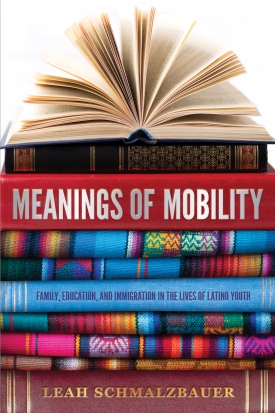
Meanings of Mobility
Family, Education, and Immigration in the Lives of Latino Youth
Publication Date
6 in. × 9 in.
244 pages
ISBN
978-0-87154-800-9
About This Book
American Educational Studies Association Critic's Choice Book Award Winner
"In Meanings of Mobility, Leah Schmalzbauer carefully and in precise detail documents the costs—psychic and embodied—of children of immigrants’ class mobility through elite educational pathways. Driven by love and a desire to make good on parents’ sacrifices, poor and working-class students of color understand that academic excellence only leads to financial success when they can proficiently enact the cultural norms of privileged whiteness. Readers get to witness through these students’ own accounts how they make sense of the tough choices an elite college education presents: the spectrum runs from returning to community to contribute to social justice to leaning into racial capitalism to acquire wealth."
—LEISY J. ABREGO, professor and chair, Chicana/o and Central American Studies, UCLA
"A compassionate and detailed exploration of how young adult children of Latin American immigrants navigate a privileged college environment. Leah Schmalzbauer follows the stories of a new generation of young adults who attend a top liberal arts college, seeking an education in elite spaces while balancing family obligations and the stress of the COVID pandemic. Highly informative and deeply moving, Meanings of Mobility sheds light on how higher education works for a select group, and what needs to change to provide such access to others."
—JOANNA DREBY, professor of sociology, University at Albany
"With penetrating prose, Leah Schmalzbauer provides an intimate portrait of how poverty shapes undergraduate life at even the wealthiest institutions of higher education. Moreover, she forces us to grapple with the simple yet overlooked fact that students do not come to college alone; families come to college. Through revealing interviews with students and their families, Meanings of Mobility outlines the pitfalls and promises of pursuing higher education for the most vulnerable members of society. And with care and attention born of a dedicated scholar, Schmalzbauer provides insights into what can be done to make our institutions not just accessible, but inclusive."
—ANTHONY A. JACK, assistant professor of education, Harvard University
Over the past twenty years, elite colleges and universities enacted policies that reshaped the racial and class composition of their campuses, and over the past decade, Latinos’ college attendance notably increased. While discussions on educational mobility often focus on its perceived benefits – that it will ultimately lead to social and economic mobility – less attention is paid to the process of “making it” and the challenges low-income youth experience when navigating these elite spaces. In Meanings of Mobility, sociologist Leah C. Schmalzbauer explores the experiences of low-income Latino youth attending highly selective, elite colleges.
To better understand these experiences, Schmalzbauer draws on interviews with 60 low-income Latino youth who graduated or were set to graduate from Amherst College, one of the most selective private colleges in the United States, as well as their parents and siblings. The vast majority of these students were the first in their immigrant families to go to college in the U.S. She finds that while most of the students believed attending Amherst provided them with previously unimaginable opportunities, adjusting to life on campus came with significant challenges. Many of the students Schmalzbauer spoke with had difficulties adapting to the cultural norms at Amherst as well as with relating to their non-Latino, non-low-income peers. The challenges these students faced were not limited to life on campus. As they attempted to adapt to Amherst, many felt distanced from the family and friends they left behind who could not understand the new challenges they faced.
The students credit their elite education for access to extraordinary educational and employment opportunities. However, their experiences while in college and afterward reveal that the relationship between educational and social mobility is much more complicated and less secure than popular conversations about the “American Dream” suggest. Many students found that their educational attainment was not enough to erase the core challenges of growing up in a marginalized immigrant family: many were still poor, faced racism, and those who were undocumented or had undocumented family members still feared deportation. The challenges they faced were only intensified by the COVID-19 pandemic.
Schmalzbauer suggests ways institutions of higher education can better support low-income Latino students and lower the emotional price of educational mobility, including the creation of immigration offices on campus to provide programming and support for undocumented students and their families. She recommends educating staff to better understand the centrality of family for these students and the challenges they face, as well as educating more privileged students about inequality and the life experiences of their marginalized peers.
Meanings of Mobility provides compelling insights into the difficulties faced and the resilience demonstrated by low-income Latinos pursuing educational and social mobility.
LEAH C. SCHMALZBAUER is Karen and Brian Conway ’80, P’18 Presidential Teaching Professor of American Studies and Sociology, Amherst College