Education is often seen as an equalizer. But not everyone goes to college and those who do so enter a tiered system of schools and exit into a labor market that values more than educational credentials. Individuals with a bachelor's degree earn nearly $22,000 more per year and are less than half as likely to be unemployed than individuals with just a high school diploma. However, racial inequality is prevalent for college graduates, as black men make approximately 75% of the wages of white men and black women make approximately 90% of the wages of white women.

Books
Fear, Anxiety, and National Identity
Immigration and Belonging in North America and Western Europe
About This Book
Fifty years of large-scale immigration has brought significant ethnic, racial, and religious diversity to North America and Western Europe, but has also prompted hostile backlashes. In Fear, Anxiety, and National Identity, a distinguished multidisciplinary group of scholars examine whether and how immigrants and their offspring have been included in the prevailing national identity in the societies where they now live and to what extent they remain perpetual foreigners in the eyes of the long-established native-born. What specific social forces in each country account for the barriers immigrants and their children face, and how do anxieties about immigrant integration and national identity differ on the two sides of the Atlantic?
Western European countries such as Germany, the Netherlands, and the United Kingdom have witnessed a significant increase in Muslim immigrants, which has given rise to nativist groups that question their belonging. Contributors Thomas Faist and Christian Ulbricht discuss how German politicians have implicitly compared the purported “backward” values of Muslim immigrants with the German idea of Leitkultur, or a society that values civil liberties and human rights, reinforcing the symbolic exclusion of Muslim immigrants. Similarly, Marieke Slootman and Jan Willem Duyvendak find that in the Netherlands, the conception of citizenship has shifted to focus less on political rights and duties and more on cultural norms and values. In this context, Turkish and Moroccan Muslim immigrants face increasing pressure to adopt “Dutch” culture, yet are simultaneously portrayed as having regressive views on gender and sexuality that make them unable to assimilate.
Religion is less of a barrier to immigrants’ inclusion in the United States, where instead undocumented status drives much of the political and social marginalization of immigrants. As Mary C. Waters and Philip Kasinitz note, undocumented immigrants in the United States. are ineligible for the services and freedoms that citizens take for granted and often live in fear of detention and deportation. Yet, as Irene Bloemraad points out, Americans’ conception of national identity expanded to be more inclusive of immigrants and their children with political mobilization and changes in law, institutions, and culture in the wake of the Civil Rights Movement. Canadians’ views also dramatically expanded in recent decades, with multiculturalism now an important part of their national identity, in contrast to Europeans’ fear that diversity undermines national solidarity.
With immigration to North America and Western Europe a continuing reality, each region will have to confront anti-immigrant sentiments that create barriers for and threaten the inclusion of newcomers. Fear, Anxiety, and National Identity investigates the multifaceted connections among immigration, belonging, and citizenship, and provides new ways of thinking about national identity.
NANCY FONER is Distinguished Professor of Sociology at Hunter College and the Graduate Center of the City University of New York.
PATRICK SIMON is Director of Research at the Institut national d’études démographiques (National Institute for Demographic Studies).
CONTRIBUTORS: Irene Bloemraad, Jan Willem Duyvendak, Thomas Faist, Nancy Foner, Gary Gerstle, Philip Kasinitz, Nasar Meer, Tariq Modood, Deborah J. Schildkraut, Patrick Simon, Marieke Slootman, Varun Uberoi, Christian Ulbricht, Mary C. Waters
FM
Front Matter

Introduction
Fear, Anxiety, and National Identity: Immigration and Belonging in North America and Western Europe
Fear, Anxiety, and National Identity: Immigration and Belonging in North America and Western Europe
Nancy Foner and Patrick Simon
1
The Contradictory Character of American Nationality: A Historical Perspective
Gary Gerstle
2
Reimagining the Nation in a World of Migration: Legitimacy, Political Claims-Making, and Membership in Comparative Perspective
Irene Bloemraad
3
Does Becoming American Create a Better American? How Identity Attachments and Perceptions of Discrimination Affect Trust and Obligation
Deborah J. Schildkraut
4
The War on Crime and the War on Immigrants: Racial and Legal Exclusion in the Twenty-First-Century United States
Mary C. Waters and Philip Kasinitz
5
Feeling Dutch: The Culturalization and Emotionalization of Citizenship and Second-Generation Belonging in the Netherlands
Marieke Slootman and Jan Willem Duyvendak
7
Constituting National Identity Through Transnationality: Categorizations of Inequalities in German Integration Debates
Thomas Faist and Christian Ulbricht
RSF Journal
View Book Series
Sign Up For Our Mailing List
Apply For Funding
Books
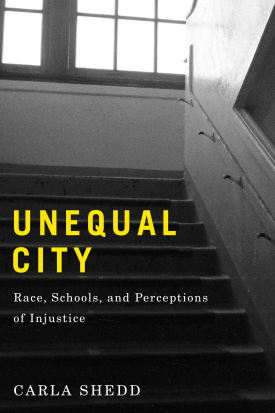
Unequal City
Race, Schools, and Perceptions of Injustice
About This Book
Winner of the 2016 C. Wright Mills Award from the Society for the Study of Social Problems
Winner of the 2016 Distinguished Contribution to Scholarship Book Award Presented by the American Sociological Association's Section on Race, Gender, and Class
Honorable Mention, 2017 Outstanding Book Award from the Inequality, Poverty, and Mobility Section of the American Sociological Association
“Unequal City is a revelatory study that shows and tells how inner city young people struggle to acquire a decent education. It powerfully describes the everyday challenges these students face—illuminating how they navigate school and their local communities and the way they confront what too often holds them back. This book should be required reading for anyone who wants to understand the relationship between inequality and urban education.”
—Elijah Anderson, William K. Lanman, Jr. Professor of Sociology, Yale University
“Carla Shedd has written an important book about how race and place shape the experiences of young people in Chicago. Unequal City stands out for many reasons, but most importantly for its empirical richness. Shedd has amassed amazing data and uses both quantitative and qualitative methods to amplify the voices of young people. If you want to understand what young people think about such topics as the police, schools, and in-equality, you should read this book. It is a timely and insightful book.”
–Cathy Cohen, David and Mary Winton Green Professor of Political Science, University of Chicago
Chicago has long struggled with racial residential segregation, high rates of poverty, and deepening class stratification, and it can be a challenging place for adolescents to grow up. Unequal City examines the ways in which Chicago’s most vulnerable residents navigate their neighborhoods, life opportunities, and encounters with the law. In this pioneering analysis of the intersection of race, place, and opportunity, sociologist and criminal justice expert Carla Shedd illuminates how schools either reinforce or ameliorate the social inequalities that shape the worlds of these adolescents.
Shedd draws from an array of data and in-depth interviews with Chicago youth to offer new insight into this understudied group. Focusing on four public high schools with differing student bodies, Shedd reveals how the predominantly low-income African American students at one school encounter obstacles their more affluent, white counterparts on the other side of the city do not face. Teens often travel long distances to attend school which, due to Chicago’s segregated and highly unequal neighborhoods, can involve crossing class, race, and gang lines. As Shedd explains, the disadvantaged teens who traverse these boundaries daily develop a keen “perception of injustice,” or the recognition that their economic and educational opportunities are restricted by their place in the social hierarchy.
Adolescents’ worldviews are also influenced by encounters with law enforcement while traveling to school and during school hours. Shedd tracks the rise of metal detectors, surveillance cameras, and pat-downs at certain Chicago schools. Along with police procedures like stop-and-frisk, these prison-like practices lead to distrust of authority and feelings of powerlessness among the adolescents who experience mistreatment either firsthand or vicariously. Shedd finds that the racial composition of the student body profoundly shapes students’ perceptions of injustice. The more diverse a school is, the more likely its students of color will recognize whether they are subject to discriminatory treatment. By contrast, African American and Hispanic youth whose schools and neighborhoods are both highly segregated and highly policed are less likely to understand their individual and group disadvantage due to their lack of exposure to youth of differing backgrounds.
CARLA SHEDD is assistant professor of sociology and African American studies at Columbia University.
RSF Journal
View Book Series
Sign Up For Our Mailing List
Apply For Funding

Books
Race, Class, and Affirmative Action
About This Book
“If you thought class-based affirmative action is the answer, think again. This provocative book, based on a rigorous study of current and historical trends in the United States and internationally, raises serious questions and challenges for both race- and class-based affirmative action policies. Bringing a timely and compelling perspective to the debate, Sigal Alon convincingly demonstrates what the most equitable admission solutions are for today.”
–Barbara Schneider, John A. Hannah University Distinguished Professor, Michigan State University
“Race, Class, and Affirmative Action is an important book, which adopts an unusual and valuable international perspective, focusing on Israel and the United States. It is remarkably balanced and free of the abundance of cant too often found in American discussions of affirmative action. Equally noteworthy is Sigal Alon’s emphasis on evidence-based findings and her frank recognition that there is no ‘silver bullet.’ Trade-offs are unavoidable—between achieving significant representation of racial minorities in the most elite universities and achieving a broader diversity at affordable cost. Neither class-based affirmative action (in any number of guises) nor a well-crafted race-sensitive policy is, in and of itself, a cure-all. Alon is to be commended for her practical, realis - tic, and hard-headed approach to a topic that needs precisely those qualities.”
–William G. Bowen, president emeritus, The Andrew W. Mellon Foundation
“In her new book, Race, Class, and Affirmative Action, Sigal Alon offers a powerful comparative analysis which opens new approaches to assess the structural determinants of disadvantage, yielding new strategies for productive policy development. Her insights open our thinking for forward movement in the United States, but also for other countries such as Brazil, India, and South Africa which are struggling with similar challenges.”
–Ann Marcus, professor and director, The Steinhardt Institute for Higher Education Policy, New York University
No issue in American higher education is more contentious than that of race-based affirmative action. In light of the ongoing debate around the topic and recent Supreme Court rulings, affirmative action policy may be facing further changes. As an alternative to race-based affirmative action, some analysts suggest affirmative action policies based on class. In Race, Class, and Affirmative Action, sociologist Sigal Alon studies the race-based affirmative action policies in the United States and the class-based affirmative action policies in Israel. Alon evaluates how these different policies foster campus diversity and socioeconomic mobility by comparing the Israeli policy with a simulated model of race-based affirmative action and the U.S. policy with a simulated model of class-based affirmative action.
Alon finds that affirmative action at elite institutions in both countries is a key vehicle of mobility for disenfranchised students, whether they are racial and ethnic minorities or socioeconomically disadvantaged. Affirmative action improves their academic success and graduation rates and leads to better labor market outcomes. The beneficiaries of affirmative action in both countries thrive at elite colleges and in selective fields of study. As Alon demonstrates, they would not be better off attending less selective colleges instead.
Alon finds that Israel’s class-based affirmative action programs have provided much-needed entry slots at the elite universities to students from the geographic periphery, from high-poverty high schools, and from poor families. However, this approach has not generated as much ethnic diversity as a race-based policy would. By contrast, affirmative action policies in the United States have fostered racial and ethnic diversity at a level that cannot be matched with class-based policies. Yet, class-based policies would do a better job at boosting the socioeconomic diversity at these bastions of privilege. The findings from both countries suggest that neither race-based nor class-based models by themselves can generate broad diversity. According to Alon, the best route for promoting both racial and socioeconomic diversity is to embed the consideration of race within class-based affirmative action. Such a hybrid model would maximize the mobility benefits for both socioeconomically disadvantaged and minority students.
Race, Class, and Affirmative Action moves past political talking points to offer an innovative, evidence-based perspective on the merits and feasibility of different designs of affirmative action.
SIGAL ALON is an associate professor in the Department of Sociology and Anthropology at Tel-Aviv University.
RSF Journal
View Book Series
Sign Up For Our Mailing List
Apply For Funding
Books
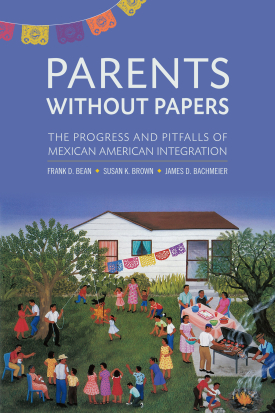
Parents Without Papers
The Progress and Pitfalls of Mexican American Integration
About This Book
Winner of the 2016 Otis Dudley Duncan Award for Outstanding Scholarship in Social Demography
Honorable Mention, 2016 Thomas and Znaniecki Award from the International Migration Section of the American Sociological Association
“Parents Without Papers exposes the effects of legal status on immigrants’ life chances, which persist over generations. Through carefully collected data, meticulous analysis, and theoretical acuity, the authors offer a sobering account of the injurious consequences of an undocumented status on long-term patterns of immigrant integration, making a unique and significant contribution to immigration scholarship. Their findings also have much to offer for policy, making a compelling case for the legalization of undocumented immigrants to ensure a better future for the immigrants themselves and for the country as a whole.”
—CECILIA MENJÍVAR, Cowden Distinguished Professor, Arizona State University
“Parents Without Papers is a major contribution to our understanding of immigrant incorporation and Mexican American mobility. Conceptually, theoretically, and empirically it shows the multifaceted impact that ‘illegal’ status has on Mexican American communities including immigrants and the native born second and third generations. The volume will become essential to scholars and policy makers seriously concerned about immigrant policy. “
—RODOLFO O. DE LA GARZA, Eaton Professor of Administrative Law and Municipal Science, Columbia University
For several decades, Mexican immigrants in the United States have outnumbered those from any other country. Though the economy increasingly needs their labor, many remain unauthorized. In Parents Without Papers, immigration scholars Frank D. Bean, Susan K. Brown, and James D. Bachmeier document the extent to which the outsider status of these newcomers inflicts multiple hardships on their children and grandchildren. Parents Without Papers provides both a general conceptualization of immigrant integration and an in-depth examination of the Mexican American case. The authors draw upon unique retrospective data to shed light on three generations of integration. They show in particular that the “membership exclusion” experienced by unauthorized Mexican immigrants—that is, their fear of deportation, lack of civil rights, and poor access to good jobs—hinders the education of their children, even those who are U.S.-born. Moreover, they find that children are hampered not by the unauthorized entry of parents itself but rather by the long-term inability of parents, especially mothers, to acquire green cards. When unauthorized parents attain legal status, the disadvantages of the second generation begin to disappear. These second-generation men and women achieve schooling on par with those whose parents come legally. By the third generation, socioeconomic levels for women equal or surpass those of native white women. But men reach parity only through greater labor-force participation and longer working hours, results consistent with the idea that their integration is delayed by working-class imperatives to support their families rather than attend college. An innovative analysis of the transmission of advantage and disadvantage among Mexican Americans, Parents Without Papers presents a powerful case for immigration policy reforms that provide not only realistic levels of legal less-skilled migration but also attainable pathways to legalization. Such measures, combined with affordable access to college, are more important than ever for the integration of vulnerable Mexican immigrants and their descendants.
FRANK D. BEAN is Distinguished Professor of Sociology and Director of the Center for Research on International Migration at the University of California, Irvine.
SUSAN K. BROWN is associate professor of sociology at the University of California, Irvine.
JAMES D. BACHMEIER is assistant professor of sociology at Temple University.
RSF Journal
View Book Series
Sign Up For Our Mailing List
Apply For Funding
Labor market discrimination contributes to persistent gaps in employment between majority and minority racial and ethnic groups and increases racial inequality. Economic arguments suggest that employment discrimination wastes talent and reduces productivity, by lowering the quality of matches between applicants and jobs.
Increasing numbers of children are affected not only by living on the low end of the growing income and wealth divide, but also by a second disadvantage—their parents’ immigration status. An estimated 5.3 million children live with an unauthorized immigrant parent who lacks permission to live or work in the United States.
Emerging research on gene-by-environment interactions (GxE) has shown that gene expression is amplified or reduced in the presence of particular environments. Conversely, the effects of environments on individuals are influenced by the presence or absence of specific genetic susceptibilities. Given these findings, the integration of genetic data into large-scale multidisciplinary social surveys holds the potential to revolutionize our understanding of how social and biological forces interact to shape social and health inequalities over the life course.
Corporate elites enjoy a privileged place in the policymaking process as stewards of billions of dollars in economic assets; they also represent a source of tax revenues. As campaign finance laws have recently been interpreted by the Supreme Court, the influence of wealthy corporate donors may have increased.
Books
Social Science in Nursing
Applications for the Improvement of Patient Care
Publication Date
354 pages
About This Book
Social Science in Nursing was the product of a three year project examining the application of the social sciences to nursing, conducted at the Cornell University-New York Hospital School of Nursing.
FRANCES COOK MACGREGOR was visiting associate professor of social science at Cornell University-New York Hospital School of Nursing.