Search Fellows
Click on a Fellow below to view more information or create your own search.
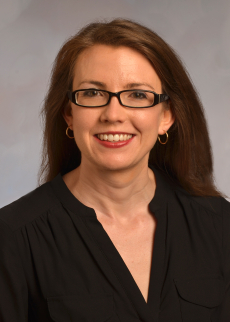
Jana Morgan
University of Tennessee
Visiting Scholar
2017 to 2018
Morgan will study how rising economic inequality has shaped the priorities of policymakers. She will explore the influence of wealthy voters on the congressional agenda and investigate why most politicians have not pursued initiatives designed to reduce inequality. She will also analyze a database of machine-readable congressional speeches and other sources to understand how monied interests have shaped legislators’ stances on pro-poor and pro-rich policies in the post-World War II period.
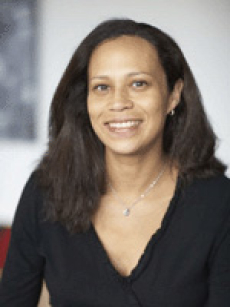
Ann Morning
New York University
Visiting Scholar
2014 to 2015
Morning (working with Marcello Maneri) will complete a book comparing the ways that Americans and Italians assess group differences such as race and nationality. She will look at how national conceptions of culture and biology shape individuals’ beliefs about what distinguish ethnic groups from one another. She finds that due to increasing non-white immigration to the U.S., Americans’ conceptions of racial difference are coming to resemble those held by Italians and other Western Europeans.
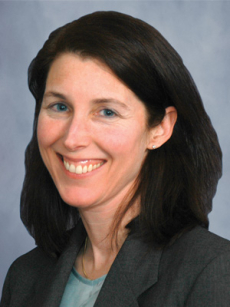
Arden Morris
University of Michigan
Visiting Scholar
2014 to 2015
Morris will complete a series of articles on the racial and socioeconomic barriers to cancer care in the U.S., focusing on the association between psychosocial and physiologic stress among colorectal cancer patients. She will describe the impact of clinical and social factors on patient-physician relationships, receipt of care, and levels of stress among these cancer patients.
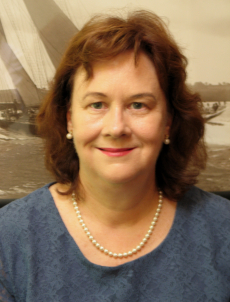
Rebecca Morton
New York University
Visiting Scholar
2007 to 2008
Rebecca Morton, Professor of Politics at New York University, will complete a book analyzing the significant variation in how election laws are administered across the nation and how this affects the U.S. political system. Her preliminary research shows that even if states have the same laws, the enforcement of those laws is often selective and influenced by partisan considerations.
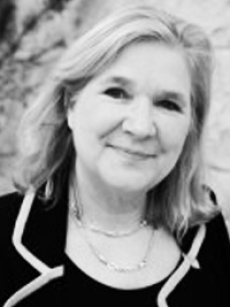
Chandra Muller
University of Texas at Austin
Visiting Scholar
2016 to 2017
Muller will examine how education and skills development influence midlife labor force participation among a racially and ethnically diverse group of workers. She will examine how high school and postsecondary education—from specific coursework to degree attainment and field of degree—contribute to labor force success and flexibility in midlife work. She will also investigate how the relationships between educational training and labor force success may differ for workers based on race, gender, and immigration status.
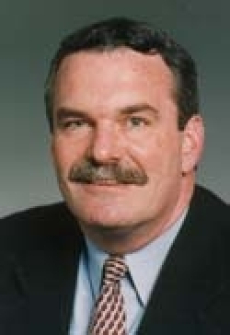
Edward Patrick Mulvey
University of Pittsburgh
Visiting Scholar
2012 to 2013
Mulvey will continue his work on the Pathways to Desistance study, which follows a large sample of juvenile offenders from adolescence to young adulthood. Using interviews with the offenders and their friends and family, this project compares the effects of sanctions and interventions in promoting positive changes among serious adolescent offenders.
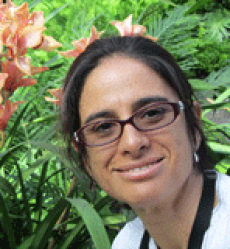
Maria Victoria Murillo
Columbia University
Visiting Scholar
2011 to 2012
Murillo will write a book exploring the impact of income inequality on voter expectations and the ability of political parties to respond equitably to rich and poor constituents. She argues that in democracies with high inequality, politicians are often torn between promoting policies that will serve the public good and responding to the narrower demands of particular groups. Murillo will utilize longitudinal data and in-depth interviews with elected politicians and political workers collected in Argentina, Peru, and Chile.
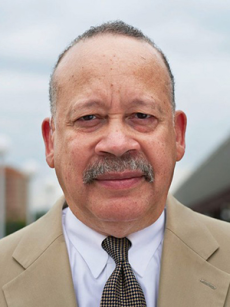
Samuel L. Myers, Jr.
University of Minnesota
Visiting Scholar
2021 to 2022
Myers will investigate the “Minnesota Paradox”--the fact that while Minnesota is often cited as one of the best places to live in America, it is one of the worst places for blacks to live. His research project will analyze the causes of racial gaps in social and economic outcomes in the state. Through a combination of historical documentation and illustrations from ten different areas of significant racial disparities, he will explore the relationship between the state’s progressive policies and racial gaps.
Daniel S. Nagin
Carnegie Mellon University
Visiting Scholar
2011 to 2012
Nagin will write a book in collaboration with Steven Durlauf, University of Wisconsin, that describes strategies for reforming the criminal justice system in ways that reduce incarceration rates and crime simultaneously. They argue that both imprisonment and crime can be reduced by implementing policies that reallocate resources from incarceration to policing, parole, and probation systems.
Jonathan Nagler
New York University
Visiting Scholar
2015 to 2016
Nagler will work on a book that examines how increases in economic inequality have affected voter turnout in congressional elections from 1972 through 2014. Using a variety of data sources not previously available, he will assess the ideologies of congressional candidates across many elections, and explore how turnout was affected by the ways in which voters from different income groups perceived those candidates' positions.
Sylvia Nasar
Columbia University
Visiting Scholar
2006 to 2007
Sylvia Nasar, John S. and James L. Knight Professor of Business Journalism at Columbia University, will spend the spring at the Foundation writing a book on the intersecting histories of key economic thinkers in the past 150 years. She will profile great economists, from Alfred Marshall to Amartya Sen, whose work helped shift the focus of economics from the study of the limited potential for growth to the problem of poverty amid plenty.
Constance Nathanson
Johns Hopkins University
Visiting Scholar
1998 to 1999
Constance A. Nathanson, professor in the department of population dynamics at the Johns Hopkins University School of Hygiene and Public Health, and director of the Hopkins Center on the Demography of Aging, will compare the development of public health policy in France, Britain, Canada, and the United States. Nathanson will analyze how public health risks are constructed, drawing into focus the role of social cleavage as perpetuated through race in the United States, language in Canada, and social class in Britain.
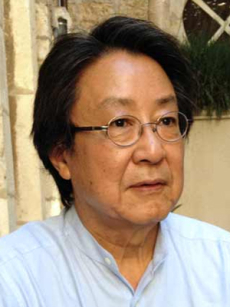
Victor Nee
Cornell University
Visiting Scholar
2015 to 2016
Nee will analyze data from a three-year research project on the emergence of a new tech industry in lower Manhattan following the Great Recession. He will investigate how the high level of immigrant involvement—both as tech workers and as entrepreneurs—has shaped the rapid expansion of this industry. Nee will also examine the ways in which political and economic institutions have aided the growth of the Manhattan tech economy.
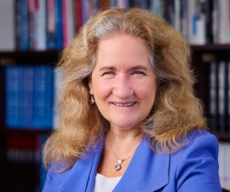
Katherine Newman
Columbia University
Visiting Scholar
1995 to 1996
Katherine S. Newman, professor of anthropology at Columbia University, and Carol B. Stack, professor, Graduate School of Education and Women's Studies, University of California, Berkeley, jointly worked on their project "Why Work?", an investigation of the role of minimum wage jobs in the survival of poverty-level families living in two major urban ghettos, New York City's Harlem and Oakland, California.
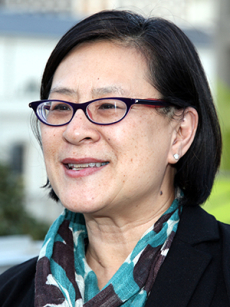
Mae Ngai
Columbia University
Visiting Scholar
2020 to 2021
Ngai will write an intellectual and political history of the American liberal narrative of immigrant integration. She will examine how immigration history was written after World War II and how that narrative helped both to secure immigration reform in the 1960s and established an enduring framework for how Americans think about immigration and assimilation.
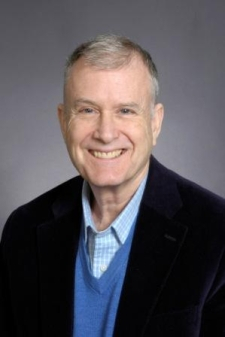
Richard E. Nisbett
University of Michigan
Visiting Scholar
2008 to 2009
William T. Dickens, Professor, Northeastern University, and Non-Resident Senior Fellow at the Brookings Institution, James R. Flynn, Emeritus Professor at the University of Otago, New Zealand, and Richard E. Nisbett, Theodore M. Newcomb Distinguished University Professor at the University of Michigan, will form a working group to develop a multi-level model of intelligence that explains the role of genes and physiology along with the role of environment in making individuals intellectually able..
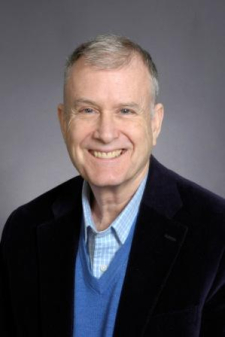
Richard E. Nisbett
University of Michigan
Visiting Scholar
2003 to 2004
Richard E. Nisbett, Theodore M. Newcomb Distinguished University Professor of Psychology, will spend the fall semester at Russell Sage working on projects that extend his research on the cognitive differences between the holistic styles of thought characteristic of East Asian cultures and the analytic styles prevalent in the West. Nisbett believes that social systems play an important role in cognition and that collectivist societies yield a more holistic way of thought while more individualistic societies encourage categorical thought.
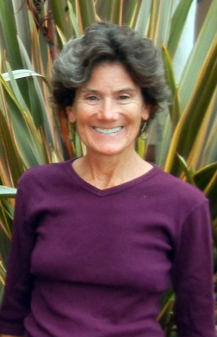
Alice O'Connor
University of California, Santa Barbara
Visiting Scholar
1995 to 1996
Alice B. O'Connor, assistant professor of history at the University of California, Santa Barbara, completed a book on the development of poverty research as a social science in the United States. Her book examines the field's historical origins and its contemporary issues, methods, and practitioners, and most importantly will assess the role of poverty research in shaping public policy and welfare reform. O'Connor also explored the political and bureaucratic pressures that have intensified the need for poverty expertise.
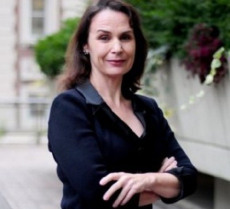
Sharyn O'Halloran
Columbia University
Visiting Scholar
2003 to 2004
Sharyn O'Halloran, associate professor of political science and international affairs at Columbia University, and David Epstein, associate professor of political science at Columbia University, will write a book that analyzes the impact of race-based districting on racial representation in Congress and on public policy. Epstein and O'Halloran will explore how districting strategies impact the ability of minority groups to affect the passage of legislation at both the national and state levels.
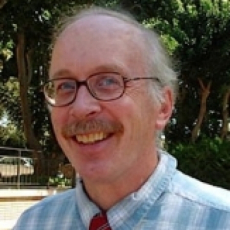
Barry O'Neill
University of California, Los Angeles
Visiting Scholar
2005 to 2006
Barry O’Neill, Professor of Political Science at University of California, Los Angeles, will conduct research on how public apologies can be used to resolve conflict and promote reconciliation between states or groups. He will discuss strategic dilemmas in apologizing, assess the importance of symbolism in apologies, and study apology patterns in different cultures. For the project, he will assemble a systematic database of international apologies that will discuss how and why they were made, and how they were received.