About This Book
Address at the Virginia Child Welfare Conference at Richmond. Early 1900s.
J. W. SCHERESCHEWSKY, M.D., Public Health and Marine Hospital, Washington, D.C.
Address at the Virginia Child Welfare Conference at Richmond. Early 1900s.
J. W. SCHERESCHEWSKY, M.D., Public Health and Marine Hospital, Washington, D.C.
This introduction to social case work was published in 1922 as part of the Russell Sage Foundation's Social Work Series. The different forms of social work and their interrelations in the school, workshop, hospital, and court are analyzed.
MARY E. RICHMOND was director of the Charity Organization Department at the Russell Sage Foundation.
In 1916, the Foundation's Department of Child-Helping organized round table sessions to assist trustees of institutions caring for dependent children in their administrative duties. This document outlines the agendas of the meetings, which also accompanied the publication of eight short monographs of study findings.
C. SPENCER RICHARDSON was associate director of the Department of Child-Helping of the Russell Sage Foundation.
One of a series of monographs prepared by the Foundation's Department of Child-Helping to accompany round table meetings of trustees of institutions caring for children. Physical Care of Dependent Children in Institutions discusses how the vital health needs of children were met at institutions in New York.
C. SPENCER RICHARDSON was associate director of the Department of Child-Helping of the Russell Sage Foundation.
One of a series of monographs prepared by the Foundation's Department of Child-Helping to accompany round table meetings of trustees of institutions caring for children. The Education of Dependent Children in Institutions discusses the academic and vocational aspects of the subject, social, moral and religious considerations are put forth in another monograph of the series.
C. SPENCER RICHARDSON was associate director of the Department of Child-Helping of the Russell Sage Foundation.
This report is the outcome of a study commissioned by the Children's Bureau of Delaware. It tracked interventions of fifteen Delaware children's organizations over six months. The author makes recommendations for improvements, which are indexed in the table of contents. Dependent Delinquent and Defective Children of Delaware was published by the Foundation's Department of Child-Helping in 1918.
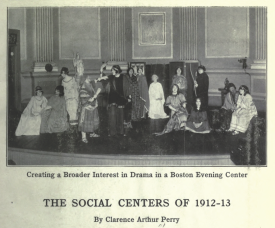
A 1912 report on the results of a schools survey taken to obtain data on evening "social center" activities hosted.
CLARENCE ARTHUR PERRY, Department of Child Hygiene, Russell Sage Foundation
“James House has written a powerful book that shows a recent erosion of the health status of Americans that cannot be fixed by increased medical care but requires new public policies aimed at achieving greater fairness and justice in employment, income levels, and housing markets as well as educational systems of higher quality. Beyond Obamacare is a masterwork!”
—ALVIN R. TARLOV, emeritus professor of medicine, University of Chicago, and former president, Henry J. Kaiser Family Foundation
“Beyond Obamacare maintains that both improving population health and constraining growth in health care costs requires shifting our focus from more narrow medical concerns to social and other non-medical determinants including income, education, work and social relations. Drawing on his distinguished research in these areas over several decades, and with broad interdisciplinary scope, James House's data-driven, provocative, and compelling presentation provides the basis for a new health policy paradigm. Presented in a clear and accessible way, it will be invaluable to health professionals, policy scholars, and students.”
—DAVID MECHANIC, Rene Dubos University Professor, Institute for Health, Health Care Policy, and Aging Research, Rutgers, The State University of New Jersey
“In this beautifully written book, James House provides a carefully reasoned, empirically grounded analysis of why universal health care, though long overdue, is still insufficient to move Americans closer to the health profile enjoyed by citizens of other wealthy nations. Beyond Obamacare is must reading for everyone who wants to see a healthier, more socially just America.”
—SHERMAN A. JAMES, Susan B. King Emeritus Professor of Public Policy, Duke University
Health care spending in the United States today is approaching 20 percent of GDP, yet levels of U.S. population health have been declining for decades relative to other wealthy—and even some developing—nations. How is it possible that the United States, which spends more than any other nation on health care and insurance, now has a population markedly less healthy than those of many other nations? Sociologist and public health expert James S. House analyzes this paradoxical crisis, offering surprising new explanations for how and why the United States has fallen into this trap. In Beyond Obamacare, House shows that health care reforms, including the Affordable Care Act, cannot resolve this crisis because they do not focus on the underlying causes for the nation’s poor health outcomes, which are largely social, economic, environmental, psychological, and behavioral.
House demonstrates that the problems of our broken health care and insurance system are interconnected with our large and growing social disparities in education, income, and other conditions of life and work. House calls for a complete reorientation of how we think about health. He concludes that we need to move away from our misguided and almost exclusive focus on biomedical determinants of health, and to place more emphasis on addressing social, economic,and other inequalities.
House’s review of the evidence suggests that the landmark Affordable Care Act of 2010, and even universal access to health care, are likely to yield only marginal improvements in population health or in reducing health care expenditures. In order to rein in spending and improve population health, we need to refocus health policy from the supply side—which makes more and presumably better health care available to more citizens—to the demand side—which would improve population health though means other than health care and insurance, thereby reducing need and spending for health care. House shows how policies that provide expanded educational opportunities, more and better jobs and income, reduced racial/ethnic discrimination and segregation, and improved neighborhood quality enhance population health and quality of life as well as help curb health spending. He recommends redirecting funds from inefficient supply-side health care measures toward broader social initiatives focused on education, income support, civil rights, housing and neighborhoods, and other reforms, which can be paid for from savings in expenditures for health care and insurance.
A provocative reconceptualization of health in America, Beyond Obamacare looks past partisan debates to show how cost-efficient and effective health policies begin with more comprehensive social policy reforms.
JAMES S. HOUSE is Angus Campbell Distinguished University Professor Emeritus of Survey Research, Public Policy, and Sociology at the University of Michigan, Ann Arbor.
Originally published in The Pittsburgh District, a volume of the 1914 Pittsburgh Survey, this report is an in-depth study of children's institutions in Pittsburgh at the time. Housing accommodation standards, children's schedules, and education curriculum are discussed at length. Based on the social needs of children during the rise of industry in the city, this study presents a program for the conservation and rehabilitation of the homes of children, the requirement for thoughtfully selected foster homes, the adoption of standards of care in foster homes, and the enforcement of these standards.
FLROENCE L. LATTIMORE was associate director of Department of Child Hygiene of the Russell Sage Foundation.
This series of papers is the outcome of a house-to-house investigation of infant mortality in four wards of Boston made in 1910-11 and 1911-12 by the Research Department of the Boston School for Social Workers under a grant from the Russell Sage Foundation.
HENRY H. HIBBS, JR., Department of Research of the Boston School for Social Workers and the Department of Sociology of the University of Illinois