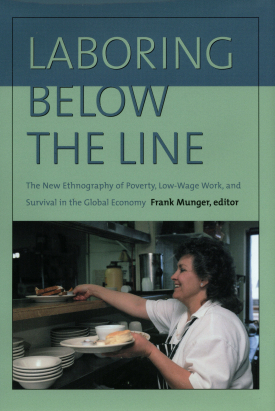
Cover image of the book Laboring Below the Line
Books

Laboring Below the Line

The New Ethnography of Poverty, Low-Wage Work, and Survival in the Global Economy
Editor
Frank Munger
Paperback
$32.50
Add to Cart
Publication Date
6 in. × 9 in. 336 pages
ISBN
978-0-87154-619-7
Also Available From

About This Book

"The thoughtful contributors to this useful volume have provided a unique and comprehensive vision for the study of poverty. Laboring Below the Line is one of the most important publications on poverty and low-wage work in the last several decades. I highly recommend it to anyone interested in confronting the problems and challenges of inequality."
-WILLIAM JULIUS WILSON, Lewis P. and Linda L. Geyser University Professor, Harvard University

"This excellent volume is a welcome addition to the renewed stream of ethnographic examinations of the lives of America's poor. Laboring Below the Line concentrates on perennial issues of making a living by people in highly constrained circumstances, a subject not so central to many earlier ethnographies. It should be read by all those concerned with poverty policies as a corrective for the abstract and reductive models that dominate that field."
-LEE RAINWATER, professor of sociology emeritus, Harvard University

"Laboring Below The Line offers a much needed view of what people do to get by, raise families, get ahead, and grapple with issues of identity, esteem, and efficacy while laboring in a world that simultaneously demands and undervalues the work that they do. In establishing a dialogue between ethnographic and structural analysis, the authors remind us that the personal and the global can-indeed must-inform one another in research as well as in political action. They penetrate facile assumptions about the 'low-skill' nature of low-wage workers and work. They show how life chances are constrained by the growing inequities of global political economy, while recognizing the agency individuals do exercise in the workplace, the community, and in their own lives."
-ALICE O'CONNOR, associate professor of history, University of California, Santa Barbara

"For anyone hoping to move beyond the misleading stereotypes that dominate our culture, Laboring Below the Line offers rich portraits and analysis that take us deep into the everyday realities of labor and poverty in America. This indispensable book challenges conventional myths with accessible frontline research from the nation's leading scholars and shows new ways to confront and respond to America's enduring crisis."
-JOHN GILLIOM, associate professor of political science, Ohio University

As the distribution of wealth between rich and poor in the United States grew more and more unequal over the past twenty years, this economic gap assumed a life of its own in the popular culture. The news and entertainment media increasingly portrayed the lives of the poor with such stereotypes as the lazy welfare mother and the thuggish teen, offering Americans few ways to learn how the "other half" really lives. Laboring Below the Line works to bridge this gap by synthesizing a wide range of qualitative scholarship on the working poor. The result is a coherent, nuanced portrait of how life is lived below the poverty line, and a compelling analysis of the systemic forces in which poverty is embedded, and through which it is perpetuated.

Laboring Below the Line explores the role of interpretive research in understanding the causes and effects of poverty. Drawing on perspectives of the working poor, welfare recipients, and marginally employed men and women, the contributors—an interdisciplinary roster of ethnographers, oral historians, qualitative sociologists, and narrative analysts—dissect the life circumstances that affect the personal outlook, ability to work, and expectations for the future of these people. For example, Carol Stack views the work aspirations of an Oakland teenager for whom a job is important, even though it strains her academic performance. And Ruth Buchanan looks at low-wage telemarketing workers who are attempting to move up the economic ladder while balancing family, education, and other important commitments. What emerges is a compelling picture of low-wage workers—one that illustrates the precarious circumstances of individuals struggling with the economic conditions and institutions that surround them Each chapter also explores the capacity for economic survival from a different angle, with ancillary commentary complementing the ethnographies with perspectives from other fields of study, such as economics.

At this moment of governmental retrenchment, ethnography's complex, nonstereotypical portraits of individual people fighting against poverty are especially important. Laboring Below the Line reveals the ambiguities of real lives, the potential for individuals to change in unexpected ways, and the even greater intricacy of the collective life of a community.

FRANK MUNGER is professor of law and adjunct professor of sociology at the State University of New York at Buffalo.

CONTRIBUTORS: Frances Ansley, Ruth Buchanan, Aixa N. Cintron-Velez, Kathryn Edin, Michael Frisch, Joel F. Handler, Philip Harvey, Julia R. Henly, Sanders Korenman, Laura Lein, Timothy Nelson, Carl H. Nightingale, Saskia Sassen, Carol Stack, Lucie White.



RSF Journal
View Book Series
Sign Up For Our Mailing List
Apply For Funding
Cover image of the book The Investment Policies of Foundations
Books

The Investment Policies of Foundations

Author
Ralph L. Nelson
Hardcover
Add to Cart
Publication Date
6 in. × 9 in. 220 pages
ISBN
978-0-87154-614-2
Also Available From

About This Book

Focuses on the 133 largest foundations endowed by individuals or families, each of which in 1960 held assets of more than $10 million. While representing less than one percent of the total number, they account for the majority of income, endowment, and spending of all foundations. The author describes the economic dimensions of foundation activities in the context of the general economy and private philanthropy. He examines the process by which the foundations were established, when and how they received initial endowments, their investment patterns over a period of years, and the policies governing investment of their endowed funds.

RALPH L. NELSON is associate professor of economics at Queens College of the City University of New York.

RSF Journal
View Book Series
Sign Up For Our Mailing List
Apply For Funding
Cover image of the book The Future of the Family
Books

The Future of the Family

Editors
Daniel Patrick Moynihan
Timothy M. Smeeding
Lee Rainwater
Paperback
$29.95
Add to Cart
Publication Date
6 in. × 9 in. 328 pages
ISBN
978-0-87154-628-9
Also Available From

About This Book

"The Future of the Family is a singular contribution to our understanding of one of the most important social issues of the twenty-first century. The editors have brought together scholars who collectively represent the world's foremost experts on family systems. The net result is a volume replete with important comparative findings and insights on the changing family and family policies in the United States and other countries."
-WILLIAM JULIUS WILSON, Lewis P. and Linda L. Geyser University Professor, Harvard University

"This book provides an excellent review of what we do and do not know about changes in marriage and childbearing in the United States. It's readable and it's thorough. The policy implications of these changes are discussed by persons from a variety of political and policy viewpoints. If you want to understand what the current debate on marriage and families is all about, The Future of the Family is the book to read."
-REBECCA M. BLANK, Henry Carter Adams Professor of Policy and dean, Gerald R. Ford School of Public Policy, University of Michigan

"This book is a fitting final legacy of Senator Patrick Moynihan, who did so much as a scholar and politician to call attention to the plight of the family in America. Like Senator Moynihan, The Future of the Family is difficult to characterize ideologically, which is its great strength. It presents the facts as we know them clearly and dispassionately. It assesses the effects of family change with clarity and balance, giving in neither to pessimism or to Pollyanna-like optimism. And most remarkably, it presents the policy recommendations of both conservatives and liberals in sensible dialogue. If policymakers and scholars have enough sense to use it in their work, our national dialogue will be greatly enriched."
-MARY JO BANE, Thornton Bradshaw Professor of Public Policy and Management, John F. Kennedy School of Government, Harvard University

High rates of divorce, single-parenthood, and nonmarital cohabitation are forcing Americans to reexamine their definition of family. This evolving social reality requires public policy to evolve as well. The Future of the Family brings together the top scholars of family policy—headlined by editors Lee Rainwater, Tim Smeeding, and, in his last published work, the late Senator Daniel Patrick Moynihan—to take stock of the state of the family in the United States today and address the ways in which public policy affects the family and vice versa.

The volume opens with an assessment of new forms of family, discussing how reduced family income and lower parental involvement can disadvantage children who grow up outside of two-parent households. The book then presents three vastly dissimilar recommendations—each representing a different segment of the political spectrum—for how family policy should adapt to these changes. Child psychologist Wade Horn argues the case of political conservatives that healthy two-parent families are the best way to raise children and therefore should be actively promoted by government initiatives. Conversely, economist Nancy Folbre argues that government’s role lies not in prescribing family arrangements but rather in recognizing and fostering the importance of caregivers within all families, conventional or otherwise. Will Marshall and Isabel Sawhill borrow policy prescriptions from the left and the right, arguing for more initiatives that demand personal responsibility from parents, as well as for an increase in workplace flexibility and the establishment of universal preschool programs. The book follows with commentary by leading policy analysts Samuel Preston, Frank Furstenberg Jr., and Irwin Garfinkel on the merits of the conservative and liberal arguments. Each suggests that marriage promotion alone is not enough to ensure a happy, healthy, and prosperous future for American children who are caught up in the vortex of family change. They agree that government investments in children, however, can promote superior developmental outcomes and even potentially encourage traditional families by enlarging the pool of “marriageable” individuals for the next generation.

No government action can reverse trends in family formation or return America to the historic nuclear family model. But understanding social change is an essential step in fashioning effective policy for today’s families. With authoritative insight, The Future of the Family broadens and updates our knowledge of how public policy and demography shape one another.

DANIEL PATRICK MOYNIHAN was university professor at Syracuse University until his untimely death in March 2003, as well as a former United States senator and ambassador to India and the United Nations.

TIMOTHY M. SMEEDING is the Maxwell Professor of Public Policy at the Maxwell School of Syracuse University and overall director of the Luxembourg Income Study.

LEE RAINWATER is professor of sociology emeritus at Harvard University and research director of the Luxembourg Income Study.

CONTRIBUTORS: Daniel P. Moynihan, Lee Rainwater, Timothy M. Smeeding, P. Lindsay Chase-Lansdale, David T. Ellwood, Nancy Folbre, Frank F. Furstenberg, Irwin Garfinkel, Janet C. Gornick, Wade F. Horn, Christopher Jencks, Kathnleen Kiernan, Will Marshall, Sara McLanahan, Samuel H. Preston, Isabel V. Sawhill, Wendy Sigle-Rushton, and Douglas A. Wolf.

An Institute for Research on Poverty Affiliated Book on Poverty and Public Policy


RSF Journal
View Book Series
Sign Up For Our Mailing List
Apply For Funding
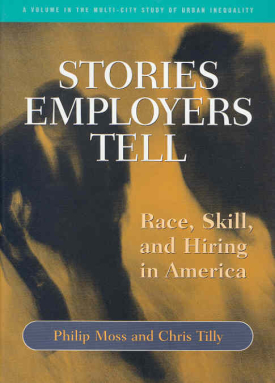
Cover image of the book Stories Employers Tell
Books

Stories Employers Tell

Race, Skill, and Hiring in America
Authors
Philip Moss
Chris Tilly
Paperback
$25.95
Add to Cart
Publication Date
6.63 in. × 9.25 in. 332 pages
ISBN
978-0-87154-632-6
Also Available From

About This Book

"Stories Employers Tell should be required reading for policymakers, advocates, practitioners-for those who care about our inner-city youth and the racial bias they encounter in getting a decent job."
- HUGH B. PRICE, National Urban League

"What role does race play in the job market? Most economists address this question by analyzing large national surveys. What this misses is a deep understanding of what employers look for, what are their attitudes and preconceptions, and how they go about hiring people. In this excellent book, Philip Moss and Chris Tilly make a major contribution to understanding racial differentials in our economy."
- PAUL OSTERMAN, MIT

"Drawing upon an important data set in four of our largest cities, Stories Employers Tell provides a comprehensive analysis of employer perceptions of racial groups in a changing labor market. In the process, the authors reveal how the overlapping of employer skills assessment and prejudice have profound implications for the labor market experiences of inner-city black and Latino workers. This book is must reading not simply for social scientists, but for concerned citizens and policymakers as well."
- WILLIAM JULIUS WILSON, Harvard University

"Despite tight labor markets and remarkably low levels of unemployment, race still plays far too great a role in determining who gets a job. Why? Philip Moss and Chris Tilly provide us with a mountain of evidence that employer perceptions of the urban labor force play a powerful role in providing opportunity to some and quick escort out the door to others. This book is essential reading for anyone interested in labor markets, inequality and equity."
- KATHERINE NEWMAN, John F. Kennedy School of Government

Is the United States justified in seeing itself as a meritocracy, where stark inequalities in pay and employment reflect differences in skills, education,and effort? Or does racial discrimination still permeate the labor market, resulting in the systematic under hiring and underpaying of racial minorities, regardless of merit? Throughout the 1980s and early 1990s African Americans have lost ground to whites in the labor market, but this widening racial inequality is most often attributed to economic restructuring, not the racial attitudes of employers. It is argued that the educational gap between blacks and whites, though narrowing, carries greater penalties now that we are living in an era of global trade and technological change that favors highly educated workers and displaces the low-skilled.

Stories Employers Tell demonstrates that this conventional wisdom is incomplete. Racial discrimination is still a fundamental part of the explanation of labor market disadvantage. Drawing upon a wide-ranging survey of employers in Atlanta, Boston, Detroit, and Los Angeles, Moss and Tilly investigate the types of jobs employers offer, the skills required, and the recruitment, screening and hiring procedures used to fill them. The authors then follow up in greater depth on selected employers to explore the attitudes, motivations, and rationale underlying their hiring decisions, as well as decisions about where to locate a business.

Moss and Tilly show how an employer's perception of the merit or suitability of a candidate is often colored by racial stereotypes and culture-bound expectations. The rising demand for soft skills, such as communication skills and people skills, opens the door to discrimination that is rarely overt, or even conscious, but is nonetheless damaging to the prospects of minority candidates and particularly difficult to police. Some employers expressed a concern to race-match employees with the customers they are likely to be dealing with. As more jobs require direct interaction with the public, race has become increasingly important in determining labor market fortunes. Frequently, employers also take into account the racial make-up of neighborhoods when deciding where to locate their businesses.

Ultimately, it is the hiring decisions of employers that determine whether today's labor market reflects merit or prejudice. This book, the result of years of careful research, offers us a rare opportunity to view the issue of discrimination through the employers' eyes.

PHILIP MOSS is professor in the Department of Regional Economic and Social Development at the University of Massachusetts, Lowell.

CHRIS TILLY is University Professor of Regional Economics and Social Development at the University of Massachusetts, Lowell.

A Volume in the Multi-City Study of Urban Inequality

RSF Journal
View Book Series
Sign Up For Our Mailing List
Apply For Funding
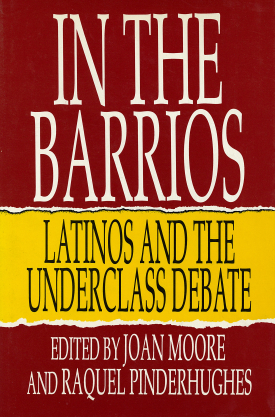
Cover image of the book In the Barrios
Books

In the Barrios

Latinos and the Underclass Debate
Editors
Joan Moore
Raquel Pinderhughes
Paperback
Add to Cart
Publication Date
6 in. × 9 in. 296 pages
ISBN
978-0-87154-613-5
Also Available From

About This Book

The image of the "underclass," framed by persistent poverty, long-term joblessness, school dropout, teenage pregnancy, and drug use, has become synonymous with urban poverty. But does this image tell us enough about how the diverse minorities among the urban poor actually experience and cope with poverty? No, say the contributors to In the Barrios. Their portraits of eight Latino communities—in New York, Los Angeles, Miami, Houston, Chicago, Albuquerque, Laredo, and Tucson—reveal a far more complex reality.

In the Barrios responds directly to current debates on the origins of the "underclass" and depicts the cultural, demographic, and historical forces that have shaped poor Latino communities. These neighborhoods share many hardships, yet they manifest no "typical" form of poverty. Instead, each group adapts its own cultural and social resources to the difficult economic circumstances of American urban life. The editors point to continued immigration as an issue of overriding importance in understanding urban Latino poverty. Newcomers to concentrated Latino areas build a local economy that provides affordable amenities and promotes ethnic institutional development. In many of these neighborhoods, a network of emotional as well as economic support extends across families and borders.

The first major assessment of inner-city Latino communities in the United States, In the Barrios will change the way we approach the current debate on urban poverty, immigration, and the underclass.

JOAN MOORE is professor of sociology at the University of Wisconsin, Milwaukee.

RAQUEL PINDERHUGHES is assistant professor of urban studies at San Francisco State University.

CONTRIBUTORS: Norma Stoltz Chinchilla, Phillip Gonzales, Guillermo J. Grenier, Nora Hamilton, James Loucky, Joan Moore, Felix M. Padilla, Raquel Pinderhughes, Nestor P. Rodriquez, Alex Stepick, Mercer Sullivan, Avelardo Valdez, Carlos G. Velez-Ibanez, James Diego Vigil.

RSF Journal
View Book Series
Sign Up For Our Mailing List
Apply For Funding
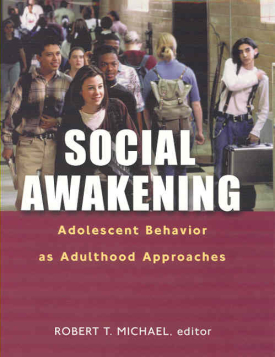
Cover image of the book Social Awakening
Books

Social Awakening

Adolescent Behavior as Adulthood Approaches
Editor
Robert T. Michael
Hardcover
Add to Cart
Publication Date
6.63 in. × 9.25 in. 432 pages
ISBN
978-0-87154-616-6
Also Available From

About This Book

"Michael and his colleagues make significant contributions to the field of youth development and to our understanding of the background for the complex transition from youth to adulthood. The authors take a rich data source and bring sophisticated statistical techniques to bear on it. The refinement of family structure measures and the multiplicity of youth outcomes examined add tremendously to a field where many studies treat family simplistically and speak only to a single issue. The volume will serve as the necessary starting point for further analyses of the 1997 National Longitudinal Survey of Youth as the cohort ages. It will also contribute to current policy discussions on how families and society help -- and sometimes hinder -- the transition to adulthood."
-MATTHEW W. STAGNER, The Urban Institute

"This fascinating volume examines the determinants of such adolescent behaviors as. discretionary time use, sexual activity, expectations regarding future fertility outcomes, dating, use of alcohol and marijuana, and criminal activity from the perspectives of economics, sociology, and other social sciences. It contains a rich set of extremely valuable analyses and insights for practitioners of these disciplines, policy makers, and the population at large. Robert T. Michael is to be congratulated for assembling this collection of papers based on the 1997 National Longitudinal Survey of Youth and for his penetrating introduction to the key issues addressed."
-MICHAEL GROSSMAN, City University of New York

While headlines about violent crimes committed by adolescents often capture the public's attention, many more young people excel in the classroom, on the athletic field, and in the community. Why do some youngsters strive to achieve while others court disaster? Using new data from the National Longitudinal Survey of Youth (NLSY), a survey of more than nine thousand young people between the ages of twelve and sixteen, Social Awakening explores the choices adolescents make about their lives and their futures. The book focuses on the key role the family plays as teenagers navigate the difficult transition from childhood to adulthood.

Social Awakening analyzes a wide range of adolescent behavior and issues that affect teenagers' lives—from their dating and sexual behavior, drug and alcohol use, and physical and mental well-being, to their career goals and expectations for the future. The findings strengthen our understanding of how an array of family characteristics—single parenthood, income, educational level, race, and geographical location—influences teens' lives. One contributor explores why children from single-parent families are more likely to perform poorly in school and to indulge in risky behavior, such as drug abuse or promiscuous sexual activity. Another chapter examines why children of parents with a college degree are less likely to engage in early sexual activity. And another looks at different levels of criminal behavior among urban and rural youths.

One of the advantages of an in-depth interview such as the NLSY is the wide array of behavior and experiences by the same youths that can be mutually investigated. The analysis in Social Awakening helps confirm or refute what we think we know—to explore what we could not explore with older or less complex surveys. The NLSY, which forms the foundation of Social Awakening, will be updated annually over the coming decades to enable experts to learn how those who were adolescents at the dawn of the twenty-first century handled the move to adulthood. Social Awakening provides a compelling first look at these young peoples' lives.

ROBERT T. MICHAEL is Elkiam Hastings Moore Distinguished Service Professor and dean of the Irving B. Harris Graduate School of Public Policy Studies, University of Chicago.

CONTRIBUTORS: Yasuo Abe,  Laura M. Argys,  Courtney Bickert,  John Cawley,  Pinka Chatterji,  Jeff Dominitz,  Baruch Fischoff,  Diane Gibson,  Charles F. Manski,  Mignon R. Moore,  H. Elizabeth Peters, Charles R. Pierret,  Robin L. Tepper,  James R. Walker,  L. Susan Williams. 
 

RSF Journal
View Book Series
Sign Up For Our Mailing List
Apply For Funding
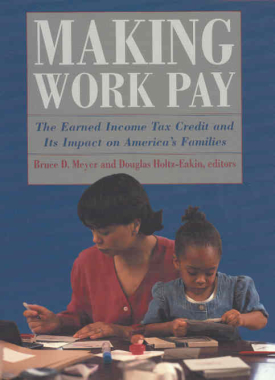
Cover image of the book Making Work Pay
Books

Making Work Pay

The Earned Income Tax Credit and Its Impact on America's Families
Editors
Bruce D. Meyer
Douglas Holtz-Eakin
Hardcover
Add to Cart
Publication Date
6 in. × 9 in. 412 pages
ISBN
978-0-87154-599-2
Also Available From

About This Book

"The Earned Income Tax Credit has emerged as one of the most important and most innovative aspects of the U.S. safety net. It is one of the few components of our safety net that Western European nations are beginning to adopt themselves. Making Work Pay presents much of the latest and most important research on this credit and its effects."
-ROBERT GREENSTEIN, CENTER ON BUDGET AND POLICY PRIORITIES

"Over the past twenty-five years, the earned income tax credit (EITC) has become the federal government's largest cash transfer program for low-income households, and has received support from both the right and left. In this book, a highly-qualified group of authors provides wide-ranging and detailed analyses of the history, politics, economic effects, uses, optimal design, and other aspects of the EITC. Making Work Pay is both an excellent introduction to the EITC as well as a compendium of state-of-the-art research on the topic. The book is not just 'must reading' for anyone interested in the EITC; it will be the standard against which other contributions are measured."
-WILLIAM G. GALE, BROOKINGS INSTITUTION

"The earned income tax credit is a cornerstone of the nation's antipoverty efforts, delivering more than $30 billion annually to low-income working families. This authoritative history and analysis of the credit discusses its effects on labor markets, family structure, and economic well being, and its administration and policy implications. It is a fine example of high-quality academic research informing important policy issues."
-JOHN KARL SCHOLZ, UNIVERSITY OF WISCONSIN-MADISON

Since its inception under President Ford in 1975, the Earned Income Tax Credit (EITC) has become the largest antipoverty program for the non-elderly in the United States. In 1998, more than nineteen million families received EITC payments, and the program lifted over four million Americans above the poverty line. Despite the rapid growth of the EITC throughout the 1990s, little has been written about how the program works or how it affects low-income families. Making Work Pay provides the first full-scale examination of the EITC, exploring its effects on income distribution, poverty, work, and marriage.

Making Work Pay opens with a history of the EITC -- its emergence in the 1970s as a pro-work, low-cost antipoverty program and its expansion through the 1980s and 1990s. The central chapters in the volume look at the substantial impact of the EITC on work incentives in recent years and show that the program, in combination with welfare reform and a strong economy, has led to an unprecedented increase in the employment of single mothers. In one study, researchers conclude that the EITC—with its stipulation that one family member be a wage earner—was the most important change in work incentives for single mothers between 1984 and 1996, a period when the employment rate of single mothers rose sharply. Several chapters outline proposals for reforming the program, addressing the concerns by policymakers about the work disincentives that rise as benefits fall with increasing income. Finally, Making Work Pay examines how EITC recipients view the credit and what they do with it once they get it. The contributors find that not only does EITC's lump-sum payment increase consumption but it also allows recipients to make changes in economic status. Many families use the end-of-the-year payment as a form of forced savings, enabling them to save for home improvement, a new car, or other purchases to improve their lives, and providing the extra economic cushion needed to move beyond mere day-to-day survival.

Comprehensive in scope, Making Work Pay is an indispensable resource for policymakers, administrators, and researchers seeking to understand the ramifications of the country's largest programs for aiding the working poor.

BRUCE D. MEYER is professor of economics at Northwestern University.

DOUGLAS HOLTZ-EAKIN is at the Center for Policy Research, Syracuse University.

CONTRIBUTORS:  Lisa Barrow, David T. Ellwood, Janet Holtzblatt, Jeffrey B. Liebman, Janet McCubbin, Leslie McGranahan, Michael O'Connor, Katherin Ross Phillips, Robert Rebelein, Jennifer L. Romich, Dan T. Rosenbaum, Timothy M. Smeeding, Dennis J. Ventry Jr., Thomas S. Weisner.

RSF Journal
View Book Series
Sign Up For Our Mailing List
Apply For Funding
Cover image of the book Market Friendly or Family Friendly?
Books

Market Friendly or Family Friendly?

The State and Gender Inequality in Old Age
Authors
Madonna Harrington Meyer
Pamela Herd
Paperback
$33.95
Add to Cart
Publication Date
6 in. × 9 in. 256 pages
ISBN
978-0-87154-646-3
Also Available From

About This Book

A Volume in the American Sociological Association’s Rose Series in Sociology

Winner of the 2008 Richard Kalish Publication Award from the Genontological Society of America

"Market Friendly or Family Friendly? is a welcome addition to the burgeon ing debate over America's fraying social contract. With the knowledge and care of social scientists and the passion and vision of public intellectuals, Harrington Meyer and Herd show that older women continue to be gravely disadvantaged by a framework of old-age security that has been under assault for more than two decades. To their great credit, they also lay out a set of reasonable reforms that would go a long way toward making American social policy more 'family friendly.'"
-JACOB S. HACKER, professor of political science, Yale University

"In this beautifully written and carefully argued book, Madonna Harrington Meyer and Pamela Herd challenge advocates of pro-market policies who seek to privatize Social Security and Medicare and force families to pay more out-of-pocket for health care. Using a rich array of evidence, they convincingly demonstrate that the protection afforded by the welfare state is needed even more now than in the past, especially for women and minori ties. This should be required for anyone seeking to understand the distribu tional effects of social programs and for members of Congress."
-JILL QUADAGNO, Mildred and Claude Pepper Eminent Scholar in Social Gerontology, Florida State University

Poverty among the elderly is sharply gendered—women over sixty-five are twice as likely as men to live below the poverty line. Older women receive smaller Social Security payments and are less likely to have private pensions. They are twice as likely as men to need a caregiver and twice as likely as men to be a caregiver. Recent efforts of some in Washington to reduce and privatize social welfare programs threaten to exacerbate existing gender disparities among older Americans. They also threaten to exacerbate inequality among women by race, class, and marital status. Madonna Harrington Meyer and Pamela Herd explain these disparities and assess how proposed policy reforms would affect inequality among the aged.

Market Friendly or Family Friendly? documents the cumulative disadvantages that make it so difficult for women to achieve economic and health security when they retire. Wage discrimination and occupational segregation reduce women’s lifetime earnings, depressing their savings and Social Security benefits. While more women are employed today than a generation ago, they continue to shoulder a greater share of the care burden for children, the disabled, and the elderly. Moreover, as marriage rates have declined, more working mothers are raising children single-handedly. Women face higher rates of health problems due to their lower earnings and the high demands associated with unpaid care work.  There are also financial consequences to these family and work patterns.

Harrington Meyer and Herd contrast the impact of market friendly programs that maximize individual choice, risk, and responsibility with family friendly programs aimed at redistributing risks and resources. They evaluate popular policies on the current agenda, considering the implications for inequality. But they also evaluate less discussed policy proposals. In particular, minimum benefits for Social Security, as well as credits for raising children, would improve economic security for all, regardless of marital status. National health insurance would also reduce inequality, as would reforms to Medicare, particularly increased coverage of long term care. Just as important are policies such as universal preschool and paid family leave aimed at reducing the disadvantages women face during their working years.

The gender gaps that women experience during their work and family lives culminate in income and health disparities between men and women during retirement, but the problem has received scant attention. Market Friendly or Family Friendly? is a comprehensive introduction to this issue, and a significant contribution to the debate over the future of America’s entitlement programs.

MADONNA HARRINGTON MEYER is professor of sociology, director of the Gerontology Center, and senior research associate at the Center for Policy Research at Syracuse University.

PAMELA HERD is assistant professor of public affairs and sociology and a research associate at the Institute for Research on Poverty at the University of Wisconsin, Madison.

An Institute for Research on Poverty Affiliated Book on Poverty and Public Policy


RSF Journal
View Book Series
Sign Up For Our Mailing List
Apply For Funding
Cover image of the book Girls at Vocational High
Books

Girls at Vocational High

An Experiment in Social Work Intervention
Authors
Henry J. Meyer
Edgar F. Borgatta
Wyatt C. Jones
Hardcover
Add to Cart
Publication Date
6 in. × 9 in. 228 pages
ISBN
978-0-87154-601-2
Also Available From

About This Book

Teachers, social workers, psychologists, and sociologists carried out an ambitious, six-year experiment in individual casework and group therapy with potential problem girls in a New York City vocational high school. Conducted in collaboration with Youth Consultation Service, this provocative study provides valuable data on adolescent girls—and raises compelling questions on the extent to which casework can be effective in interrupting deviant careers.

HENRY J. MEYER is professor in the School of Social Work and the Department of Sociology at the University of Michigan.

EDGAR F. BORGATTA is chairman of the Department of Sociology at the University of Wisconsin.

WYATT C. JONES is senior research scientist in the School of Social Work at Columbia University

ELIZABETH P. ANDERSON is director of Youth Consultation Service.

HANNA GRUNWALD is group therapy consultant.

DOROTHY HEADLEY is senior group therapist.

RSF Journal
View Book Series
Sign Up For Our Mailing List
Apply For Funding
Cover image of the book Poverty, Inequality, and the Future of Social Policy
Books

Poverty, Inequality, and the Future of Social Policy

Western States in the New World Order
Editors
Katherine McFate
Roger Lawson
William Julius Wilson
Paperback
$37.50
Add to Cart
Publication Date
6.63 in. × 9.25 in. 768 pages
ISBN
978-0-87154-593-0
Also Available From

About This Book

"Extremely coherent and useful, this much needed volume is concerned with the current status of the poor in Western industrial states. Its closely linked essays allow comparisons between case studies and are often themselves cross-national comparisons....The essays also comment on the meaning of globalization for social policy." —Choice

"Excellent and tightly integrated articles by a group of prominent international scholars....A timely and important book, which will surely become the basic reference point for all future research on inequality and social policy." —Contemporary Sociology

The social safety net is under strain in all Western nations, as social and economic change has created problems that traditional welfare systems were not designed to handle. Poverty, Inequality, and the Future of Social Policy provides a definitive analysis of the conditions that are fraying the social fabric and the reasons why some countries have been more successful than others in addressing these trends. In the United States, where the poverty rate in the 1980s was twice that of any advanced nation in Europe, the social protection system—and public support for it—has eroded alarmingly. In Europe, the welfare system more effectively buffered the disadvantaged, but social expenditures have been indicted by many as the principal cause of high unemployment.

Concluding chapters review the progress and goals of social welfare programs, assess their viability in the face of creeping economic, racial, and social fragmentation, and define the challenges that face those concerned with social cohesion and economic prosperity in the new global economy. This volume illuminates the disparate effects of government intervention on the incidence and duration of poverty in Western countries. Poverty, Inequality, and the Future of Social Policy is full of lessons for anyone who would look beyond the limitations of the welfare debate in the United States.

KATHERINE McFATE is associate director for social policy at the Joint Center for Political and Economic Studies in Washington.

ROGER LAWSON is senior lecturer in social policy at the University of Southampton, England.

WILLIAM JULIUS WILSON is Malcolm Wiener Professor of Social Policy at Harvard University.

CONTRIBUTORS: Timothy Smeeding, Lee Rainwater, Greg J. Duncan, Bjorn Gustafsson, Richard Hauser, Gunter Schmaus, Stephen Jenkins, Hans Messinger, Ruud Muffels, Brian Nolan, Jean-Claude Ray, Wolfgang Voges, Susan Mayer, Guy Standing, Peter Gottschalk, Mary Joyce, Sheila B. Kamerman, Nadine Lefaucheur, Siv Gustafsson, Ruth Rose, Sara McLanahan, Irwin Garfinkel, aul Osterman, Bernard Casey, Enrico Pugliese, Troy Duster, Alejandro Portes, Min Zhou,Ian Gordon, Loic Wacquant, Sophie Body-Gendrot, Colin Brown, Justus Veenman, Hugh Heclo, Roger Lawson, William Julius Wilson. 

RSF Journal
View Book Series
Sign Up For Our Mailing List
Apply For Funding