Cover image of the book Recent Progress in Child Welfare Legislation
Books

Recent Progress in Child Welfare Legislation

Foreword by William Hodson
Author
Russell Sage Foundation
Ebook
Publication Date
31 pages

About This Book

This booklet contains six papers from the National Conference of Social Work, which took place in Washington, DC, in May 1923. Four papers describe developments in particular sections of the United States. Two papers offer a national perspective. Together, the papers bear testimony to the similarity of children’s needs everywhere.

RSF Journal
View Book Series
Sign Up For Our Mailing List
Apply For Funding
Cover image of the book How the “Fourth” Was Celebrated in 1911: Facts Gathered from Special Reports
Books

How the “Fourth” Was Celebrated in 1911: Facts Gathered from Special Reports

Author
Lee F. Hanmer
Ebook
Publication Date
54 pages

About This Book

This booklet provides advice on reforming Independence Day celebrations. It includes illustrated descriptions of safe celebrations; a list of state laws and city ordinances regulating the manufacture, sale, and use of explosives; and a collection of programs and suggestions.

LEE F. HANMER was associate director of the Department of Child Hygiene at the Russell Sage Foundation.

RSF Journal
View Book Series
Sign Up For Our Mailing List
Apply For Funding
Cover image of the book The Use of Standardized Ability Tests in American Secondary Schools and Their Impact  on Students, Teachers, and Administrators
Books

The Use of Standardized Ability Tests in American Secondary Schools and Their Impact on Students, Teachers, and Administrators

Technical Report No. 3 on the Social Consequences of Testing
Authors
Orville G. Brim Jr.
David A. Goslin
David C. Glass
Isadore Goldberg
Ebook
Publication Date
480 pages

About This Book

This report, a collaboration between Project Talent at the University of Pittsburgh and the Russell Sage Foundation, presents the results of a survey of the attitudes of secondary school students, teachers, and counselors toward ability tests and provides an appraisal of the extent of these tests’ use.  

RSF Journal
View Book Series
Sign Up For Our Mailing List
Apply For Funding
Cover image of the book Department of Child Hygiene: Activities and Publications
Books

Department of Child Hygiene: Activities and Publications

Author
Russell Sage Foundation
Ebook
Publication Date
16 pages

About This Book

This report, by the Russell Sage Foundation’s Department of Child Hygiene, provides an account of the department’s activities and lists its pamphlets and books, as well as the foundation’s other publications.

RSF Journal
View Book Series
Sign Up For Our Mailing List
Apply For Funding
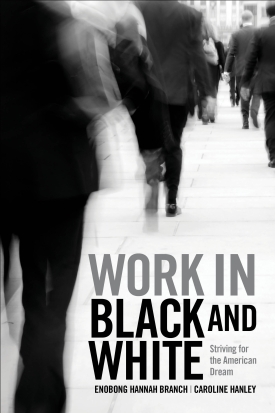
Cover image of the book Work in Black and White
Books

Work in Black and White

Striving for the American Dream
Authors
Enobong Hannah Branch
Caroline Hanley
Paperback
$37.50
Add to Cart
Publication Date
6 in. × 9 in. 232 pages
ISBN
978-0-87154-023-2

About This Book

“Enobong Hannah Branch and Caroline Hanley have written an insightful book that documents just how fragile the American Dream is and always has been for Black workers. Anyone who wants to understand the complex, nuanced relationship between race, gender, and economic insecurity needs to pick up Work in Black and White immediately.”
—ADIA WINGFIELD, vice dean of faculty development and diversity, professor of sociology, Mary Tileston Hemenway Professor of Arts and Sciences, Washington University in St. Louis

Work in Black and White deftly weaves Black and White workers’ sense making of their labor market insecurities with clear historical and demographic analyses. ‘Stories have the power to make inequality legitimate,’ the authors write and go on to document the commonalities and divergence in stories told by educated men and women. While Black and White workers share aspirations for security, they part ways on how to understand the barriers to achieving it. Black workers recognize continuities in racism and White nepotism but also tend to believe they have some control over their own futures. Whites misperceive their precarity as a loss of racial privilege, while being blind to their advantaged reliance on White networks to get and keep jobs. Both groups embrace myths around hard work, education, and meritocracy and so are unable to imagine, much less generate, a political agenda to deal with the profound structural weaknesses of the U.S. economy. Read this book.”
— DONALD TOMASKOVIC-DEVEY, professor of sociology and director, Center for Employment Equity, University of Massachusetts, Amherst

Work in Black and White reminds us that leaving school is just the beginning of the struggle for economic security. Many workers experience recessions as new threats and recoveries as challenges to their past accomplishments. And, of course, nothing works the same for women and men or Blacks and Whites. Enobong Hannah Branch and Caroline Hanley build a case for employment policy that goes beyond credentials and self-reliance; America needs to reset the imbalance between workers and employers.”
—MICHAEL HOUT, professor of sociology and director, Center for Advanced Social Science Research, New York University

The ability to achieve economic security through hard work is a central tenet of the American Dream, but significant shifts in today’s economy have fractured this connection. While economic insecurity has always been a reality for some Americans, Black Americans have historically long experienced worse economic outcomes than Whites. In Work in Black and White, sociologists Enobong Hannah Branch and Caroline Hanley draw on interviews with 79 middle-aged Black and White Americans to explore how their attitudes and perceptions of success are influenced by the stories American culture has told about the American Dream – and about who should have access to it and who should not.

Branch and Hanley find that Black and White workers draw on racially distinct histories to make sense of today’s rising economic insecurity. White Americans have grown increasingly pessimistic and feel that the American Dream is now out of reach, mourning the loss of a sense of economic security which they took for granted. But Black Americans tend to negotiate their present insecurity with more optimism, since they cannot mourn something they never had. All educated workers bemoaned the fact that their credentials no longer guarantee job security, but Black workers lamented the reality that even with an education, racial inequality continues to block access to good jobs for many.

The authors interject a provocative observation into the ongoing debate over opportunity, security, and the American Dream: Among policymakers and the public alike, Americans talk too much about education. The ways people navigate insecurity, inequality, and uncertainty rests on more than educational attainment. The authors call for a public policy that ensures dignity in working conditions and pay while accounting for the legacies of historical inequality.

Americans want the game of life to be fair. While the survey respondents expressed common ground on the ideal of meritocracy, opinions about to achieve economic security for all diverge along racial lines, with the recognition – or not – of differences in current and past access to opportunity in America.

Work in Black and White is a call to action for meaningful policies to make the premise of the American Dream a reality.

ENOBONG HANNAH BRANCH is Senior Vice President for Equity and Professor of Sociology, Rutgers University

CAROLINE HANLEY is Associate Professor of Sociology, William & Mary
RSF Journal
View Book Series
Sign Up For Our Mailing List
Apply For Funding
Cover image of the book Soaking the Middle Class
Books

Soaking the Middle Class

Suburban Inequality and Recovery from Disaster
Authors
Anna Rhodes
Max Besbris
Paperback
$37.50
Add to Cart
Publication Date
6 in. × 9 in. 244 pages
ISBN
978-0-87154-716-3

About This Book

“Soaking the Middle Class tells the complex story of disaster recovery in a White middle-class suburb. It is driven by the chilling narrative of the water rising, escape, and inspiring and awesome stories of rebuilding. But not everyone rebounds the same. Behind an appearance of homogeneity are forces—both structural and individual—that widen gaps in wealth and resources. As an ever more volatile environment threatens to soak us all, this book is essential reading for how to create a broader and more equitable safety net.”
—MARY PATTILLO, Northwestern University

“A powerful book about one of the most urgent problems of the century: how to avoid going under in an era of catastrophic climate change. Drawing on an unusually deep and extensive study of an inundated suburban community, Anna Rhodes and Max Besbris show how class-based inequalities determine who bounces back from disaster and who gets bogged down or displaced. Soaking the Middle Class is timely and important for everyone who calls this warm, wet planet home.”
—ERIC KLINENBERG, New York University

“As climate change causes more extreme weather many middle-class Americans assume that their financial and social resources, their insurance, as well as help from the government, would protect them from financial ruin should they be caught in a disaster. In this eye-opening sociological account of how Hurricane Harvey affected one middle class suburb in Houston, Anna Rhodes and Max Besbris show that the disaster had very unequal effects, with some people able to build back better, and others not able to get back on their feet. Soaking the Middle Class is a cogently argued and wide-ranging book that opens our eyes to how disaster puts us all at risk.”
—MARY C. WATERS, Harvard University

Extreme weather is increasing in scale and severity as global warming worsens. While poorer communities are typically most vulnerable to the negative effects of climate change, even well-resourced communities are increasingly vulnerable as climate-related storms intensify. Yet little is known about how middle-class communities are responding to these storms and the resulting damage. In Soaking the Middle Class, sociologists Anna Rhodes and Max Besbris examine how a middle-class community recovers from a climate-related disaster and how this process fosters inequality within these kinds of places.

In 2017, Hurricane Harvey dropped record-breaking rainfall in Southeast Texas resulting in more than $125 billion in direct damages. Rhodes and Besbris followed 59 flooded households in Friendswood, Texas, for two years after the storm to better understand the recovery process in a well-resourced, majority-White, middle-class suburban community. As such, Friendswood should have been highly resilient to storms like Harvey, yet Rhodes and Besbris find that the recovery process exacerbated often-invisible economic inequality between neighbors. Two years after Harvey, some households were in better financial positions than they were before the storm, while others still had incomplete repairs, were burdened with large new debts, and possessed few resources to draw on should another disaster occur.

Rhodes and Besbris find that recovery policies were significant drivers of inequality, with flood insurance playing a key role in the divergent recovery outcomes within Friendswood. Households with flood insurance prior to Harvey tended to have higher incomes than those that did not. These households received high insurance payouts, enabling them to replace belongings, hire contractors, and purchase supplies. Households without coverage could apply for FEMA assistance, which offered considerably lower payouts, and for government loans, which would put them into debt. Households without coverage found themselves exhausting their financial resources, including retirement savings, to cover repairs, which put them in even more financially precarious positions than they were before the flood.

The vast majority of Friendswood residents chose to repair and return to their homes after Hurricane Harvey. Even this devastating flood did not alter their plans for long-term residential stability, and the structure of recovery policies only further oriented homeowners towards returning to their homes. Prior to Harvey, many Friendswood households relied on flood damage from previous storms to judge their vulnerability and considered themselves at low risk. After Harvey, many found it difficult to assess their level of risk for future flooding. Without strong guidance from federal agencies or the local government on how to best evaluate risk, many residents ended up returning to potentially unsafe places.

As climate-related disasters become more severe, Soaking the Middle Class illustrates how inequality in the United States will continue to grow if recovery policies are not fundamentally changed.

ANNA RHODES is Assistant Professor of Sociology, Rice University

MAX BESBRIS is Assistant Professor of Sociology, University of Wisconsin-Madison

RSF Journal
View Book Series
Sign Up For Our Mailing List
Apply For Funding
Cover image of the book Voices in the Code
Books

Voices in the Code

A Story About People, Their Values, and the Algorithm They Made
Author
David G. Robinson
Paperback
$32.50
Add to Cart
Publication Date
6 in. × 9 in. 212 pages
ISBN
978-0-87154-777-4

About This Book

“Voices in the Code is essential reading for anyone interested in civil rights, the biases of data, and holding algorithmic systems accountable. Robinson compellingly draws lessons from the struggle to fairly allocate transplant organs to grapple with the moral work of algorithmic governance.”
—DANAH BOYD,Georgetown University

“How do we share the moral burden of high-stakes digital decision-making? David Robinson’s gripping account of the development of the U.S. kidney allocation system offers promising ways forward: we must promote participation by design, center lived experience, and share power to protect community values. Voices in the Code passionately demonstrates how ethical algorithms, like democracy itself, require constant tending. A must-read.”
—VIRGINIA EUBANKS, University at Albany, SUNY

Voices in the Code by David Robinson asks the most urgent question about technology at the appropriate level of abstraction: how do we make algorithms that impact the public accountable to the public? Robinson insists, correctly, that this is not a new question, just a new level of complexity. Dodging the fad appeal of techno-solutionism, he points the reader to profound lessons from publicly accountable algorithms that have been largely resolved, such as kidney transplant lists.”
—CATHY O’NEIL,O’Neil Risk Consulting & Algorithmic Auditing (ORCAA)

Algorithms–rules written into software–shape key moments in our lives: from who gets hired or admitted to a top public school, to who should go to jail or receive scarce public benefits. Today, high stakes software is rarely open to scrutiny, but its code navigates moral questions: Which of a person’s traits are fair to consider as part of a job application? Who deserves priority in accessing scarce public resources, whether those are school seats, housing, or medicine? When someone first appears in a courtroom, how should their freedom be weighed against the risks they might pose to others?

Policymakers and the public often find algorithms to be complex, opaque and intimidating—and it can be tempting to pretend that hard moral questions have simple technological answers. But that approach leaves technical experts holding the moral microphone, and it stops people who lack technical expertise from making their voices heard. Today, policymakers and scholars are seeking better ways to share the moral decisionmaking within high stakes software — exploring ideas like public participation, transparency, forecasting, and algorithmic audits. But there are few real examples of those techniques in use.

In Voices in the Code, scholar David G. Robinson tells the story of how one community built a life-and-death algorithm in a relatively inclusive, accountable way. Between 2004 and 2014, a diverse group of patients, surgeons, clinicians, data scientists, public officials and advocates collaborated and compromised to build a new transplant matching algorithm – a system to offer donated kidneys to particular patients from the U.S. national waiting list.

Drawing on interviews with key stakeholders, unpublished archives, and a wide scholarly literature, Robinson shows how this new Kidney Allocation System emerged and evolved over time, as participants gradually built a shared understanding both of what was possible, and of what would be fair. Robinson finds much to criticize, but also much to admire, in this story. It ultimately illustrates both the promise and the limits of participation, transparency, forecasting and auditing of high stakes software. The book’s final chapter draws out lessons for the broader struggle to build technology in a democratic and accountable way.

DAVID G. ROBINSON is a visiting scholar at the Social Science Matrix at the University of California, Berkeley, and a member of the faculty at Apple University. From 2018 to 2021, he developed this book as a Visiting Scientist at Cornell’s AI Policy and Practice Project. Earlier, Robinson co-founded and led Upturn, an NGO that partners with civil rights organizations to advance equity and justice in the design, governance, and use of digital technology.

RSF Journal
View Book Series
Sign Up For Our Mailing List
Apply For Funding
Cover image of the book Collateral Damages
Books

Collateral Damages

Landlords and the Urban Housing Crisis
Author
Meredith J. Greif
Paperback
$35.00
Add to Cart
Publication Date
6 in. × 9 in. 196 pages
ISBN
978-0-87154-471-1

About This Book

“A riveting narrative of how decent people are transformed by conducive structural conditions into malevolent slumlords, Collateral Damages is guaranteed to make you think about the housing crisis in a new light. Meredith J. Greif lays bare how the very regulations meant to protect marginalized tenants stoke landlords’ illegal and immoral behaviors, ensuring even greater precarity in tenants’ lives. If you want to understand housing in America, this book is not to be missed.”
—KATHRYN EDIN, William Church Osborn Professor of Sociology and Public Affairs,Princeton University

Collateral Damages provides a critical window into the understudied practices and motivations of small landlords, who collectively provide homes to most of the nation’s poor renters. Meredith J. Greif highlights the financial vulnerability of these housing providers and shows how structural forces can lead some of them to engage in harmful practices. Balanced and engaging, the book sends an important, cautionary note about how well-intentioned local laws can backfire and harm the very low-income renters they are meant to protect.”
—INGRID GOULD ELLEN, Paulette Goddard Professor of Urban Policy and Planning, New York University

Changes in federal housing policies over the past several decades shifted the primary responsibility for providing low-income renters with affordable housing from the government to private landlords. Federal, state, and local governments have passed laws to ensure that low-income renters are protected from illicit landlording practices. Yet we know little about how private landlords experience local housing regulations. In Collateral Damages, sociologist Meredith Greif examines how local laws affect private landlords and whether tenants are, in fact, being adequately protected.

For three years, Greif followed 60 private landlords serving low- and moderate-income residents in the Cleveland, Ohio, metropolitan area to better understand how local regulations, such as criminal activity nuisance ordinances (CANOs) and local water billing regulations, affect their landlording practices. CANOs are intended to protect communities by discouraging criminal activity on private properties. Property owners can face financial and criminal sanctions if they do not abate nuisance activities, which can include littering, noise, drug use, and calls for police assistance, including calls for domestic violence. Local water billing regulations hold landlords responsible for delinquent water bills, even in cases where the account is registered in the tenant’s name. Greif finds that such laws often increase landlords’ sense of “financial precarity” – the real or perceived uncertainty that their business is financially unsustainable – by holding them responsible for behavior they feel is out of their control. Feelings of financial uncertainty led some landlords to use illegitimate business practices against their tenants, including harassment, oversurveillance, poor property upkeep, and illegal evictions. And to avoid to financial penalities associated with CANOs and delinquent water bills, some landlords engage in discriminatory screening of vulnerable potential tenants who are unemployed or have histories of domestic violence or drug use. In this sense, by promoting a sense of financial insecurity among landlords, laws meant to protect renters ultimately had the opposite effect.

While some landlords, particularly those who rented a larger number of units, were able to operate their businesses both lawfully and profitably, the majority could not. Greif offers practical recommendations to address the concerns of small- and mid-sized landlords, such as regular meetings that bring landlords and local authorities together to engage in constructive dialogue about local housing policy, issues, and concerns. She also proposes policy recommendations to protect renters, such as establishing the right to counsel for lower-income tenants in eviction hearings and enacting a federal renter’s tax credit.

Collateral Damages is an enlightening investigation on how local laws and practices perpetuate disadvantage among marginalized populations and communities, in ways that are hidden and often unintended.

MEREDITH GREIF is assistant professor of sociology at Johns Hopkins University

RSF Journal
View Book Series
Sign Up For Our Mailing List
Apply For Funding
Cover image of the book An Ugly Word
Books

An Ugly Word

Rethinking Race in Italy and the United States
Authors
Ann Morning
Marcello Maneri
Paperback
$37.50
Add to Cart
Publication Date
6 in. × 9 in. 284 pages
ISBN
978-0-87154-678-4

About This Book

We recently sat down with Ann Morning & Marcello Maneri to understand how everyday people view race in Italy and the United States. You can watch an abridged video of the interview above, or read or listen to the full transcript below.

Listen to Part 1 of 2 of the interview

Listen to Part 2 of 2 of the interview

Read a transcript of the full interview here.

An Ugly Word is a terrific book that will make a major contribution to several areas of scholarship. First, it addresses a very important question in comparative race studies—whether the United States and Western Europe have different concepts of race, rooted in biological notions in the United States and cultural notions in Europe. Second, the book is a very careful and nuanced empirical study of how Italians think of and talk about descent-based difference. Third, the book revisits Morning’s important groundbreaking earlier work on concepts of descent-based difference in the United States and extends it by putting it in dialogue with the Italian case, bringing new light to understanding the ways in which Americans think and talk about racial and ethnic differences. Fourth, the book provides a new conceptual apparatus and theoretical tools for researching the conceptual underpinnings of descent-based difference. This is difficult work because it involves unpacking taken-for-granted terms such as race, ethnicity, biology, primordialism, culture, and the like, while also using these terms to understand how ordinary people make sense of the diversity they encounter. An Ugly Word is a great example of using empirical social science to advance theory on an incredibly important social and public policy issue. It is a terrific example of the interplay of evidence and theory.”
—MARY C. WATERS, Harvard University

“By bringing Italian and American ways of thinking and talking (or not talking) about race into fruitful conversation with one another, Ann Morning and Marcello Maneri make a valuable contribution, at once conceptual and empirical, to the comparative study of understandings of descent-based difference.”
—ROGERS BRUBAKER, University of California, Los Angeles

An Ugly Word invites us to think more deeply about descent-based difference. Ann Morning and Marcello Maneri interrogate in quite fined-grained detail the meanings and nuances of perceived group boundaries and categories in the United States and Italy. In so doing, they advance the cultural sociology and comparative analyses of race as a social phenomena. In an age of global population flows and enduring challenges of inequality, this work will surely engage and prove useful to serious students of racism, identity, and culture.”
—LAWRENCE D. BOBO, Harvard University

Scholars and politicians often assume a significant gap between the ways that Americans and Europeans think about race. According to this template, in the U.S. race is associated with physical characteristics, while in Western Europe race has disappeared, and discrimination is based on insurmountable cultural differences. However, little research has addressed how average Americans and Europeans actually think and talk about race. In An Ugly Word, sociologists Ann Morning and Marcello Maneri examine American and Italian understandings of group difference in order to determine if and how they may differ.

Morning and Maneri interviewed over 150 people across the two countries about differences among what they refer to as “descent-based groups.” Using this concept allowed them to sidestep the language of “race” and “ethnicity,” which can be unnecessarily narrow, poorly defined, or even offensive to some. Drawing on these interviews, the authors find that while ways of speaking about group difference vary considerably across the Atlantic, underlying beliefs about it do not. The similarity in American and Italian understandings of difference was particularly evident when discussing sports. Both groups relied heavily on traditional stereotypes of Black physicality to explain Black athletes’ overrepresentation in sports like U.S. football and their underrepresentation in sports like swimming – contradicting the claims that a biological notion of race is a distinctly American phenomenon.

While American and Italian concepts of difference may overlap extensively, they are not identical. Interviews in Italy were more likely to reveal beliefs about groups’ innate, unchangeable temperaments, such as friendly Senegalese and dishonest Roma. And where physical difference was seen by Italians as superficial and unimportant, cultural difference was perceived as deeply meaningful and consequential. In contrast, U.S. interviewees saw cultural difference as supremely malleable—and often ascribed the same fluidity to racial identity, which they believed stemmed from culture as well as biology. In light of their findings, Morning and Maneri propose a new approach to understanding cross-cultural beliefs about descent-based difference that includes identifying the traits people believe differentiate groups, how they believe those traits are acquired, and whether they believe these traits can change.

An Ugly Word is an illuminating, cross-national examination of the ways in which people around the world make sense of race and difference.

ANN MORNING is professor of sociology at New York University

MARCELLO MANERI is associate professor of sociology at the University of Milan-Bicocca

RSF Journal
View Book Series
Sign Up For Our Mailing List
Apply For Funding
Cover image of the book Skin Color, Power, and Politics in America
Books

Skin Color, Power, and Politics in America

Authors
Mara C. Ostfeld
Nicole D. Yadon
Paperback
$37.50
Add to Cart
Publication Date
6 in. × 9 in. 284 pages
ISBN
978-0-87154-637-1

About This Book

"Skin Color, Power, and Politics in America offers a compelling study examining the linkage between skin color and politics in the United States. Importantly, Mara Ostfeld and Nicole Yadon embark on a careful comparative analysis that examines the nuances and varied effects of skin color on the political attitudes of the three major ethnoracial groups in the United States."
—MARISA ABRAJANO, professor of political science, University of California, San Diego

"The conception of race as a social construct is not novel. What is novel and what makes Skin Color, Power, and Politics in America an essential read is its nuanced and deeper understanding—from measurement to meaning—of the multifaceted ways that people are stratified by skin shade both across and within broadly defined racial groups, and how that sorting links to power and politics."
—DARRICK HAMILTON, university professor and Henry Cohen Professor of Economics and Urban Policy, The New School

"Skin Color, Power, and Politics in America is a landmark achievement. It provides new and important insights about how skin tone shapes politics within and across ethnoracial categories. By looking beyond broad ethnoracial categories using novel data, Mara Ostfeld and Nicole Yadon carefully reveal the manifold pathways through which race, gender, color, and class influence political ideologies and ethnoracial politics in the United States. In so doing, Skin Color, Power, and Politics in America is an indispensable resource and a must-read for anyone interested in enriching their understanding of contemporary ethnoracial politics in the United States."
—ELLIS MONK, associate professor of sociology, Harvard University

A person’s skin color affects their life experiences including income, educational attainment, health outcomes, exposure to discrimination, interactions with the criminal justice system and one’s sense of ethnoracial group belonging. But, do these disparate experiences affect the relationship between skin color and political views? In Skin Color, Power, and Politics in America, political scientists Mara Ostfeld and Nicole Yadon explore the relationship between skin color and political views in the U.S. among Latino, Black, and White Americans. They examine how skin color influences an individual’s politics and whether a person’s political views influence how they assess their own skin color.

Ostfeld and Yadon surveyed over 1,300 people about their political views, including party affiliation, their opinions on welfare, and the importance of speaking English in the U.S. The authors created a matrix grounded in their “Roots of Race” framework, which predicts the relationship between skin color and political attitudes for each ethnoracial group based on the blurriness of the group’s boundaries and historical levels of privilege. They draw upon three distinct measures of skin color to conceptualize the relationship between skin color and political views: “Machine-Rated Skin Color,” measured with a light-reflectance meter; “Self-Assessed Skin Color,” using the Yadon-Ostfeld Skin Color Scale; and “Skin Color Discrepancy,” the difference between one’s Machine-Rated and Self-Assessed Skin Color.

Ostfeld and Yadon examine patterns that emerge among these measures, and their relationships with life experiences and political stances. Among Latinos, a group with relatively blurry group boundaries and low levels of historical privilege, the authors find a robust relationship between political views and Self-Assessed Skin Color. Latinos who overestimate the lightness of their skin color are more likely to hold conservative views on current racialized political issues, such as policing. Latinos who overestimate the darkness of their skin color, on the other hand, are more likely to hold liberal political views. As America’s major political parties remain divided on issues of race, this suggests that for Latinos, self-reported skin color is used as a means of aligning oneself with valued political coalitions.

African Americans, another group with low levels of historical privilege but with more clearly defined group boundaries, demonstrated no significant relationship between skin color and political attitudes. Thus, the lived experiences associated with being African American appeared to supersede the differences in life experiences due to skin color.

Whites, a group with more historical privilege and increasingly blurry group boundaries, showed a clear relationship between machine-assessed skin color and attitudes on political issues. Those with darker Machine-Rated Skin Color are more likely to hold conservative views, suggesting that they are responding to the threat of losing their privilege in a multicultural society.

At a time when the U.S. is both more diverse and politically divided, Skin Color, Power, and Politics in America is a timely account of the ways in which skin color and politics are intertwined.

MARA OSTFELD is an assistant research scientist at the Gerald R. Ford  School of Public Policy at the University of Michigan.

NICOLE YADON is an assistant professor of political science at The Ohio State University.

RSF Journal
View Book Series
Sign Up For Our Mailing List
Apply For Funding