About This Book
A pamphlet published in 1910 by what was the Department of Child Hygiene of the Russell Sage Foundation. Other research areas of the Child Hygiene department included "folk dancing," "athletics," and the "use of school buildings."
An address presented at one of 47 different sessions of the Forty-Second National Conference of Charities and Correction, held in Baltimore for a week in May 1915.
C. C. CARSTENS was secretary and general agent of the Massachusetts Society for the Prevention of Cruelty to Children.
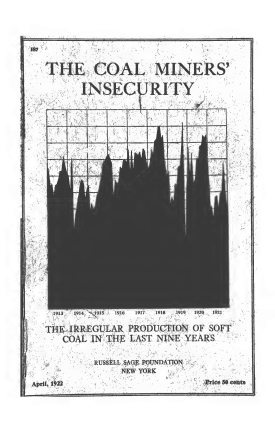
This pamphlet, published in 1922, is a collection of data drawn from publications issued by various state and federal bureaus, which show some of the economic facts behind the unrest of the miners in the bituminous or soft coal industry. It aims to outline certain vital facts which affected the daily working life of the coal miner and explain the workers’ willingness to strike in defense of wages.
LOUIS BLOCH, Department of Industrial Studies, Russell Sage Foundation
This handbook, published in 1922, serves as an introduction to zoning, covering the spread of the movement, the reasons for zoning, the experiences of various zoned cities, and the legal pitfalls, with a discussion of the theory of community land planning legislation.
EDWARD M. BASSETT was chairman of the Zoning Committee of New York.
Published in 1915, this report provides an account of the working conditions and wages of longshoremen in the United States in the early twentieth century. It highlights the problems that come with intermittent employment and casual labor.
CHARLES B. BARNES was fellow at the Bureau of Social Research, New York School of Philanthropy, and director of New York State Public Employment Bureau.
This 1935 pamphlet from the Division of Education at the Russell Sage Foundation details the investigation of American city school systems in 1913 to gather facts concerning the boys in these schools from kindergarten to the last year in high school and the fathers of these boys, to secure a more definite fact basis in the field of industrial education.
LEONARD P. AYRES was director of the Division of Education at the Russell Sage Foundation.
This pamphlet, published in 1911, looks into the causes which contribute to making a child over-age for his grade and if the responsibility lies with the school. Conclusions presented demonstrate the importance of studying the progress of school children as well as their distribution by ages and grades.
LEONARD P. AYRES was director of the Division of Education at the Russell Sage Foundation.
This 1913 paper examines the use of psychological tests in selecting applicants who are best fitted to perform work for positions in certain occupations and industries. Also studied is the possibility of using psychological tests for the purpose of selecting fitting vocations for people.
LEONARD P. AYRES was director of the Division of Education at the Russell Sage Foundation.
Published in 1910, this book presents the essential features and a brief history of the open-air school, a new type of schooling held almost entirely in the open air, with education focusing on outdoor life.
LEONARD P. AYRES was director of the Division of Education at the Russell Sage Foundation.
This article, published in the Journal of Education in 1909, argues for more research in regards to the proportion of children who enter schools in relation to how many complete the elementary course. It proposes diligent study on the number of new pupils entering public schools to better facilitate educational administrators.
LEONARD P. AYRES was director of the Division of Education at the Russell Sage Foundation.