Cover image of the book Approaches to Social Theory
Books

Approaches to Social Theory

Editors
Siegwart Lindenberg
James S. Coleman
Stefan Nowak
Hardcover
Add to Cart
Publication Date
1 in. × 1 in. 416 pages
ISBN
978-0-87154-205-2
Also Available From

About This Book

Many social scientists lament the increasing fragmentation of their discipline, the trend toward specialization and away from engagement with overarching issues. Opportunities to transcend established subdisciplinary boundaries are rare, but the extraordinary conference that gave rise to this volume was one such occasion.

The W. I. Thomas and Florian Znaniecki Memorial Conference on Social Theory, held at the University of Chicago, brought together an outstanding array of scholars representing a variety of contending approaches to social theory. In panels, presentations, and general discussions, these scholars confronted one another in the context of an entire range of approaches. But as readers of this deftly edited collection will discover, the conference was more than a forum for abstract theoretical debate. These papers and discussions represent original scholarly contributions that exemplify orientations to social theory by examining real problems in the functioning of society—from large-scale economic growth and decline to the dynamics of interpersonal interaction.

By exploring a few central issues in different ways, this unique conference worked through some lively theoretical incompatibilities and established genuine potential for communication, for complementary and collaborative effort at the core of sociology. The excitement of that dialogue, and the intellectual vitality it generated, are captured for the reader in Approaches to Social Theory.

"Meaty presentations and confrontations of ideas by people whose views we respect...Recommended to anyone interested in the current state of social theory." —Contemporary Sociology

SIEGWART LINDENBERG is at the University of Groningen.

JAMES S. COLEMAN is at the University of Chicago.

CONTRIBUTORS: Robert McCormick Adams, Howard Aldrich, Gary S. Becker, Joseph Ben-David, Peter M. Blau, Ronald S. Burt, James S. Coleman, Randall Collins, Robert G. Eccles, David L. Featherman, John Freeman, Allen Grimshaw, Joseph R. Gusfield, Michael T. Hannan, Russell Hardin, Michael Hechter, David R. Heise, Morris Janowitz, John Kitsuse, David Knoke, William Labov, Edward O. Laumann, Siegwart Lindenberg, Arthur Mann, Anthony Oberschall, Mancur Olson, Ann Shola Orloff, John Padgett, Edward Shils, Theda Skocpol, Arthur L. Stinchcombe, Fred L. Strodtbeck, Nigel Tomes, Immanuel Wallerstein, and Harrison C. White

RSF Journal
View Book Series
Sign Up For Our Mailing List
Apply For Funding
Cover image of the book The Colors of Poverty
Books

The Colors of Poverty

Why Racial and Ethnic Disparities Persist
Editors
Ann Chih Lin
David R. Harris
Paperback
$34.95
Add to Cart
Publication Date
1 in. × 1 in. 344 pages
ISBN
978-0-87154-540-4
Also Available From

About This Book

"In The Colors of Poverty Ann Chih Lin and David Harris bring together a stellar roster of scholars to argue that racial inequality does not stem from a single powerful socioeconomic disadvantage, but from multiple disadvantages that accumulate over time to undermine decisively the life chances of poor minorities. Attempts to find one underlying cause of poverty and eliminate it with a magic policy bullet, they argue, are doomed to failure. This insight should guide all future research and policy on poverty in the United States."
-DOUGLAS S. MASSEY, Henry G. Bryant Professor of Sociology and Public Affairs, Woodrow Wilson School, Princeton University

"The Colors of Poverty has it all–theory, data, and policy. It treats a wide range of substantive topics and is inclusive of the full 'color' spectrum in the United States, not just blacks and whites. Ann Chih Lin and David R. Harris, and the chapter authors, bring a fresh perspective to the vexing problem of race-based disadvantage. You may not need any other book on your syllabus."
-MARY PATTILLO, professor of sociology and African American studies, Northwestern University

"The Colors of Poverty, the product of an interdisciplinary team of leading scholars, explores the key issues at the intersection of race, poverty, and public policy. The book's eleven chapters are sophisticated, comprehensive, and well-balanced. Anyone who wants to understand the multiple and overlapping causes of the persistence of racial disadvantage in the United States could not do better than to study this book."
-PAUL A. JARGOWSKY, professor of public policy, University of Texas at Dallas

Given the increasing diversity of the nation—particularly with respect to its growing Hispanic and Asian populations—why does racial and ethnic difference so often lead to disadvantage? In The Colors of Poverty, a multidisciplinary group of experts provides a breakthrough analysis of the complex mechanisms that connect poverty and race.

The Colors of Poverty reframes the debate over the causes of minority poverty by emphasizing the cumulative effects of disadvantage in perpetuating poverty across generations. The contributors consider a kaleidoscope of factors that contribute to widening racial gaps, including education, racial discrimination, social capital, immigration, and incarceration. Michèle Lamont and Mario Small grapple with the theoretical ambiguities of existing cultural explanations for poverty disparities.  They argue that culture and structure are not competing explanations for poverty, but rather collaborate to produce disparities. Looking at how attitudes and beliefs exacerbate racial stratification, social psychologist Heather Bullock links the rise of inequality in the United States to an increase in public tolerance for disparity. She suggests that the American ethos of rugged individualism and meritocracy erodes support for antipoverty programs and reinforces the belief that people are responsible for their own poverty. Sociologists Darren Wheelock and Christopher Uggen focus on the collateral consequences of incarceration in exacerbating racial disparities and are the first to propose a link between legislation that blocks former drug felons from obtaining federal aid for higher education and the black/white educational attainment gap. Joe Soss and Sanford Schram argue that the increasingly decentralized and discretionary nature of state welfare programs allows for different treatment of racial groups, even when such policies are touted as “race-neutral.” They find that states with more blacks and Hispanics on welfare rolls are consistently more likely to impose lifetime limits, caps on benefits for mothers with children, and stricter sanctions.

The Colors of Poverty is a comprehensive and evocative introduction to the dynamics of race and inequality. The research in this landmark volume moves scholarship on inequality beyond a simple black-white paradigm, beyond the search for a single cause of poverty, and beyond the promise of one “magic bullet” solution.

ANN CHIH LIN is associate professor in the Gerald R. Ford School of Public Policy and Department of Political Science at the University of Michigan.

DAVID R. HARRIS is professor of sociology and deputy provost at Cornell University.

CONTRIBUTORS: Scott W. Allard, Heather E. Bullock, George Farkas, David R. Harris, Michèle Lamont, Ann Chih Lin, Selina A. Mohammed, Devah Pager, Lincoln Quillian, Rozlyn Reed, Sanford F. Schram, Mario Luis Small, Joe Soss, Michael A. Stoll, Christopher Uggen, Darren Wheelock, and David R. Williams

A Volume in the National Poverty Center Series on Poverty and Public Policy

RSF Journal
View Book Series
Sign Up For Our Mailing List
Apply For Funding
Cover image of the book Deflecting Immigration
Books

Deflecting Immigration

Networks, Markets, and Regulation in Los Angeles
Author
Ivan Light
Paperback
$31.95
Add to Cart
Publication Date
1 in. × 1 in. 272 pages
ISBN
978-0-87154-537-4
Also Available From

About This Book

Winner of the 2008 Thomas and Znaniecki Award from the International Migration Section of the American Sociological Association

"Ivan Light's Deflecting Immigration makes a valuable contribution, one that illuminates various trends either overlooked or left unaddressed in the standard scholarship about immigration in the United States."
-SCIENCE MAGAZINE

"Ivan Light offers a bold thesis of how local policies shape immigrant incorporation in middle-class America ... Deflecting Immigration argues immigration policy in America is implemented at the municipal, not federal level."
-DOWELL MYERS, professor of urban planning and demography, University of Southern California

"Ivan Light's Deflecting Immigration is a book of multiple and long overdue contributions to immigration research at a time when existing paradigms are reaching exhaustion ... [T]his book has filled a gap in the emerging literature on new immigrant destinations, showing that in order to explain what is happening in uncharted areas of settlement, we need to understand what is unfolding in America's premier immigrant gateway."
-RUBÉN HERNÁNDEZ-LEÓN, assistant professor of sociology, University of California, Los Angeles

"Deflecting Immigration provides a new and insightful interpretation of the reason for the growing immigrant diaspora from the coastal gateway cites of the United States ... The book is an important contribution to the debate about immigration, its intersection with local communities, and the long-term implications for the spatial redistribution of immigrants."
-WILLIAM A. V. CLARK, professor of geography, University of California, Los Angeles

As international travel became cheaper and national economies grew more connected over the past thirty years, millions of people from the Third World emigrated to richer countries. A tenth of the population of Mexico relocated to the United States between 1980 and 2000. Globalization theorists claimed that reception cities could do nothing about this trend, since nations make immigration policy, not cities. In Deflecting Immigration, sociologist Ivan Light shows how Los Angeles reduced the sustained, high-volume influx of poor Latinos who settled there by deflecting a portion of the migration to other cities in the United States. In this manner, Los Angeles tamed globalization’s local impact, and helped to nationalize what had been a regional immigration issue.

Los Angeles deflected immigration elsewhere in two ways. First, the protracted network-driven settlement of Mexicans naturally drove up rents in Mexican neighborhoods while reducing immigrants’ wages, rendering Los Angeles a less attractive place to settle. Second, as migration outstripped the city’s capacity to absorb newcomers, Los Angeles gradually became poverty-intolerant. By enforcing existing industrial, occupational, and housing ordinances, Los Angeles shut down some unwanted sweatshops and reduced slums. Their loss reduced the metropolitan region’s accessibility to poor immigrants without reducing its attractiveness to wealthier immigrants. Additionally, ordinances mandating that homes be built on minimum-sized plots of land with attached garages made home ownership in L.A.’s suburbs unaffordable for poor immigrants and prevented low-cost rental housing from being built. Local rules concerning home occupancy and yard maintenance also prevented poor immigrants from crowding together to share housing costs. Unable to find affordable housing or low-wage jobs, approximately one million Latinos were deflected from Los Angeles between 1980 and 2000.

The realities of a new global economy are still unfolding, with uncertain consequences for the future of advanced societies, but mass migration from the Third World is unlikely to stop in the next generation. Deflecting Immigration offers a shrewd analysis of how America’s largest immigrant destination independently managed the challenges posed by millions of poor immigrants and, in the process, helped focus attention on immigration as an issue of national importance.

IVAN LIGHT is professor of sociology at the University of California, Los Angeles.


RSF Journal
View Book Series
Sign Up For Our Mailing List
Apply For Funding
Cover image of the book The New Dollars and Dreams
Books

The New Dollars and Dreams

American Incomes and Economic Change
Author
Frank Levy
Paperback
$26.95
Add to Cart
Publication Date
1 in. × 1 in. 264 pages
ISBN
978-0-87154-515-2
Also Available From

About This Book

Foreword by Nicholas Lemann

"A brilliant book that both clarifies and explains the seemingly contradictory trends of a booming economy, wage stagnation, and growing income inequality." —Thomas B. Edsall, author, The New Politics of Inequality and political reporter at The Washington Post

More than a decade ago, Frank Levy's classic Dollars and Dreams offered an incisive analysis of the dramatic changes then taking place in the American standard of living. As wage stagnation and rising income inequality in the 1970s and early 80s began to undermine Americans' traditional economic optimism, Levy's book provided the first diagnosis of what he called the quiet depression. Since then, the U.S. economy has made a dramatic comeback, but economic insecurity remains widespread. New technologies, increased immigration, and global competition have opened up a new economic playing field, one with new rules and new winners and losers. The New Dollars and Dreams explores this puzzling economic landscape, in which low unemployment goes hand in hand with sluggish wage growth and high income inequality. This completely revised and expanded version of Levy's original book offers an invaluable guide to the sweeping economic, social, and political changes that have remade life in the United States over the past twenty-five years.

Levy tells a fascinating and insightful story about what happened to American incomes and jobs. His plot resists the simple truths of everyday journalism, and explains the economic and political twists and turns that have shaped the current American economy—including the oil and food price inflations of the 1970s, the market deregulations and corporate downsizings of the 1980s, the emergence of women as sole breadwinners in many families, the migration of jobs to the suburbs, and the computerization of work. The New Dollars and Dreams illuminates the key sources of inequality, with chapters that examine the disparate employment progress of whites, minorities, men, and women, and it carefully investigates the claim that the concentration of very high incomes is the result of a winner-take-all economy. Although the growth of the service economy is often blamed for inequality, Levy locates a more fundamental cause in the rising educational and skill demands brought about by restructuring of work in all sectors of the economy. An important part of the story also involves the transformation of the American family from extended and two-parent households to those headed by single mothers and lone individuals. By making sense of these complex trends, The New Dollars and Dreams offers crucial insights into why, despite a thriving economy, many Americans no longer feel secure in their financial futures.

FRANK LEVY is Daniel Rose Professor of Urban Economics at the Massachusetts Institute of Technology.

A Volume in the RSF Census Series

RSF Journal
View Book Series
Sign Up For Our Mailing List
Apply For Funding
Cover image of the book The Changing Face of Home
Books

The Changing Face of Home

The Transitional Lives of the Second Generation
Editors
Peggy Levitt
Mary C. Waters
Paperback
$34.95
Add to Cart
Publication Date
1 in. × 1 in. 420 pages
ISBN
978-0-87154-516-9
Also Available From

About This Book

"[T]his is a valuable guide to the current state of transnational research and theory, and as such should be considered essential
reading for immigration scholars."
-JOURNAL OF AMERICAN ETHNIC HISTORY

"Levitt and Waters have assembled, in this book, engaging, provocative approaches to transnationalism and the second generation that should be read by all scholars in these fields."
- CONTEMPORARY SOCIOLOGY

"In The Changing Face of Home, leading scholars integrate diverse methodologies and theoretical positions to investigate the extent to which the children of immigrants will retain ties to their families' countries of origin. Offering the best definition of the concept of transnationalism available, and drawing upon evidence collected from a wide array of brilliant case studies, it contributes significantly to our understanding of contemporary migrants' identities and behaviors. It is a must read for those who wish to keep abreast of the ways by which human movement continues to transform social life."
- STEVEN J. GOLD, Michigan State University

"This is one of these rare books that clears a wide and exciting path for future scholarship. By putting together such an impressive collection of insightful articles, Peggy Levitt and Mary C. Waters add considerable knowledge and precision to a disorderly interdisciplinary field that has attracted, and can only continue to attract, enormous interest. They and their coauthors are particularly sensitive to how transnationalism shapes definitions of personal and collective identities and imagined communities. As such, they help push the field of immigration toward a truly multidimensional understanding of the transnational lives of the second generation."
- MICHÈLE LAMONT, Princeton University

"A treasure trove anthology that includes chapters on a wide array of different immigrant groups, this book breaks new ground through comparative, nuanced analysis and searing research questions that offer readers a state-of-the-art summary while setting the stage for a new generation of scholarship. Provocative and pioneering, The Changing Face of Home shifts research on second generation immigrants in a critical new direction that will keenly interest policy makers, planners and academics alike."
- SARAH J. MAHLER, Florida International University

The children of immigrants account for the fastest growing segment of the U.S. population under eighteen years old—one out of every five children in the United States. Will this generation of immigrant children follow the path of earlier waves of immigrants and gradually assimilate into mainstream American life, or does the global nature of the contemporary world mean that the trajectory of today's immigrants will be fundamentally different? Rather than severing their ties to their home countries, many immigrants today sustain economic, political, and religious ties to their homelands, even as they work, vote, and pray in the countries that receive them. The Changing Face of Home is the first book to examine the extent to which the children of immigrants engage in such transnational practices.

Because most second generation immigrants are still young, there is much debate among immigration scholars about the extent to which these children will engage in transnational practices in the future. While the contributors to this volume find some evidence of transnationalism among the children of immigrants, they disagree over whether these activities will have any long-term effects. Part I of the volume explores how the practice and consequences of transnationalism vary among different groups. Contributors Philip Kasinitz, Mary Waters, and John Mollenkopf use findings from their large study of immigrant communities in New York City to show how both distance and politics play important roles in determining levels of transnational activity. For example, many Latin American and Caribbean immigrants are "circular migrants" spending much time in both their home countries and the United States, while Russian Jews and Chinese immigrants have far less contact of any kind with their homelands.

In Part II, the contributors comment on these findings, offering suggestions for reconceptualizing the issue and bridging analytical differences. In her chapter, Nancy Foner makes valuable comparisons with past waves of immigrants as a way of understanding the conditions that may foster or mitigate transnationalism among today's immigrants. The final set of chapters examines how home and host country value systems shape how second generation immigrants construct their identities, and the economic, social, and political communities to which they ultimately express allegiance.

The Changing Face of Home presents an important first round of research and dialogue on the activities and identities of the second generation vis-a-vis their ancestral homelands, and raises important questions for future research.

PEGGY LEVITT is assistant professor of sociology, Wellesley College.

MARY C. WATERS is professor of sociology, Harvard University.

CONTRIBUTORS: Merih Anil, Susan Eckstein, Yen Le Espiritu, Nancy Foner, Georges E. Fouron, Nina Glick-Schiller, Michael Jones-Correa, Philip Kasinitz, Nazli Kibria, Peggy Levitt, Andrea Louie, John H. Mollenkopf, Joel Perlmann, Ruben G. Rumbaut, Robert C. Smith, Thom Tran, Reed Ueda, Milton Vickerman, Mary C. Waters, and Diane L. Wolf.

RSF Journal
View Book Series
Sign Up For Our Mailing List
Apply For Funding
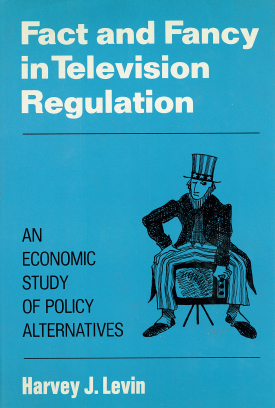
Cover image of the book Fact and Fancy in Television Regulation
Books

Fact and Fancy in Television Regulation

An Economic Study of Policy Alternatives
Author
Harvey J. Levin
Hardcover
Add to Cart
Publication Date
1 in. × 1 in. 524 pages
ISBN
978-0-87154-531-2
Also Available From

About This Book

How diverse can, and should, TV programming be? And especially, in what precise ways does governmental regulation of TV affect (or fail to affect) the programs station owners produce—programs which, in the final analysis, shape in such large measure the values of Americans? It is to these timely and beguiling questions that Harvey Levin addresses his dispassionate assessment of the complex relationship between government and the TV industry. Analyzing data drawn from the history of the FCC's regulatory decisions, as well as from interviews with numerous government and industry officials, Professor Levin shows how the present form of restrictive governmental regulation almost always results in higher profits and rents for TV stations, with no concomitant increase in programming diversity.

In addition, Professor Levin investigates various other aspects of the media market, from the particular kinds of crucial decisions that are made when, for example, a newspaper owns a TV station, to the kinds of problems that arise when commercial rents are taxed to fund public TV; from the brand of programming we are offered when a monopoly controls a given TV market to the nature of programming in a situation of steady and fair competition. Following a comprehensive assessment, the author makes a compelling case for diversification of station ownership, in order to be "safe rather than sorry." He also argues for the entry of new stations, more extensive support of public TV, and some form of quantitative program requirements—all of which will help bring about greater program diversity.

Professor Levin's volume provides us with a fully documented and sharply focused analysis of the theories, policies, and problems of one of the most powerful and misunderstood of contemporary institutions.

HARVEY J. LEVIN is professor of economics at Hofstra University and senior research associate at the Center for Policy Research.

RSF Journal
View Book Series
Sign Up For Our Mailing List
Apply For Funding
Cover image of the book Designing Democratic Government
Books

Designing Democratic Government

Making Institutions Work
Editors
Margaret Levi
James Johnson
Jack Knight
Susan Stokes
Paperback
$42.95
Add to Cart
Publication Date
1 in. × 1 in. 336 pages
ISBN
978-0-87154-459-9
Also Available From

About This Book

"Redolent and thoughtful, this is a rich book of essays about fundamental questions. How does the organization of institutions-formal and informal-affect the qualities of modern democracy? Which arrangements impede or facilitate electoral participation and other forms of active citizenship? Harnessing systematic social science and sustained reason to probe such issues, Designing Democratic Government effectively challenges political science scholarship to help direct political reform. In turn, it invites leaders and citizens to think more analytically about the future of liberal democracy."
-IRA KATZNELSON, Ruggles Professor of Political Science and History, Columbia University

"Designing Democratic Government offers a rich and thoughtful collection of essays exploring the ways in which institutional configurations promote or impede democratic participation, competition, and accountability. It is an important resource for scholars and reformers alike."
-THOMAS E. MANN, W. Averell Harriman Chair and senior fellow, The Brookings Institution

What are the essential elements of a democracy? How can nations ensure a political voice for all citizens, and design a government that will respond to those varied voices? These perennial questions resonate strongly in the midst of ongoing struggles to defend democratic institutions around the world and here at home. In Designing Democratic Government, a group of distinguished political scientists provides a landmark cross-national analysis of the institutions that either facilitate or constrain the healthy development of democracy.

The contributors to Designing Democratic Government use the democratic ideals of fairness, competitiveness, and accountability as benchmarks to assess a wide variety of institutions and practices. John Leighly and Jonathan Nagler find that in the U.S., the ability to mobilize voters across socioeconomic lines largely hinges on the work of non-party groups such as civic associations and unions, which are far less likely than political parties to engage in class-biased outreach efforts. Michael McDonald assesses congressional redistricting methods and finds that court-ordered plans and close adherence to the Voting Rights Act effectively increase the number of competitive electoral districts, while politically-drawn maps reduce the number of competitive districts. John Carey and John Polga-Hecimovich challenge the widespread belief that primary elections produce inferior candidates. Analyzing three decades worth of comprehensive data on Latin American presidential campaigns, they find that primaries impart a stamp of legitimacy on candidates, helping to engage voters and mitigate distrust in the democratic process. And Kanchan Chandra proposes a paradigm shift in the way we think about ethnic inclusion in democracies: nations should design institutions that actively promote—rather than merely accommodate—diversity.

At a moment when democracy seems vulnerable both at home and abroad, Designing Democratic Government sorts through a complex array of practices and institutions to outline what works and what doesn’t in new and established democracies alike. The result is a volume that promises to change the way we look at the ideals of democracy worldwide.


MARGARET LEVI is Jere L. Bacharach Professor of International Studies of the Department of Political Science at the University of Washington.


JAMES JOHNSON teaches social and political theory at the University of Rochester.


JACK KNIGHT is professor of law and political science at Duke University.


SUSAN STOKES is John S. Sadden Professor of Political Science at Yale University.


CONTRIBUTORS: Susan A. Banducci, Shaun Bowler, Henry E. Brady, Thomas L. Brunell, John M. Carey, Kanchan Chandra, Todd Donovan, David L. Epstein, Bernard Grofman, Iris Hui, James Johnson, Jeffrey A. Karp, Jack Knight, Jan E. Leighley, Margaret Levi, David Lublin, Michael P. McDonald, Jonathan Nagler, Sharyn O'Halloran, John Polga-Hecimovich, Gary Segura, Charles Stewart III, and Susan Stokes.

RSF Journal
View Book Series
Sign Up For Our Mailing List
Apply For Funding
Cover image of the book Muslims in the United States
Books

Muslims in the United States

The State of Research
Author
Karen Isaksen Leonard
Paperback
$27.95
Add to Cart
Publication Date
1 in. × 1 in. 216 pages
ISBN
978-0-87154-530-5
Also Available From

About This Book

As the United States wages war on terrorism, the country's attention is riveted on the Muslim world as never before. While many cursory press accounts dealing with Muslims in the United States have been published since 9/11, few people are aware of the wealth of scholarly research already available on the American Islamic population. In Muslims in the United States: The State of Research, Karen Isaksen Leonard mines this rich vein of research to provide a fascinating overview of the history and contemporary situation of American Muslim communities.

Leonard describes how Islam, never a monolithic religion, has inevitably been shaped by its experience on American soil. American Muslims are a religious minority, and arbiters of Islamic cultural values and jurisprudence must operate within the framework of America's secular social and legal codes, while coping with the ethnic differences among Muslim groups that have long divided their communities. Arab Muslims tend to dominate mosque functions and teaching Arabic and the Qur'an, whereas South Asian Muslims have often focused on the regional and national mobilization of Muslims around religious and political issues. By the end of the 20th century, however, many Muslim immigrants had become American citizens, prompting greater interchange among these groups and bridging some cultural differences.

African American Muslims remain the most isolated group—a minority within a minority. Many African American men have converted to Islam while in prison, leading to a special concern among African American Muslims for civil and religious rights within the prison system. Leonard highlights the need to expand our knowledge of African American Muslim movements, which are often not regarded as legitimate by immigrant Muslims. Leonard explores the construction of contemporary American Muslim identities, examining such factors as gender, sexuality, race, class, and generational differences within the many smaller national origin and sectarian Muslim communities, including secular Muslims, Sufis, and fundamentalists.

Muslims in the United States provides a thorough account of the impact of September 11th on the Muslim community. Before the terrorist attacks, Muslim leaders had been mostly optimistic, envisioning a growing role for Muslims in U.S. society. Afterward, despite a brave show of unity and support for the nation, Muslim organizations became more open in showing their own conflicts and divisions and more vocal in opposing militant Islamic ideologies.

By providing a concise summary of significant historical and contemporary research on Muslims in the United States, this volume will become an essential resource for both the scholar and the general reader interested in understanding the diverse communities that constitute Muslim America.

KAREN ISAKSEN LEONARD is professor of anthropology at the University of California, Irvine.

RSF Journal
View Book Series
Sign Up For Our Mailing List
Apply For Funding
Cover image of the book Kinship and Casework
Books

Kinship and Casework

Authors
Hope Jensen Leichter
William E. Mitchell
Hardcover
Add to Cart
Publication Date
1 in. × 1 in. 372 pages
ISBN
978-0-87154-522-0
Also Available From

About This Book

Reaffirms the importance of the larger kinship network through analysis of extensive data on the clients of one social agency. The authors show that the less kinship-oriented caseworkers often attempt to change clients' kin relationships in the direction of less involvement, raising questions about value differences in therapeutic practice. The book also points to the importance of concepts, such as those dealing with family kinship, that will enable the caseworker to appraise the client's social relationships more fully. The authors emphasize the benefits to be derived from a closer liaison between social work and social science.

HOPE JENSEN LEICHTER is associate professor at Columbia University's Teacher's College.

WILLIAM E. MITCHELL is research associate in anthropology in the Department of Psychiatry at the Vermont College of Medicine.

RSF Journal
View Book Series
Sign Up For Our Mailing List
Apply For Funding
Cover image of the book The Diversity Paradox
Books

The Diversity Paradox

Immigration and the Color Line in Twenty-First Century America
Authors
Jennifer Lee
Frank D. Bean
Paperback
$34.95
Add to Cart
Publication Date
1 in. × 1 in. 248 pages
ISBN
978-0-87154-513-8
Also Available From

About This Book

Winner of the 2011 Otis Dudley Duncan Award for Outstanding Scholarship in Social Demography

“The Diversity Paradox provides much needed clarity on the complex issues of the new (and old) diversity in American society. . . . Lee and Bean provide a thorough documentation of recent demographic changes and a clear and compelling synthesis of the research literature on the new American diversity.”
–CONTEMPORARY SOCIOLOGY 

“Using an impressive arsenal of quantitative and qualitative data, Jennifer Lee and Frank Bean offer an authoritative analysis of the color line in American society, revealing a remarkable paradox at the heart of contemporary intergroup relations. . . . Their careful analysis challenges both glib assertions of a post-racial order as well as pronouncements about the immutability of America’s racial categories.”
–DOUGLAS S. MASSEY, Henry G. Bryant Professor of Sociology and Public Affairs, the Woodrow Wilson School 

“The study of multiracial identification is both timely and theoretically significant. Jennifer Lee and Frank Bean combine their distinct sensibility and nuanced sociological imagination with rigorous application of qualitative and quantitative methodologies to make a seminal contribution to research on interracial dynamics that will forever challenge our understanding of race in twenty-first century America.”
–MIN ZHOU, professor of sociology and Asian American studies, UCLA 

“Jennifer Lee and Frank D. Bean have produced a penetrating analysis of how the new immigration and a rapidly growing multiracial population have complicated America’s racial and ethnic hierarchies. Through a combination of demographic analysis and in-depth interviews, they reveal a remarkable blurring of racialized boundaries for some groups in many places, while they also detect the stubborn persistence of a color line. The Diversity Paradox challenges old notions of race and ethnicity and brings unusual clarity to understanding a changing America.”
–EDWARD TELLES, professor of sociology, Princeton University 

“Jennifer Lee and Frank Bean’s comprehensive, data-filled, and insightful analysis adds considerably to our understanding of multiracial life in America. The Diversity Paradox is a very welcome and greatly needed book, for the study of multiracials will be high on immigration, race, and ethnicity research agendas in the coming years. The book’s report about the country’s ethnoracial present and future should be of special interest to students. They will be spending their adult lives in an America marked by the paradoxical treatment of diverse nonwhite people about which Lee and Bean write.”
–HERBERT J. GANS, Robert S. Lynd Professor Emeritus of Sociology, Columbia University

African Americans grappled with Jim Crow segregation until it was legally overturned in the 1960s. In subsequent decades, the country witnessed a new wave of immigration from Asia and Latin America—forever changing the face of American society and making it more racially diverse than ever before. In The Diversity Paradox, authors Jennifer Lee and Frank Bean take these two poles of American collective identity—the legacy of slavery and immigration—and ask if today’s immigrants are destined to become racialized minorities akin to African Americans or if their incorporation into U.S. society will more closely resemble that of their European predecessors. They also tackle the vexing question of whether America’s new racial diversity is helping to erode the tenacious black/white color line.

The Diversity Paradox uses population-based analyses and in-depth interviews to examine patterns of intermarriage and multiracial identification among Asians, Latinos, and African Americans. Lee and Bean analyze where the color line—and the economic and social advantage it demarcates—is drawn today and on what side these new arrivals fall. They show that Asians and Latinos with mixed ancestry are not constrained by strict racial categories. Racial status often shifts according to situation. Individuals can choose to identify along ethnic lines or as white, and their decisions are rarely questioned by outsiders or institutions. These groups also intermarry at higher rates, which is viewed as part of the process of becoming “American” and a form of upward social mobility. African Americans, in contrast, intermarry at significantly lower rates than Asians and Latinos. Further, multiracial blacks often choose not to identify as such and are typically perceived as being black only—underscoring the stigma attached to being African American and the entrenchment of the “one-drop” rule. Asians and Latinos are successfully disengaging their national origins from the concept of race—like European immigrants before them—and these patterns are most evident in racially diverse parts of the country.

For the first time in 2000, the U.S. Census enabled multiracial Americans to identify themselves as belonging to more than one race. Eight years later, multiracial Barack Obama was elected as the 44th President of the United States. For many, these events give credibility to the claim that the death knell has been sounded for institutionalized racial exclusion. The Diversity Paradox is an extensive and eloquent examination of how contemporary immigration and the country’s new diversity are redefining the boundaries of race. The book also lays bare the powerful reality that as the old black/white color line fades a new one may well be emerging—with many African Americans still on the other side.

JENNIFER LEE is professor of sociology at the University of California, Irvine.

FRANK D. BEAN is Chancellor’s Professor of Sociology and Economics and director of the Center for Research on Immigration, Population, and Public Policy at the University of California, Irvine.

RSF Journal
View Book Series
Sign Up For Our Mailing List
Apply For Funding