Cover image of the book Tiny Publics
Books

Tiny Publics

A Theory of Group Action and Culture
Author
Gary Alan Fine
Paperback
$42.50
Add to Cart
Publication Date
236 pages
ISBN
978-0-87154-432-2
Also Available From

About This Book

“In Tiny Publics, Gary Alan Fine synthesizes over three decades of his research to show that there is a substantial gain to understanding how and why small groups create civil society and social order. The implications are intuitive, compelling, and profound and should lead us to reconsider everything from art worlds to the Arab Spring. All in all, it is further evidence that Fine is one of the most gifted ethnographers and sociologists of our time.”
—Damon J. Phillips, Columbia University

“Using such evocative phrases as ‘sociological miniaturism,’ the ‘sociology of the local,’ ‘idiocultures,’ and ‘peopled organizations,’ Gary Alan Fine has long offered the best and most insistent reminder to sociologists to attend to the interactional fields of small groups in order to understand . . . well, anything. In his new book Tiny Publics, Fine continues in this rich vein, showing how large-scale social forces are always deeply embedded in, and inexorably the product of, the microdynamics of group settings.”
—Amy Binder, University of California, San Diego

“In Tiny Publics, Gary Alan Fine builds on forty years of fieldwork in the dynamics of small groups to propose a ‘local sociology’ that sheds new light on meso-level social life. Multi-dimensional, multifarious, and rich in implications, this approach bridges the traditional insights of micro-sociology with the newest disciplinary developments. Fine’s daring novel agenda will most certainly leave its mark on the landscape of contemporary sociological theory.”
—Michèle Lamont, Harvard University

If all politics is local, then so is almost everything else, argues sociologist Gary Alan Fine. We organize our lives by relying on those closest to us—family members, friends, work colleagues, team mates, and other intimates—to create meaning and order. In this thoughtful and wide-ranging book, Fine argues that the basic building blocks of society itself are forged within the boundaries of such small groups, the "tiny publics" necessary for a robust, functioning social order at all levels. Action, meaning, authority, inequality, organization, and institutions all have their roots in small groups. Yet for the past twenty-five years social scientists have tended to ignore the power of groups in favor of an emphasis on organizations, societies, or individuals. Based on over thirty-five years of Fine's own ethnographic research across an array of small groups, Tiny Publics presents a compelling new theory of the pivotal role of small groups in organizing social life.

No social system can thrive without flourishing small groups. They provide havens in an impersonal world, where faceless organizations become humanized. Taking examples from such diverse worlds as Little League baseball teams, restaurant workers, high school debate teams, weather forecasters, and political volunteers, Fine demonstrates how each group has its own unique culture, or idioculture—the system of knowledge, beliefs, behavior, and customs that define and hold a group together. With their dense network of relationships, groups serve as important sources of social and cultural capital for their members. The apparently innocuous jokes, rituals, and nicknames prevalent within Little League baseball teams help establish how teams function internally and how they compete with other teams. Small groups also provide a platform for their members to engage in broader social discourse and a supportive environment to begin effecting change in larger institutions. In his studies of mushroom collectors and high school debate teams, Fine demonstrates the importance of stories that group members tell each other about their successes and frustrations in fostering a strong sense of social cohesion. And Fine shows how the personal commitment political volunteers bring to their efforts is reinforced by the close-knit nature of their work, which in turn has the power to change larger groups and institutions. In this way, the actions and debates begun in small groups can eventually radiate outward to affect every level of society.

Fine convincingly demonstrates how small groups provide fertile ground for the seeds of civic engagement. Outcomes often attributed to large-scale social forces originate within such small-scale domains. Employing rich insights from both sociology and social psychology, as well as vivid examples from a revealing array of real-work groups, Tiny Publics provides a compelling examination of the importance of small groups and of the rich vitality they bring to social life.

GARY ALAN FINE is professor of sociology at Northwestern University.

A Volume in the Russell Sage Foundation Series on Trust
RSF Journal
View Book Series
Sign Up For Our Mailing List
Apply For Funding
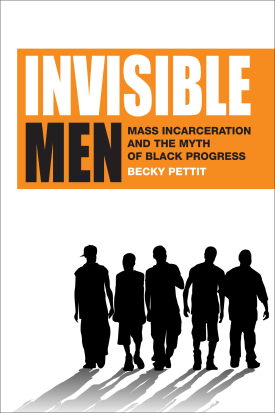
Cover image of the book Invisible Men
Books

Invisible Men

Mass Incarceration and the Myth of Black Progress
Author
Becky Pettit
Paperback
$39.95
Add to Cart
Publication Date
156 pages
ISBN
978-0-87154-667-8
Also Available From

About This Book

“By documenting how our nation’s data collection infrastructure systematically undercounts currently or formerly incarcerated individuals, Becky Pettit leaves the reader with this deeply unsettling realization: our empirical understanding of the era of mass incarceration is fundamentally inadequate. This timely book should spur two reactions. We must revise our data collection systems. We must also acknowledge our limited ability to document prison’s consequences. By forcing this uncomfortable look in the mirror, Pettit has performed an invaluable service.”
—Jeremy Travis, John Jay College of Criminal Justice 

Invisible Men is an important book. Becky Pettit pulls back the curtain on a hidden population marginalized by mass incarceration. Her analysis masterfully challenges the conventional statistics of racial inequality and reveals a history of African American progress stalled by the growth of the nation’s prisons.”
—Bruce Western, Harvard University 

“In this brilliant and timely book, Becky Pettit systematically upends a generation of social science research on American racial progress. With clear prose and< convincing evidence, Invisible Men shows how the failure to properly count prisoners has distorted official statistics on education, employment, politics, and health. The book’s policy importance cannot be overstated: unless and until we improve data quality, our policy efforts will be guided by a funhouse mirror image rather than reliable and accurate social facts. Even as Invisible Men demonstrates that things are sometimes worse than they appear, it offers a hopeful reform agenda for improving our data and our policy prescriptions.”
—Christopher Uggen, University of Minnesota

For African American men without a high school diploma, being in prison or jail is more common than being employed—a sobering reality that calls into question post-Civil Rights era social gains. Nearly 70 percent of young black men will be imprisoned at some point in their lives, and poor black men with low levels of education make up a disproportionate share of incarcerated Americans. In Invisible Men, sociologist Becky Pettit demonstrates another vexing fact of mass incarceration: most national surveys do not account for prison inmates, a fact that results in a misrepresentation of U.S. political, economic, and social conditions in general and black progress in particular. Invisible Men provides an eye-opening examination of how mass incarceration has concealed decades of racial inequality.

Pettit marshals a wealth of evidence correlating the explosion in prison growth with the disappearance of millions of black men into the American penal system. She shows that, because prison inmates are not included in most survey data, statistics that seemed to indicate a narrowing black-white racial gap—on educational attainment, work force participation, and earnings—instead fail to capture persistent racial, economic, and social disadvantage among African Americans. Federal statistical agencies, including the U.S. Census Bureau, collect surprisingly little information about the incarcerated, and inmates are not included in household samples in national surveys. As a result, these men are invisible to most mainstream social institutions, lawmakers, and nearly all social science research that isn't directly related to crime or criminal justice. Since merely being counted poses such a challenge, inmates' lives—including their family background, the communities they come from, or what happens to them after incarceration—are even more rarely examined. And since correctional budgets provide primarily for housing and monitoring inmates, with little left over for job training or rehabilitation, a large population of young men are not only invisible to society while in prison but also ill-equipped to participate upon release.

Invisible Men provides a vital reality check for social researchers, lawmakers, and anyone who cares about racial equality. The book shows that more than a half century after the first civil rights legislation, the dismal fact of mass incarceration inflicts widespread and enduring damage by undermining the fair allocation of public resources and political representation, by depriving the children of inmates of their parents' economic and emotional participation, and, ultimately, by concealing African American disadvantage from public view.

BECKY PETTIT is professor of sociology at the University of Washington.

RSF Journal
View Book Series
Sign Up For Our Mailing List
Apply For Funding
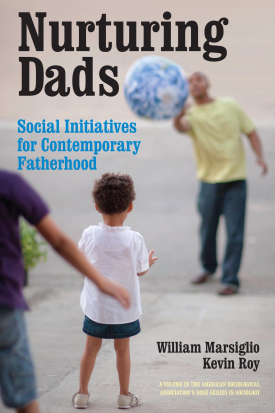
Cover image of the book Nurturing Dads
Books

Nurturing Dads

Social Initiatives for Contemporary Fatherhood
Authors
William Marsiglio
Kevin Roy
Paperback
$45.00
Add to Cart
Publication Date
6 in. × 9 in. 312 pages
ISBN
978-0-87154-566-4
Also Available From

About This Book

A Volume in the American Sociological Association’s Rose Series in Sociology

"In this wide-ranging, insightful, and kaleidoscopic journey across the increasingly diverse social landscape of American fatherhood, William Marsiglio and Kevin Roy breathe fresh air into a stale debate. They illumine men's growing aspirations for close involvement in their children's lives, even when they face economic disadvantage and physical separation. Nurturing Dads makes it abundantly clear that it is time to jettison narrow definitions of manhood and develop social policies that reach well beyond the limited model of fathers as only breadwinners."
-Kathleen Gerson, professor of sociology and Collegiate Professor of Arts and Science, New York University

"In their ground-breaking new book, Nurturing Dads, William Marsiglio and Kevin Roy take a close and thoughtful look at the 'new American father,' that oft-discussed but seldom understood man. Marsiglio and Roy vividly and engagingly describe the goals, dilemmas, challenges, and rewards faced by contemporary fathers as they grapple with diverse, often contradictory, expectations in a rapidly changing cultural landscape. In the process, Marsiglio and Roy identify sensible, intriguing, and practical policies that could be embraced with equal fervour by both the progressive and conservative interest groups whose ideological disagreements have tended to thwart American policy for the last two decades. Perhaps this book will provide the long-awaited tipping point, moving the country from rhetoric to action!"
-Michael E. Lamb, professor of social and developmental psychology, University of Cambridge, and editor-elect, Psychology, Public Policy, & Law

"Fatherhood policy tends to be a 'one size fits all' proposition, working off a deficit model, with most efforts designed to increase men's participation in family life. William Marsiglio and Kevin Roy have cast the broadest and most extensive net ever, embracing the widest and most diverse set of fathers. By focusing as much on what fathers actually do, as what they don't do, but should, they reframe the debates about men's family participation, and set the terms for a renewed and revitalized set of policy initiatives."
-Michael Kimmel, Distinguished Professor of Sociology, SUNY Stony Brook

"Nurturing Dads outlines some of the most pressing challenges facing fathers today. Written by two leading fathering scholars, it makes timely and important contributions to our understandings of the relationships between social policies and men's caregiving. This beautifully written book is a must read for academics, policymakers, and community leaders interested in learning how to promote nurturing and engaged fatherhood."
-Andrea Doucet, Canada Research Chair in Gender, Work, and Care and professor of sociology, Brock University

American fathers are a highly diverse group, but the breadwinning, live-in, biological dad prevails as the fatherhood ideal. Consequently, policymakers continue to emphasize marriage and residency over initiatives that might help foster healthy father-child relationships and creative co-parenting regardless of marital or residential status. In Nurturing Dads, William Marsiglio and Kevin Roy explore the ways new initiatives can address the social, cultural, and economic challenges men face in contemporary families and foster more meaningful engagement between many different kinds of fathers and their children.

What makes a good father? The firsthand accounts in Nurturing Dads show that the answer to this question varies widely and in ways that counter the mainstream "provide and reside" model of fatherhood. Marsiglio and Roy document the personal experiences of more than three hundred men from a wide range of socioeconomic backgrounds and diverse settings, including fathers-to-be, young adult fathers, middle-class dads, stepfathers, men with multiple children in separate families, and fathers in correctional facilities. They find that most dads express the desire to have strong, close relationships with their children and to develop the nurturing skills to maintain these bonds. But they also find that disadvantaged fathers, including young dads and those in constrained financial and personal circumstances, confront myriad structural obstacles, such as poverty, inadequate education, and poor job opportunities.

Nurturing Dads asserts that society should help fathers become more committed and attentive caregivers and that federal and state agencies, work sites, grassroots advocacy groups, and the media all have roles to play. Recent efforts to introduce state-initiated paternity leave should be coupled with social programs that encourage fathers to develop unconditional commitments to children, to co-parent with mothers, to establish partnerships with their children's other caregivers, and to develop parenting skills and resources before becoming fathers via activities like volunteering and mentoring kids. Ultimately, Marsiglio and Roy argue, such combined strategies would not only change the policy landscape to promote engaged fathering but also change the cultural landscape to view nurturance as a fundamental aspect of good fathering.

Care is a human experience—not just a woman's responsibility—and this core idea behind Nurturing Dads holds important implications for how society supports its families and defines manhood. The book promotes the progressive notion that fathers should provide more than financial support and, in the process, bring about a better start in life for their children.

WILLIAM MARSIGLIO is professor in the Department of Sociology and Criminology & Law at the University of Florida.

KEVIN ROY is associate professor of family science at the University of Maryland

RSF Journal
View Book Series
Sign Up For Our Mailing List
Apply For Funding

The incarceration debate heated up last summer when the U.S. Supreme Court held that California would be required to significantly scale back its gravely overcrowded prison population. The decision created a furor among those who believe that releasing convicts back into society poses a risk to public safety. Yet the cost of housing millions of offenders remains an unsustainable proposition for California and other cash-strapped states. Is mass incarceration really a tradeoff between public safety and public finance?

Mark Tessler
University of Michigan
Andrew Shryock
University of Michigan
Ann Chih Lin
University of Michigan
Amaney Jamal
Princeton University
Sally Howell
University of Michigan
Ronald Stockton
University of Michigan, Dearborn