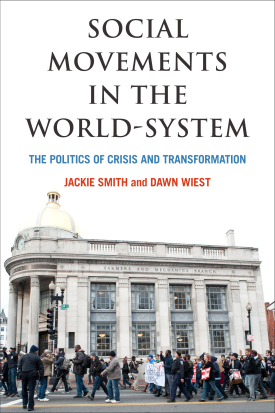
Cover image of the book Social Movements in the World-System
Books

Social Movements in the World-System

The Politics of Crisis and Transformation
Authors
Jackie Smith
Dawn Wiest
Paperback
$49.95
Add to Cart
Publication Date
1 in. × 1 in. 252 pages
ISBN
978-0-87154-812-2
Also Available From

About This Book

A Volume in the American Sociological Association’s Rose Series in Sociology

Honorable Mention, 2013 Best Book Award, Political Economy of the World-System Section of the American Sociological Association

Honorable Mention, 2013 Best Book Award, Global and Transnational Sociology Section of the American Sociological Association

"Beginning from the current crisis in the world economy, and basing their work on solid empirical research, Jackie Smith and Dawn Wiest see in the world polity strengthened opportunities for transnational social movements, their increased capacity to mobilize antisystemic challenges, and a shift in the bases of power from territorial to normative claims. Not everyone will agree with their bold claims, but serious students of the world polity will need to take them seriously."
-SIDNEY TARROW, Emeritus Maxwell Upson Professor of Government and visiting professor, Cornell Law School

"With Social Movements in the World-System, Jackie Smith and Dawn Wiest have broken new ground in the ongoing quest to understand why and explain how transnational social movements succeed and fail in the era of capitalist globalization. Based on their own original and unique Transnational Social Movement Organizations Dataset and exemplary use of the scholarly sources (a bibliography of 400 plus items), they connect the systemic nature of global capitalism and the antisystemic and transformational potential of TSMOs, all the way from UN conferences on global human rights issues to what is happening on the streets all over the world today."
-LESLIE SKLAIR, emeritus professor of sociology, London School of Economics

"A much-needed and very comprehensive analytic integration of the realities of worldwide social movements and their theorization. Social Movements in the World-System permits us to appreciate and integrate the new spectacular occupy movements as something with deep roots in what has happened over the past fifty years."
-IMMANUEL WALLERSTEIN, Senior Research Scholar, Yale University

Global crises such as rising economic inequality, volatile financial markets, and devastating climate change illustrate the defects of a global economic order controlled largely by transnational corporations, wealthy states, and other elites. As the impacts of such crises have intensified, they have generated a new wave of protests extending from the countries of the Middle East and North Africa throughout Europe, North America, and elsewhere. This new surge of resistance builds upon a long history of transnational activism as it extends and develops new tactics for pro-democracy movements acting simultaneously around the world.

In Social Movements in the World-System, Jackie Smith and Dawn Wiest build upon theories of social movements, global institutions, and the political economy of the world-system to uncover how institutions define the opportunities and constraints on social movements, which in turn introduce ideas and models of action that help transform social activism as well as the system itself. Smith and Wiest trace modern social movements to the founding of the United Nations, as well as struggles for decolonization and the rise of national independence movements, showing how these movements have shifted the context in which states and other global actors compete and interact. The book shows how transnational activism since the end of the Cold War, including United Nations global conferences and more recently at World Trade Organization meetings, has shaped the ways groups organize. Global summits and UN conferences have traditionally provided focal points for activists working across borders on a diverse array of issues. By engaging in these international arenas, movements have altered discourses to emphasize norms of human rights and ecological sustainability over territorial sovereignty. Over time, however, activists have developed deeper and more expansive networks and new spaces for activism. This growing pool of transnational activists and organizations democratizes the process of organizing, enables activists to build on previous experiences and share knowledge, and facilitates local actions in support of global change agendas.

As the world faces profound financial and ecological crises, and as the United States' dominance in the world political economy is increasingly challenged, it is especially urgent that scholars, policy analysts, and citizens understand how institutions shape social behavior and the distribution of power. Social Movements in the World-System helps illuminate the contentious and complex interactions between social movements and global institutions and contributes to the search for paths toward a more equitable, sustainable, and democratic world.

JACKIE SMITH is professor of sociology at the University of Pittsburgh.

DAWN WIEST is senior research analyst at the American College of Physicians.

RSF Journal
View Book Series
Sign Up For Our Mailing List
Apply For Funding
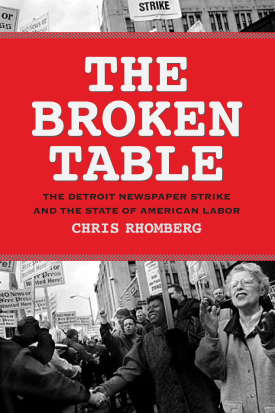
Cover image of the book The Broken Table
Books

The Broken Table

The Detroit Newspaper Strike and the State of American Labor
Author
Chris Rhomberg
Paperback
$57.50
Add to Cart
Publication Date
1 in. × 1 in. 400 pages
ISBN
978-0-87154-717-0
Also Available From

About This Book

Winner of the 2013 Distinguished Scholarly Book Award of the Labor and Labor Movements Section of the American Sociological Association

“Chris Rhomberg provides a rich example of why, in an era of emboldened corporate power, worker-community solidarity and filing legal challenges are no longer enough to win strikes and collective bargaining agreements.”
—Kate L. Bronfenbrenner, Cornell University

“In prose both accessible and dramatic, Chris Rhomberg has given us a profound and carefully detailed analysis of a landmark struggle between labor and management in the ’90s. But Professor Rhomberg’s work is not only an authoritative chronicle of the 1995 Detroit newspaper strike—one of the most important cases to come before me during my National Labor Relations Board tenure. It is also a broad, sweeping, and profound examination of the state of labor-management relations today and historically in the United States and an important discussion about the ongoing need for labor law reform. His book effectively links the changing bargaining table and its erosion to the growing inequality in our society. The Broken Table is must reading for all concerned with the changing labor landscape, Detroit, and the political-economic challenges ahead.”
—William B. Gould IV, National Labor Relations Board

“Chris Rhomberg brings to his account of this epic conflict the kind of historical understanding, sociological insight, and legal acumen that illuminates the world of work in our day. The Broken Table is essential reading for anyone who wants to grasp the profound economic and ideological ruptures that have so decimated American unions and eroded working-class living standards during the last three decades.”
—Nelson N. Lichtenstein, University of California, Santa Barbara

When the Detroit newspaper strike was settled in December 2000, it marked the end of five years of bitter and violent dispute. No fewer than six local unions, representing 2,500 employees, struck against the Detroit News, the Detroit Free Press, and their corporate owners, charging unfair labor practices. The newspapers hired permanent replacement workers and paid millions of dollars for private security and police enforcement; the unions and their supporters took their struggle to the streets by organizing a widespread circulation and advertising boycott, conducting civil disobedience, and publishing a weekly strike newspaper. In the end, unions were forced to settle contracts on management's terms, and fired strikers received no amnesty.

In The Broken Table, Chris Rhomberg sees the Detroit newspaper strike as a historic collision of two opposing forces: a system in place since the New Deal governing disputes between labor and management, and decades of increasingly aggressive corporate efforts to eliminate unions. As a consequence, one of the fundamental institutions of American labor relations—the negotiation table—has been broken, Rhomberg argues, leaving the future of the collective bargaining relationship and democratic workplace governance in question.

The Broken Table uses interview and archival research to explore the historical trajectory of this breakdown, its effect on workers' economic outlook, and the possibility of restoring democratic governance to the business-labor relationship. Emerging from the New Deal, the 1935 National Labor Relations Act protected the practice of collective bargaining and workers' rights to negotiate the terms and conditions of their employment by legally recognizing union representation. This system became central to the democratic workplace, where workers and management were collective stakeholders. But efforts to erode the legal protections of the NLRA began immediately, leading to a parallel track of anti-unionism that began to gain ascendancy in the 1980s. The Broken Table shows how the tension created by these two opposing forces came to a head after a series of key labor disputes over the preceding decades culminated in the Detroit newspaper strike. Detroit union leadership charged management with unfair labor practices after employers had unilaterally limited the unions' ability to bargain over compensation and work conditions. Rhomberg argues that, in the face of management claims of absolute authority, the strike was an attempt by unions to defend workers' rights and the institution of collective bargaining, and to stem the rising tide of post-1980s anti-unionism.

In an era when the incidence of strikes in the United States has been drastically reduced, the 1995 Detroit newspaper strike stands out as one of the largest and longest work stoppages in the past two decades. A riveting read full of sharp analysis, The Broken Table revisits the Detroit case in order to show the ways this strike signaled the new terrain in labor-management conflict. The book raises broader questions of workplace governance and accountability that affect us all.

CHRIS RHOMBERG is associate professor of sociology at Fordham University.

RSF Journal
View Book Series
Sign Up For Our Mailing List
Apply For Funding
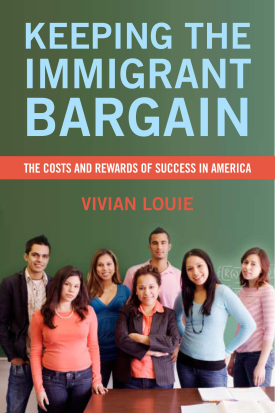
Cover image of the book Keeping the Immigrant Bargain
Books

Keeping the Immigrant Bargain

The Costs and Rewards of Success in America
Author
Vivian Louie
Paperback
$49.95
Add to Cart
Publication Date
1 in. × 1 in. 260 pages
ISBN
978-0-87154-564-0
Also Available From

About This Book

“Vivian Louie’s study of second-generation Dominican and Colombian immigrants advances new insights on why some immigrants have gained greater success than others. Louie reveals that a full understanding of the different experiences of immigrants requires more than determining their desire and capacity to be incorporated into American society. We also have to consider the role that institutions play in their incorporation. Keeping the Immigrant Bargain is a worthwhile addition to the burgeoning literature on ethnic-group assimilation.”
—William Julius Wilson, Harvard University 

“Immigrants, past and present, endure great hardships in order to secure a better life for their children. In today’s America the path to that ‘better life’ runs directly through often deeply troubled public schools. In Keeping the Immigrant Bargain, Vivian Louie presents a cleareyed and rigorous assessment of why some immigrants have used the educational system to great advantage, while others have been consistently failed by it. This is an important book and should be read by anyone concerned about the children of immigrants and their place in our nation’s future.”
—Philip Kasinitz, The City University of New York 

“Vivian Louie is one of the country’s prime empirical investigators of the immigrant second generation’s college experience. Keeping the Immigrant Bargain makes a significant contribution to a national issue that transcends immigrants: how to enable working class and poor (or moderate income and poor) youngsters to get into, survive, and succeed in four-year colleges. Her reporting on the familial, institutional, and other supporting people and systems that help them succeed is particularly valuable. Louie’s writing combines subtle analysis and empathic narrative, and the book is recommended most highly to researchers, educators, and policymakers dedicated to increasing access to college for less affluent Americans.”
—Herbert J. Gans, Columbia University

Most nineteenth and early-twentieth-century European immigrants arrived in the United States with barely more than the clothes on their backs. They performed menial jobs, spoke little English, and often faced a hostile reception. But two or more generations later, the overwhelming majority of their descendants had successfully integrated into American society. Today's immigrants face many of the same challenges, but some experts worry that their integration, especially among Latinos, will not be as successful as their European counterparts. Keeping the Immigrant Bargain examines the journey of Dominican and Colombian newcomers whose children have achieved academic success one generation after the arrival of their parents. Sociologist Vivian Louie provides a much-needed comparison of how both parents and children understand the immigrant journey toward education, mobility, and assimilation.

Based on Louie's own survey and interview study, Keeping the Immigrant Bargain examines the lives of thirty-seven foreign-born Dominican and Colombian parents and their seventy-six young adult offspring—the majority of whom were enrolled in or had graduated from college. The book shows how they are adapting to American schools, jobs, neighborhoods, and culture. Louie discovers that before coming to the United States, some of these parents had already achieved higher levels of education than the average foreign-born Dominican or Colombian, and after arrival many owned their own homes. Significantly, most parents in each group expressed optimism about their potential to succeed in the United States, while also expressing pessimism about whether they would ever be accepted as Americans.

In contrast to the social exclusion experienced by their parents, most of the young adults had assimilated linguistically and believed themselves to be full participants in American society. Keeping the Immigrant Bargain shows that the offspring of these largely working-class immigrants had several factors in common that aided their mobility. Their parents were highly engaged in their lives and educational progress, although not always in ways expected by schools or their children, and the children possessed a strong degree of self-motivation. Equally important was the availability of key institutional networks of support, including teachers, peers, afterschool and other enrichment programs, and informal mentors outside of the classroom. These institutional networks gave the children the guidance they needed to succeed in school, offering information the parents often did not know themselves.

While not all immigrants achieve such rapid success, this engrossing study shows how powerful the combination of self-motivation, engaged families, and strong institutional support can be. Keeping the Immigrant Bargain makes the case that institutional relationships—such as teachers and principals who are trained to accommodate cultural difference and community organizations that help parents and children learn how to navigate the system—can bear significantly on immigrant educational success.

VIVIAN LOUIE is associate professor of education at the Graduate School of Education, Harvard University.

RSF Journal
View Book Series
Sign Up For Our Mailing List
Apply For Funding
Cover image of the book Family Consequences of Children's Disabilities
Books

Family Consequences of Children's Disabilities

Author
Dennis Hogan
Paperback
$37.50
Add to Cart
Publication Date
1 in. × 1 in. 132 pages
ISBN
978-0-87154-457-5
Also Available From

About This Book

A Volume in the American Sociological Association’s Rose Series in Sociology

Winner of the 2012 Otis Dudley Duncan Award for Outstanding Scholarship in Social Demography

“Dennis Hogan harnesses a plethora of data sources to document the pervasive effects of childhood disability from a family perspective. This comprehensive book highlights the very real challenges that children and youth with disabilities and their families face, demonstrating the ways in which public and private supports can ease or exacerbate those challenges.”
—Valerie Leiter, Simmons College 

“Dennis Hogan has written a ground-breaking study of the consequences that raising a child with a disability has for family life. His empathy for these families is clear, and his analyses are rigorous and insightful. I know of no other treatment of the subject that is like it.”
—Andrew J. Cherlin, Johns Hopkins University 

“Families encounter events that may produce a new way of life, such as care of a disabled child. Dennis Hogan grew up in such a household and wondered about the family impact. Twenty years after his doctorate, he gained access to relevant population data and launched a project to address this question with a research team. The result is an unparalleled study for families of these children, for practitioners, and for students of the family. It richly illuminates the extraordinary challenges and gifts of this family experience.”
—Glen H. Elder, Jr., University of North Carolina at Chapel Hill

The Americans with Disabilities Act (ADA) and other national policies are designed to ensure the greatest possible inclusion of people with disabilities in all aspects of American life. But as a matter of national policy we still place the lion's share of responsibility for raising children with disabilities on their families. While this strategy largely works, sociologist Dennis Hogan maintains, the reality is that family financial security, the parents' relationship, and the needs of other children in the home all can be stretched to the limit. In Family Consequences of Children's Disabilities Hogan delves inside the experiences of these families and examines the financial and emotional costs of raising a child with a disability. The book examines the challenges families of children with disabilities encounter and how these challenges impact family life.

The first comprehensive account of the families of children with disabilities, Family Consequences of Children's Disabilities employs data culled from seven national surveys and interviews with twenty-four mothers of children with disabilities, asking them questions about their family life, social supports, and how other children in the home were faring. Not surprisingly, Hogan finds that couples who are together when their child is born have a higher likelihood of divorcing than other parents do. The potential for financial insecurity contributes to this anxiety, especially as many parents must strike a careful balance between employment and caregiving. Mothers are less likely to have paid employment, and the financial burden on single parents can be devastating. One-third of children with disabilities live in single-parent households, and nearly 30 percent of families raising a child with a disability live in poverty.

Because of the high levels of stress these families incur, support networks are crucial. Grandparents are often a source of support. Siblings can also assist with personal care and, consequently, tend to develop more helpful attitudes, be more inclusive of others, and be more tolerant. But these siblings are at risk for their own health problems: they are three times more likely to experience poor health than children in homes where there is no child with a disability. Yet this book also shows that raising a child with a disability includes unexpected rewards—the families tend to be closer, and they engage in more shared activities such as games, television, and meals.

Family Consequences of Children's Disabilities offers access to a world many never see or prefer to ignore. The book provides vital information on effective treatment, rehabilitation, and enablement to medical professionals, educators, social workers, and lawmakers. This compelling book demonstrates that every mirror has two faces: raising a child with a disability can be difficult, but it can also offer expanded understanding.

DENNIS HOGAN is Robert E. Turner Distinguished Professor of Population Studies at Brown University.

RSF Journal
View Book Series
Sign Up For Our Mailing List
Apply For Funding
Cover image of the book From Parents to Children
Books

From Parents to Children

The Intergenerational Transmission of Advantage
Editors
John Ermisch
Markus Jäntti
Timothy M. Smeeding
Paperback
$69.95
Add to Cart
Publication Date
1 in. × 1 in. 524 pages
ISBN
978-0-87154-045-4
Also Available From

About This Book

“Parents’ socioeconomic status affects later child outcomes in all of the advanced nations studied in this fascinating book, but nowhere is this relationship stronger than in the United States. How can we make children’s life chances more equal without interfering with the rights of parents and the efficiency of the economy? This book does not provide all of the answers but it contains a wealth of data and analysis with important implications for both research and policy. From Parents to Children is a tour de force.”
—Isabel Sawhill, senior fellow, The Brookings Institution

“Intergenerational transmission of resources and rewards has gained more interest with the increase in income inequality during the last thirty years. In this book a number of first-rate scholars review how outcomes depend on various conditions in childhood. The role of parental socioeconomic and educational resources as well as that of societal institutions, like child care and schools, is studied for several countries in America and Europe. This broad perspective gives every reader, regardless of prior knowledge, an increased understanding of the mechanisms through which parental advantage is transferred to children.”
—Robert Erikson, Stockholm University

Does economic inequality in one generation lead to inequality of opportunity in the next? In From Parents to Children, an esteemed international group of scholars investigates this question using data from ten countries with differing levels of inequality. The book compares whether and how parents' resources transmit advantage to their children at different stages of development and sheds light on the structural differences among countries that may influence intergenerational mobility.

How and why is economic mobility higher in some countries than in others? The contributors find that inequality in mobility-relevant skills emerges early in childhood in all of the countries studied. Bruce Bradbury and his coauthors focus on learning readiness among young children and show that as early as age five, large disparities in cognitive and other mobility-relevant skills develop between low- and high-income kids, particularly in the United States and the United Kingdom. Such disparities may be mitigated by investments in early childhood education, as Christelle Dumas and Arnaud Lefranc demonstrate. They find that universal pre-school education in France lessens the negative effect of low parental SES and gives low-income children a greater shot at social mobility. Katherine Magnuson, Jane Waldfogel, and Elizabeth Washbrook find that income-based gaps in cognitive achievement in the United States and the United Kingdom widen as children reach adolescence. Robert Haveman and his coauthors show that the effect of parental income on test scores increases as children age; and in both the United States and Canada, having parents with a higher income betters the chances that a child will enroll in college.

As economic inequality in the United States continues to rise, the national policy conversation will not only need to address the devastating effects of rising inequality in this generation but also the potential consequences of the decline in mobility from one generation to the next. Drawing on unparalleled international datasets, From Parents to Children provides an important first step.

JOHN ERMISCH is professor of family demography at Oxford University.

MARKUS JäNTTI is professor of economics at the Swedish Institute for Social Research, Stockholm University.

TIMOTHY M. SMEEDING is director of the Institute for Research on Poverty, University of Wisconsin-Madison.

CONTRIBUTORS: Silke Anger, Lars Bergman, Erik Bihagen, Paul Bingley, Anders Bjorklund, Jo Blanden, Bruce Bradbury, Massimiliano Bratti, Lorenzo Cappellari, Miles Corak, Emilia Del Bono, Kathryn Duckworth, Christelle Dumas, Greg J. Duncan, Olaf Groh-Samberg, Robert Haveman, John Jerrim, Jan O. Jonsson, Ilan Katz, Katja Kokko, Arnaud Lefranc, Henning Lohmann, Anna-Liisa Lyyra, Katherine Magnuson, Molly Metzger, John Micklewright, Carina Mood, Martin Nybom, Frauke H. Peter, Patrizio Piraino, Lea Pulkkinen, Gerry Redmond, John Roemer, Sharon Simonton, C. Katharina Spiess, Jane Waldfogel, Eizabeth Washbrook, Niels Westergard-Nielsen, James A. Wilson, Kathryn Wilson.


RSF Journal
View Book Series
Sign Up For Our Mailing List
Apply For Funding
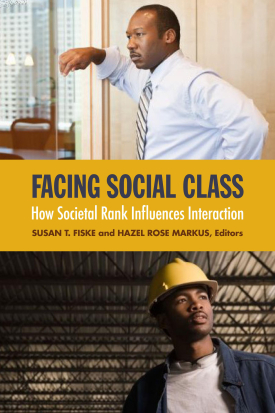
Cover image of the book Facing Social Class
Books

Facing Social Class

How Societal Rank Influences Interaction
Editors
Susan T. Fiske
Hazel Rose Markus
Paperback
$47.50
Add to Cart
Publication Date
1 in. × 1 in. 272 pages
ISBN
978-0-87154-479-7
Also Available From

About This Book

“Class may be less visible than gender or skin color, but it is no less consequential. Statistical studies document robust correlations between class and vital events. Facing Social Class digs into those correlations to uncover some of the ways people use and experience class distinctions in daily life and at life’s turning points. Leading scholars summarize what is known in their specialties and set the research agenda for this decade. Their fruitful collaboration as psychologists and sociologists shows that progress depends on an interdisciplinary approach to the study of mind, self, and our evermore unequal society.”
—Michael Hout, University of California, Berkeley

“A fascinating and wide-ranging collection exploring the everyday manifestations of social class. Drawing together perspectives from sociology, psychology, anthropology, linguistics, and law, this volume explores the often invisible ways that social class shapes our ideas, institutions, interactions, and identities. Susan T. Fiske and Hazel Rose Markus have brought together state-of-the-art contributions from the social sciences to reveal often overlooked dynamics in the production and reproduction of social class in America.”
—Devah Pager, Princeton University

Many Americans, holding fast to the American Dream and the promise of equal opportunity, claim that social class doesn't matter. Yet the ways we talk and dress, our interactions with authority figures, the degree of trust we place in strangers, our religious beliefs, our achievements, our senses of morality and of ourselves—all are marked by social class, a powerful factor affecting every domain of life. In Facing Social Class, social psychologists Susan Fiske and Hazel Rose Markus, and a team of sociologists, anthropologists, linguists, and legal scholars, examine the many ways we communicate our class position to others and how social class shapes our daily, face-to-face interactions—from casual exchanges to interactions at school, work, and home.

Facing Social Class exposes the contradiction between the American ideal of equal opportunity and the harsh reality of growing inequality, and it shows how this tension is reflected in cultural ideas and values, institutional practices, everyday social interactions, and psychological tendencies. Contributor Joan Williams examines cultural differences between middle- and working-class people and shows how the cultural gap between social class groups can influence everything from voting practices and political beliefs to work habits, home life, and social behaviors. In a similar vein, Annette Lareau and Jessica McCrory Calarco analyze the cultural advantages or disadvantages exhibited by different classes in institutional settings, such as those between parents and teachers. They find that middle-class parents are better able to advocate effectively for their children in school than are working-class parents, who are less likely to challenge a teacher's authority.

Michael Kraus, Michelle Rheinschmidt, and Paul Piff explore the subtle ways we signal class status in social situations. Conversational style and how close one person stands to another, for example, can influence the balance of power in a business interaction. Diana Sanchez and Julie Garcia even demonstrate that markers of low socioeconomic status such as incarceration or unemployment can influence whether individuals are categorized as white or black—a finding that underscores how race and class may work in tandem to shape advantage or disadvantage in social interactions.

The United States has one of the highest levels of income inequality and one of the lowest levels of social mobility among industrialized nations, yet many Americans continue to buy into the myth that theirs is a classless society. Facing Social Class faces the reality of how social class operates in our daily lives, why it is so pervasive, and what can be done to alleviate its effects.

SUSAN T. FISKE is Eugene Higgins Professor of Psychology at Princeton University.

HAZEL ROSE MARKUS is Davis-Brack Professor in the Behavioral Sciences in the Department of Psychology, director of the Center for Comparative Studies in Race and Ethnicity (CCSRE), and director of the Mind, Culture, and Society Lab at Stanford University.

CONTRIBUTORS: Courtney Bearns, Jessica McCrory Colarco, Paul DiMaggio, Susan R. Fisk, Stephanie A. Fryberg, Julie A. Garcia, Crystal C. Hall, Michael W. Kraus, Adrie Kusserow, Annette Lareau, Peggy J. Miller, Miguel Moya, Paul K. Piff, Michelle L. Rheinschmidt, Cecilia L. Ridgeway, Ann Marie Russell, Diana T. Sanchez, Douglas E. Sperry, Nicole M. Stephens, Joan C. Williams.

RSF Journal
View Book Series
Sign Up For Our Mailing List
Apply For Funding
Cover image of the book Tiny Publics
Books

Tiny Publics

A Theory of Group Action and Culture
Author
Gary Alan Fine
Paperback
$42.50
Add to Cart
Publication Date
1 in. × 1 in. 236 pages
ISBN
978-0-87154-432-2
Also Available From

About This Book

“In Tiny Publics, Gary Alan Fine synthesizes over three decades of his research to show that there is a substantial gain to understanding how and why small groups create civil society and social order. The implications are intuitive, compelling, and profound and should lead us to reconsider everything from art worlds to the Arab Spring. All in all, it is further evidence that Fine is one of the most gifted ethnographers and sociologists of our time.”
—Damon J. Phillips, Columbia University

“Using such evocative phrases as ‘sociological miniaturism,’ the ‘sociology of the local,’ ‘idiocultures,’ and ‘peopled organizations,’ Gary Alan Fine has long offered the best and most insistent reminder to sociologists to attend to the interactional fields of small groups in order to understand . . . well, anything. In his new book Tiny Publics, Fine continues in this rich vein, showing how large-scale social forces are always deeply embedded in, and inexorably the product of, the microdynamics of group settings.”
—Amy Binder, University of California, San Diego

“In Tiny Publics, Gary Alan Fine builds on forty years of fieldwork in the dynamics of small groups to propose a ‘local sociology’ that sheds new light on meso-level social life. Multi-dimensional, multifarious, and rich in implications, this approach bridges the traditional insights of micro-sociology with the newest disciplinary developments. Fine’s daring novel agenda will most certainly leave its mark on the landscape of contemporary sociological theory.”
—Michèle Lamont, Harvard University

If all politics is local, then so is almost everything else, argues sociologist Gary Alan Fine. We organize our lives by relying on those closest to us—family members, friends, work colleagues, team mates, and other intimates—to create meaning and order. In this thoughtful and wide-ranging book, Fine argues that the basic building blocks of society itself are forged within the boundaries of such small groups, the "tiny publics" necessary for a robust, functioning social order at all levels. Action, meaning, authority, inequality, organization, and institutions all have their roots in small groups. Yet for the past twenty-five years social scientists have tended to ignore the power of groups in favor of an emphasis on organizations, societies, or individuals. Based on over thirty-five years of Fine's own ethnographic research across an array of small groups, Tiny Publics presents a compelling new theory of the pivotal role of small groups in organizing social life.

No social system can thrive without flourishing small groups. They provide havens in an impersonal world, where faceless organizations become humanized. Taking examples from such diverse worlds as Little League baseball teams, restaurant workers, high school debate teams, weather forecasters, and political volunteers, Fine demonstrates how each group has its own unique culture, or idioculture—the system of knowledge, beliefs, behavior, and customs that define and hold a group together. With their dense network of relationships, groups serve as important sources of social and cultural capital for their members. The apparently innocuous jokes, rituals, and nicknames prevalent within Little League baseball teams help establish how teams function internally and how they compete with other teams. Small groups also provide a platform for their members to engage in broader social discourse and a supportive environment to begin effecting change in larger institutions. In his studies of mushroom collectors and high school debate teams, Fine demonstrates the importance of stories that group members tell each other about their successes and frustrations in fostering a strong sense of social cohesion. And Fine shows how the personal commitment political volunteers bring to their efforts is reinforced by the close-knit nature of their work, which in turn has the power to change larger groups and institutions. In this way, the actions and debates begun in small groups can eventually radiate outward to affect every level of society.

Fine convincingly demonstrates how small groups provide fertile ground for the seeds of civic engagement. Outcomes often attributed to large-scale social forces originate within such small-scale domains. Employing rich insights from both sociology and social psychology, as well as vivid examples from a revealing array of real-work groups, Tiny Publics provides a compelling examination of the importance of small groups and of the rich vitality they bring to social life.

GARY ALAN FINE is professor of sociology at Northwestern University.

A Volume in the Russell Sage Foundation Series on Trust

RSF Journal
View Book Series
Sign Up For Our Mailing List
Apply For Funding
Cover image of the book Invisible Men
Books

Invisible Men

Mass Incarceration and the Myth of Black Progress
Author
Becky Pettit
Paperback
$39.95
Add to Cart
Publication Date
1 in. × 1 in. 156 pages
ISBN
978-0-87154-667-8
Also Available From

About This Book

“By documenting how our nation’s data collection infrastructure systematically undercounts currently or formerly incarcerated individuals, Becky Pettit leaves the reader with this deeply unsettling realization: our empirical understanding of the era of mass incarceration is fundamentally inadequate. This timely book should spur two reactions. We must revise our data collection systems. We must also acknowledge our limited ability to document prison’s consequences. By forcing this uncomfortable look in the mirror, Pettit has performed an invaluable service.”
—Jeremy Travis, John Jay College of Criminal Justice 

Invisible Men is an important book. Becky Pettit pulls back the curtain on a hidden population marginalized by mass incarceration. Her analysis masterfully challenges the conventional statistics of racial inequality and reveals a history of African American progress stalled by the growth of the nation’s prisons.”
—Bruce Western, Harvard University 

“In this brilliant and timely book, Becky Pettit systematically upends a generation of social science research on American racial progress. With clear prose and< convincing evidence, Invisible Men shows how the failure to properly count prisoners has distorted official statistics on education, employment, politics, and health. The book’s policy importance cannot be overstated: unless and until we improve data quality, our policy efforts will be guided by a funhouse mirror image rather than reliable and accurate social facts. Even as Invisible Men demonstrates that things are sometimes worse than they appear, it offers a hopeful reform agenda for improving our data and our policy prescriptions.”
—Christopher Uggen, University of Minnesota

For African American men without a high school diploma, being in prison or jail is more common than being employed—a sobering reality that calls into question post-Civil Rights era social gains. Nearly 70 percent of young black men will be imprisoned at some point in their lives, and poor black men with low levels of education make up a disproportionate share of incarcerated Americans. In Invisible Men, sociologist Becky Pettit demonstrates another vexing fact of mass incarceration: most national surveys do not account for prison inmates, a fact that results in a misrepresentation of U.S. political, economic, and social conditions in general and black progress in particular. Invisible Men provides an eye-opening examination of how mass incarceration has concealed decades of racial inequality.

Pettit marshals a wealth of evidence correlating the explosion in prison growth with the disappearance of millions of black men into the American penal system. She shows that, because prison inmates are not included in most survey data, statistics that seemed to indicate a narrowing black-white racial gap—on educational attainment, work force participation, and earnings—instead fail to capture persistent racial, economic, and social disadvantage among African Americans. Federal statistical agencies, including the U.S. Census Bureau, collect surprisingly little information about the incarcerated, and inmates are not included in household samples in national surveys. As a result, these men are invisible to most mainstream social institutions, lawmakers, and nearly all social science research that isn't directly related to crime or criminal justice. Since merely being counted poses such a challenge, inmates' lives—including their family background, the communities they come from, or what happens to them after incarceration—are even more rarely examined. And since correctional budgets provide primarily for housing and monitoring inmates, with little left over for job training or rehabilitation, a large population of young men are not only invisible to society while in prison but also ill-equipped to participate upon release.

Invisible Men provides a vital reality check for social researchers, lawmakers, and anyone who cares about racial equality. The book shows that more than a half century after the first civil rights legislation, the dismal fact of mass incarceration inflicts widespread and enduring damage by undermining the fair allocation of public resources and political representation, by depriving the children of inmates of their parents' economic and emotional participation, and, ultimately, by concealing African American disadvantage from public view.

BECKY PETTIT is professor of sociology at the University of Washington.

RSF Journal
View Book Series
Sign Up For Our Mailing List
Apply For Funding
Cover image of the book Good Jobs America
Books

Good Jobs America

Making Work Better for Everyone
Authors
Paul Osterman
Beth Shulman
Paperback
$34.95
Add to Cart
Publication Date
1 in. × 1 in. 200 pages
ISBN
978-0-87154-663-0
Also Available From

About This Book

“At a time of fierce debate over America’s economic future, this fresh and deeply researched book provides a welcome antidote to the complacent conventional wisdom that good jobs are gone for good. One of the nation’s leading experts on the low-wage labor market, Paul Osterman, has teamed up with one of the nation’s leading champions of low-wage workers, the late Beth Shulman, to produce a powerful, informed case for making ‘bad’ jobs better. What Osterman and Shulman show is that doing so would benefit not just low-wage workers. It would also benefit our society and our economy more broadly.”
—JACOB S. HACKER, Stanley Resor Professor of Political Science and director, Institution for Social and Policy Studies, Yale University 

“There is no more pressing question than how we insure that American workers are able to lay claim to jobs that pay well and hold the promise of economic security. Good Jobs America is a powerful, no-holds-barred effort to answer that call. Paul Osterman and his late coauthor, Beth Shulman, do not shy away from the sobering realities: even employers dedicated to the ‘high road’ often abandon those commitments, pushing wages down, violating labor laws, and outsourcing in pursuit of the lowest wage bill. Yet the authors insist we can do better than this. They call for serious union reform, the mobilization of public opinion to pressure firms to do better, and insisting that citizens return the question of good jobs to the campaign trail. There are no easy solutions, but at last we have a book that puts the options on the table. We will be debating its conclusions for a long time to come.”
—KATHERINE NEWMAN, James B. Knapp Dean of Arts and Sciences, Johns Hopkins University 

“In this timely book, Paul Osterman and Beth Shulman address an important labor-market problem, the proliferation of low-wage jobs in the United States. Their thoughtful and accessible discussion provides an overview of the reasons for the spread of low-wage jobs in recent years and evaluates some of the major actions that are needed by diverse parties—firms, governments, local organizations, unions—to transform these bad jobs into good jobs.”
—ARNE L. KALLEBERG, Kenan Distinguished Professor of Sociology, University of North Carolina at Chapel Hill

America confronts a jobs crisis that has two faces. The first is obvious when we read the newspapers or talk with our friends and neighbors: there are simply not enough jobs to go around. The second jobs crisis is more subtle but no less serious: far too many jobs fall below the standard that most Americans would consider decent work. A quarter of working adults are trapped in jobs that do not provide living wages, health insurance, or much hope of upward mobility. The problem spans all races and ethnic groups and includes both native-born Americans and immigrants. But Good Jobs America provides examples from industries ranging from food services and retail to manufacturing and hospitals to demonstrate that bad jobs can be made into good ones. Paul Osterman and Beth Shulman make a rigorous argument that by enacting policies to help employers improve job quality we can create better jobs, and futures, for all workers.

Good Jobs America dispels several myths about low-wage work and job quality. The book demonstrates that mobility out of the low-wage market is a chimera—far too many adults remain trapped in poor-quality jobs. Osterman and Shulman show that while education and training are important, policies aimed at improving earnings equality are essential to lifting workers out of poverty. The book also demolishes the myth that such policies would slow economic growth. The experiences of countries such as France, Germany, and the Netherlands, show that it is possible to mandate higher job standards while remaining competitive in international markets. Good Jobs America shows that both government and the firms that hire low-wage workers have important roles to play in improving the quality of low-wage jobs. Enforcement agencies might bolster the effectiveness of existing regulations by exerting pressure on parent companies, enabling effects to trickle down to the subsidiaries and sub-contractors where low-wage jobs are located. States like New York have already demonstrated that involving community and advocacy groups—such as immigrant rights organizations, social services agencies, and unions—in the enforcement process helps decrease workplace violations. And since better jobs reduce turnover and improve performance, career ladder programs within firms help create positions employees can aspire to. But in order for ladder programs to work, firms must also provide higher rungs—the career advancement opportunities workers need to get ahead.

Low-wage employment occupies a significant share of the American labor market, but most of these jobs offer little and lead nowhere. Good Jobs America reappraises what we know about job quality and low-wage employment and makes a powerful argument for our obligation to help the most vulnerable workers. A core principle of U.S. society is that good jobs be made accessible to all. This book proposes that such a goal is possible if we are committed to realizing it.

PAUL OSTERMAN is NTU Professor at the MIT Sloan School of Management as well as a member of the Department of Urban Planning at MIT.

BETH SHULMAN was senior fellow at Demos, chair of the Board of the National Employment Law Project, and co-chair of the Fairness Initiative on Low-Wage Work.


RSF Journal
View Book Series
Sign Up For Our Mailing List
Apply For Funding
Cover image of the book Asian American Political Participation
Books

Asian American Political Participation

Emerging Constituents and Their Political Identities
Authors
Janelle Wong
S. Karthick Ramakrishnan
Taeku Lee
Jane Junn
Paperback
$39.95
Add to Cart
Publication Date
1 in. × 1 in. 392 pages
ISBN
978-0-87154-962-4
Also Available From

About This Book

"Asian American Political Participation provides a revealing and nuanced analysis of the political attitudes and voting preferences of the rapidly growing, highly diverse, and increasingly influential population of sixteen million Asian Americans. Based on the first-ever large-scale, multilingual national survey, this work is a 'must read' for all who study or participate in American electoral politics, the politics of race and ethnicity, and the political acculturation of immigrants. The team of Janelle Wong, S. Karthick Ramakrishnan, Taeku Lee, and Jane Junn has made an exceptional contribution to public knowledge and research about the growing impact and visibility of Asian American voters, donors, activists, and politicians."
-DON T. NAKANISHI, University of California, Los Angeles

"In this theoretically nuanced and empirically sophisticated study, these brilliant young political scientists not only decipher the paradoxes of Asian American political engagement, they show why it requires us to redefine our understanding of political participation in America-and how to do so. Destined to be a classic."
-JOHN MOLLENKOPF, CUNY Graduate Center

"Path-breaking in its evidence and in the sophistication of interpretation, Asian American Political Participation is an indispensable study for anyone interested in Asian Americans in American politics. The four authors, all leading specialists, offer rich insights into why Asian Americans are voting as they are. With Asian Americans becoming an increasingly important constituency, this book is useful and most timely."
-GORDON H. CHANG, Stanford University

"This book is outstanding for explaining participation rates across Asian American individuals and groups. Using new national survey data, the authors of this breakthrough study identify commonalities among Asian Americans, but also differences by national origin that produce significant variation in civic engagement. Although much is known about the general causes of political activity, the valuable lesson of Asian American Political Participation is that theory depends critically on group contexts that are rooted in politics, geography, history, and race."
-DENNIS CHONG, Northwestern University

Asian Americans are a small percentage of the U.S. population, but their numbers are steadily rising—from less than a million in 1960 to more than 15 million today. They are also a remarkably diverse population—representing several ethnicities, religions, and languages—and they enjoy higher levels of education and income than any other U.S. racial group. Historically, socioeconomic status has been a reliable predictor of political behavior. So why has this fast-growing American population, which is doing so well economically, been so little engaged in the U.S. political system? Asian American Political Participation is the most comprehensive study to date of Asian American political behavior, including such key measures as voting, political donations, community organizing, and political protests. The book examines why some groups participate while others do not, why certain civic activities are deemed preferable to others, and why Asian socioeconomic advantage has so far not led to increased political clout.

Asian American Political Participation is based on data from the authors’ groundbreaking 2008 National Asian American Survey of more than 5,000 Chinese, Indian, Vietnamese, Korean, Filipino, and Japanese Americans. The book shows that the motivations for and impediments to political participation are as diverse as the Asian American population. For example, native-born Asians have higher rates of political participation than their immigrant counterparts, particularly recent adult arrivals who were socialized outside of the United States. Protest activity is the exception, which tends to be higher among immigrants who maintain connections abroad and who engaged in such activity in their country of origin. Surprisingly, factors such as living in a new immigrant destination or in a city with an Asian American elected official do not seem to motivate political behavior—neither does ethnic group solidarity. Instead, hate crimes and racial victimization are the factors that most motivate Asian Americans to participate politically. Involvement in non-political activities such as civic and religious groups also bolsters political participation. Even among Asian groups, socioeconomic advantage does not necessarily translate into high levels of political participation. Chinese Americans, for example, have significantly higher levels of educational attainment than Japanese Americans, but Japanese Americans are far more likely to vote and make political contributions. And Vietnamese Americans, with the lowest levels of education and income, vote and engage in protest politics more than any other group.

Lawmakers tend to favor the interests of groups who actively engage the political system, and groups who do not participate at high levels are likely to suffer political consequences in the future. Asian American Political Participation demonstrates that understanding Asian political behavior today can have significant repercussions for Asian American political influence tomorrow.

JANELLE WONG is associate professor of political science and American studies and ethnicity at the University of Southern California and director of the Institute of Public Service at Seattle University.

S. KARTHICK RAMAKRISHNAN is associate professor of political science at the University of California, Riverside.

TAEKU LEE is professor of political science and law at the University of California, Berkeley.

JANE JUNN is professor of political science at the University of Southern California.

RSF Journal
View Book Series
Sign Up For Our Mailing List
Apply For Funding