Economic inequality in the US has been trending upward for much of the last four decades. This rise in inequality is characterized by a pattern in which the bottom half of the income distribution has remained stuck in place and the richest Americans have pulled away from the rest. To explain these changes, economists have emphasized dynamics associated with labor markets, demographic trends, globalization, technological change, and other broad socioeconomic forces.
Books
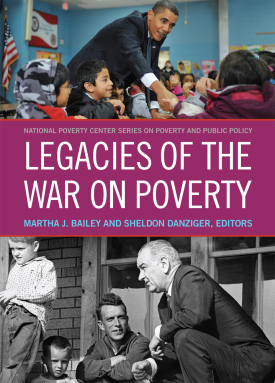
Legacies of the War on Poverty
About This Book
On the 50th anniversary of President Lyndon B. Johnson's declaration of "unconditional War on Poverty," January 8, 2014, the National Poverty Center at the University of Michigan's Gerald R. Ford School of Public Policy, the Russell Sage Foundation, and Spotlight on Poverty and Opportunity hosted a forum offering diverse perspectives on the effects of anti-poverty policies in the U.S. Click here to learn more about this special event.
“So, you thought we waged a war on poverty and lost? Well, actually, the record is a lot more nuanced than that, replete with both wins and losses, as this notable collection of essays by leading scholars demonstrates. Every serious student of poverty should read Legacies of the War on Poverty. So should many not-so-serious students.”
—ALAN S. BLINDER, Princeton University
“The War on Poverty, one of the most famous social experiments of the twentieth century, is conventionally represented as a failure second only to socialism. If you’re the type who prefers facts over sound bites, if you’re interested in the real legacy of this experiment, you’ll give Legacies of the War on Poverty pride of place on your bookshelf. With an all-star cast of contributors,
Legacies provides the definitive analysis of what worked and what didn’t, how our most cherished poverty-fighting institutions had their roots in the War, and why the expansive goals set out by President Johnson may yet be met. This is—quite simply—the best treatment ever of one of the grandest interventions ever.”
—DAVID B. GRUSKY, Stanford University
Many believe that the War on Poverty, launched by President Johnson in 1964, ended in failure. In 2010, the official poverty rate was 15 percent, almost as high as when the War on Poverty was declared. Historical and contemporary accounts often portray the War on Poverty as a costly experiment that created doubts about the ability of public policies to address complex social problems. Legacies of the War on Poverty, drawing from fifty years of empirical evidence, documents that this popular view is too negative. The volume offers a balanced assessment of the War on Poverty that highlights some remarkable policy successes and promises to shift the national conversation on poverty in America.
Featuring contributions from leading poverty researchers, Legacies of the War on Poverty demonstrates that poverty and racial discrimination would likely have been much greater today if the War on Poverty had not been launched. Chloe Gibbs, Jens Ludwig, and Douglas Miller dispel the notion that the Head Start education program does not work. While its impact on children’s test scores fade, the program contributes to participants’ long-term educational achievement and, importantly, their earnings growth later in life. Elizabeth Cascio and Sarah Reber show that Title I legislation reduced the school funding gap between poorer and richer states and prompted Southern school districts to desegregate, increasing educational opportunity for African Americans.
The volume also examines the significant consequences of income support, housing, and health care programs. Jane Waldfogel shows that without the era’s expansion of food stamps and other nutrition programs, the child poverty rate in 2010 would have been three percentage points higher. Kathleen McGarry examines the policies that contributed to a great success of the War on Poverty: the rapid decline in elderly poverty, which fell from 35 percent in 1959 to below 10 percent in 2010. Barbara Wolfe concludes that Medicaid and Community Health Centers contributed to large reductions in infant mortality and increased life expectancy. Katherine Swartz finds that Medicare and Medicaid increased access to health care among the elderly and reduced the risk that they could not afford care or that obtaining it would bankrupt them and their families.
Legacies of the War on Poverty demonstrates that well-designed government programs can reduce poverty, racial discrimination, and material hardships. This insightful volume refutes pessimism about the effects of social policies and provides new lessons about what more can be done to improve the lives of the poor.
MARTHA J. BAILEY is associate professor in the Department of Economics at the University of Michigan and faculty research fellow at the National Bureau of Economic Research.
SHELDON DANZIGER is the President of the Russell Sage Foundation. He was formerly the Henry J. Meyer Distinguished University Professor of Public Policy and director of the National Poverty Center at the Gerald R. Ford School of Public Policy at University of Michigan.
CONTRIBUTORS: Elizabeth Cascio, Chloe Gibbs, Harry J. Holzer, Bridget Terry Long, Jens Ludwig, Kathleen McGarry, Douglas L. Miller, Edgar O. Olsen,Sarah Heber, Katherine Swartz, Jane Waldfogel, Barbara Wolfe.
A Volume in the National Poverty Center Series on Poverty and Public Policy
Download
RSF Journal
View Book Series
Sign Up For Our Mailing List
Apply For Funding
Books
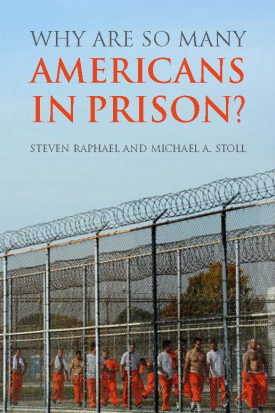
Why Are So Many Americans in Prison?
About This Book
“The most important social phenomena in the United States over the last four decades have been the enormous growth in incarceration, which preceded and to some degree explained the substantial drop in crime over the last twenty years. Steven Raphael and Michael Stoll have carefully examined the array of factors that have led the United States to be the world leader in rates of incarceration, and this knowledge will be essential if the United States is to adopt strategies—such as higher levels of local policing—that are less costly in human and resource terms than our current high-incarceration strategies but which will not imperil the public from higher rates of criminal misconduct. Policymakers and informed citizens will profit from the careful and insightful evidence that Why Are So Many American in Prison? brings to bear on what has become one of the most troubling aspects of the American criminal justice system.”
—JOHN J. DONOHUE III, C. Wendell and Edith M. Carlsmith Professor of Law, Stanford Law School
“For more than a decade, Steven Raphael and Michael Stoll have been doing some of the most careful and thoughtful empirical research on rising incarceration rates in the United States. This book brings together some of the key findings, underlining the importance of crime policy—not crime—for the unprecedented growth in imprisonment rates. The authors make a strong case for reversing the trend in incarceration and offer important avenues for policy reform. This is an important book that should be read by all criminal justice specialists concerned with the future of American penal policy.”
—BRUCE WESTERN, professor of sociology and director, Malcolm Wiener Center for Social Policy, Harvard University
Between 1975 and 2007, the American incarceration rate increased nearly fivefold, a historic increase that puts the United States in a league of its own among advanced economies. We incarcerate more people today than we ever have, and we stand out as the nation that most frequently uses incarceration to punish those who break the law. What factors explain the dramatic rise in incarceration rates in such a short period of time? In Why Are So Many Americans in Prison? Steven Raphael and Michael A. Stoll analyze the shocking expansion of America’s prison system and illustrate the pressing need to rethink mass incarceration in this country.
Raphael and Stoll carefully evaluate changes in crime patterns, enforcement practices and sentencing laws to reach a sobering conclusion: So many Americans are in prison today because we have chosen, through our public policies, to put them there. They dispel the notion that a rise in crime rates fueled the incarceration surge; in fact, crime rates have steadily declined to all-time lows. There is also little evidence for other factors commonly offered to explain the prison boom, such as the deinstitutionalization of the mentally ill since the 1950s, changing demographics, or the crack-cocaine epidemic. By contrast, Raphael and Stoll demonstrate that legislative changes to a relatively small set of sentencing policies explain nearly all prison growth since the 1980s. So-called tough on crime laws, including mandatory minimum penalties and repeat offender statutes, have increased the propensity to punish more offenders with lengthier prison sentences. Raphael and Stoll argue that the high-incarceration regime has inflicted broad social costs, particularly among minority communities, who form a disproportionate share of the incarcerated population. Why Are So Many Americans in Prison? ends with a powerful plea to consider alternative crime control strategies, such as expanded policing, drug court programs, and sentencing law reform, which together can end our addiction to incarceration and still preserve public safety.
As states confront the budgetary and social costs of the incarceration boom, Why Are So Many Americans in Prison? provides a revealing and accessible guide to the policies that created the era of mass incarceration and what we can do now to end it.
STEVEN RAPHAEL is professor of public policy at the Goldman School of Public Policy at University of California, Berkeley.
MICHAEL A. STOLL is professor and chair of public policy at the Luskin School of Public Policy at University of California, Los Angeles.
RSF Journal
View Book Series
Sign Up For Our Mailing List
Apply For Funding
Books
Fighting for Reliable Evidence
About This Book
“Truth-seeking social policymakers and serious students of social policy and social policy research will read and reread this book. Fighting for Reliable Evidence does not provide a permanent truth but it describes a forty-five year quest to understand what works and what does not work.”
—PAUL O’NEILL, former U.S. Secretary of the Treasury
“Fighting for Reliable Evidence is a fascinating review of the development of the commitment to use randomized experiments for learning about the effectiveness of current and proposed social welfare programs. It is written from two necessary perspectives: that of a pioneering government official striving to institutionalize experiments, and that of an innovator committed to developing an organization able to implement high-quality experiments. Between them, Judy Gueron and Howard Rolston demonstrate how feasible and useful experiments can be and have been. The history they tell is riveting, and the lessons they draw are compelling. No one else from inside the community of random assignment pioneers could have told it better. One day historians of science will use different assumptions to tell their version of the history of random assignment in the social sciences. But until then, this accessibly written book is THE history.”
—THOMAS D. COOK, Joan and Sarepta Harrison Chair of Ethics and Justice and Professor of Sociology, Psychology, and Education and Social Policy, Northwestern University
Once primarily used in medical clinical trials, random assignment experimentation is now accepted among social scientists across a broad range of disciplines. The technique has been used in social experiments to evaluate a variety of programs, from microfinance and welfare reform to housing vouchers and teaching methods. How did randomized experiments move beyond medicine and into the social sciences, and can they be used effectively to evaluate complex social problems? Fighting for Reliable Evidence provides an absorbing historical account of the characters and controversies that have propelled the wider use of random assignment in social policy research over the past forty years.
Drawing from their extensive experience evaluating welfare reform programs, noted scholar practitioners Judith M. Gueron and Howard Rolston portray randomized experiments as a vital research tool to assess the impact of social policy. In a random assignment experiment, participants are sorted into either a treatment group that participates in a particular program, or a control group that does not. Because the groups are randomly selected, they do not differ from one another systematically. Therefore any subsequent differences between the groups can be attributed to the influence of the program or policy. The theory is elegant and persuasive, but many scholars worry that such an experiment is too difficult or expensive to implement in the real world. Can a control group be truly insulated from the treatment policy? Would staffers comply with the random allocation of participants? Would the findings matter?
Fighting for Reliable Evidence recounts the experiments that helped answer these questions, starting with the income maintenance experiments and the Supported Work project in the 1960s and 1970s. Gueron and Rolston argue that a crucial turning point came during the 1980s, when Congress allowed states to experiment with welfare programs and foundations, states, and the federal government funded larger randomized trials to assess the impact of these reforms. As they trace these historical shifts, Gueron and Rolston discuss the ways that strategies for resolving theoretical and practical problems were developed, and they highlight the strict conditions required to execute a randomized experiment successfully. What emerges is a nuanced portrait of the potential and limitations of social experiments to advance empirical knowledge.
Weaving history, data analysis and personal experience, Fighting for Reliable Evidence offers valuable lessons for researchers, policymakers, funders, and informed citizens interested in isolating the effect of policy initiatives. It is an essential primer on welfare policy, causal inference, and experimental designs.
JUDITH M. GUERON is scholar in residence and President Emerita at MDRC.
HOWARD ROLSTON is principal associate at Abt Associates.
Related Events & Media
RSF Journal
View Book Series
Sign Up For Our Mailing List
Apply For Funding
Books
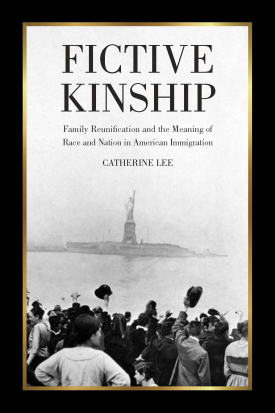
Fictive Kinship
Family Reunification and the Meaning of Race and Nation in American Immigration
About This Book
“Amid the current debates about immigration, highly skilled and unauthorized immigrants have taken the center stage. But in Catherine Lee’s carefully researched and written account, she reminds us that family unification remains the core of regular immigration policy. She traces family unification back to the nineteenth century and explains why families remain the core of policy and what the meaning of family is for racial and national issues. For those wanting to know what functions family unification serves for immigration policy, Fictive Kinship is required reading. Family unification will no doubt still be the core of policy. For, after all, what will become of the families of the undocumented who might become legal?”
—David M. Reimers, professor emeritus of history, New York University
“Fictive Kinship is a fascinating examination of what family has meant in the history of U.S. immigration. Family reunification has facilitated the entry of many immigrants, and as Professor Lee shows, it has done so long before passage of the 1965 Hart-Cellar Act. The book’s key contribution is showing how family has been fictively constructed, with its meaning shifting to support inclusionary and exclusionary positions and linked to ideas about the nation-state, race, and gender. This is critical reading for all those interested in immigration—and it reveals the critical place that the family plays in this process.”
—Katharine M. Donato, professor and chair, Department of Sociology, Vanderbilt University
Today, roughly 70 percent of all visas for legal immigration are reserved for family members of permanent residents or American citizens. Family reunification—policies that seek to preserve family unity during or following migration—is a central pillar of current immigration law, but it has existed in some form in American statutes since at least the mid-nineteenth century. In Fictive Kinship, sociologist Catherine Lee delves into the fascinating history of family reunification to examine how and why our conceptions of family have shaped immigration, the meaning of race, and the way we see ourselves as a country.
Drawing from a rich set of archival sources, Fictive Kinship shows that even the most draconian anti-immigrant laws, such as the Chinese Exclusion Act of 1882, contained provisions for family unity, albeit for a limited class of immigrants. Arguments for uniting families separated by World War II and the Korean War also shaped immigration debates and the policies that led to the landmark 1965 Immigration Act. Lee argues that debating the contours of family offers a ready set of symbols and meanings to frame national identity and to define who counts as “one of us.” Talk about family, however, does not inevitably lead to more liberal immigration policies. Welfare reform in the 1990s, for example, placed limits on benefits for immigrant families, and recent debates over the children of undocumented immigrants fanned petitions to rescind birthright citizenship. Fictive Kinship shows that the centrality of family unity in the immigration discourse often limits the discussion about the goals, functions and roles of immigration and prevents a broader definition of American identity.
Too often, studies of immigration policy focus on individuals or particular ethnic or racial groups. With its original and wide-ranging inquiry, Fictive Kinship shifts the analysis in immigration studies toward the family, a largely unrecognized but critical component in the regulation of immigrants’ experience in America.
CATHERINE LEE is associate professor of sociology and faculty associate at the Institute for Health, Health Care Policy, and Aging Research at Rutgers University.
Download
RSF Journal
View Book Series
Sign Up For Our Mailing List
Apply For Funding
Books
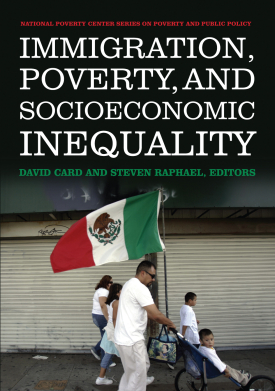
Immigration, Poverty, and Socioeconomic Inequality
About This Book
“Immigration, Poverty, and Socioeconomic Inequality offers a rigorous, multifaceted and up-to-the-minute reconsideration of the linkages between the historically high rates of U.S. immigration, the opportunities for economic advancement within and between generations, and the well-being of both immigrants and natives. It is a rare pleasure indeed when a group of distinguished scholars from across the spectrum of social sciences—economics, sociology, geography, and ethnography—join forces to mount a sustained intellectual advance on the frontier of a momentously important topic.”
—David Autor, professor and associate chair, Economics Department, MIT
“The highest and the lowest levels of education and poverty in the United States today are found among foreign-born ethnic groups. What has been the role of immigration in the widening of socioeconomic inequality? What have been the main modes of intergenerational mobility over time, between groups, and in different regions of the country? What sorts of public policies ameliorate, or exacerbate, such extraordinarily complex problems? This superb volume brings together two dozen leading economists and other social scientists to provide some of the most rigorous answers to these questions to date, setting the standard for future research into the immigration/poverty nexus.”
—Rubén G. Rumbaut, professor of sociology, University of California, Irvine
The rapid rise in the proportion of foreign-born residents in the United States since the mid-1960s is one of the most important demographic events of the past fifty years. The increase in immigration, especially among the less-skilled and less-educated, has prompted fears that the newcomers may have depressed the wages and employment of the native-born, burdened state and local budgets, and slowed the U.S. economy as a whole. Would the poverty rate be lower in the absence of immigration? How does the undocumented status of an increasing segment of the foreign-born population impact wages in the United States? In Immigration, Poverty and Socioeconomic Inequality, noted labor economists David Card and Steven Raphael and an interdisciplinary team of scholars provide a comprehensive assessment of the costs and benefits of the latest era of immigration to the United States.
Immigration, Poverty, and Socioeconomic Inequality rigorously explores shifts in population trends, labor market competition, and socioeconomic segregation to investigate how the recent rise in immigration affects economic disadvantage in the U.S. Giovanni Peri analyzes the changing skill composition of immigrants to the United States over the past two decades to assess their impact on the labor market outcomes of native-born workers. Despite concerns over labor market competition, he shows that the overall effect has been benign for most native groups. Moreover, immigration appears to have had negligible impacts on native poverty rates. Ethan Lewis examines whether differences in English proficiency explain this lack of competition between immigrant and native-born workers. He finds that parallel Spanish-speaking labor markets emerge in areas where Spanish speakers are sufficiently numerous, thereby limiting the impact of immigration on the wages of native-born residents. While the increase in the number of immigrants may not necessarily hurt the job prospects of native-born workers, low-skilled migration appears to suppress the wages of immigrants themselves. Michael Stoll shows that linguistic isolation and residential crowding in specific metropolitan areas has contributed to high poverty rates among immigrants. Have these economic disadvantages among low-skilled immigrants increased their dependence on the U.S. social safety net? Marianne Bitler and Hilary Hoynes analyze the consequences of welfare reform, which limited eligibility for major cash assistance programs. Their analysis documents sizable declines in program participation for foreign-born families since the 1990s and suggests that the safety net has become less effective in lowering child poverty among immigrant households.
As the debate over immigration reform reemerges on the national agenda, Immigration, Poverty, and Socioeconomic Inequality provides a timely and authoritative review of the immigrant experience in the United States. With its wealth of data and intriguing hypotheses, the volume is an essential addition to the field of immigration studies.
DAVID CARD is Class of 1950 Professor of Economics at the University of California, Berkeley.
STEVEN RAPHAEL is professor of public policy at the Goldman School of Public Policy at the University of California, Berkeley.
CONTRIBUTORS: Marianne P. Bitler, Irene Bloemraad, Sarah Bohn, Chistian Dustmann, Mark Ellis, Cybelle Fox, Tomasso Frattini, Robert G. Gonzales, Hilary W. Hoynes, Christel Kelser, Jennifer Lee, Ethan Lewis, Magnus Lofstrom, Renee Reichl Luthra, Douglas S. Massey, Giovanni Peri, Michael A. Stoll, Matthew Townley, Roger Waldinger, Richard Wright, Min Zhou.
A Volume in the National Poverty Center Series on Poverty and Public Policy
RSF Journal
View Book Series
Sign Up For Our Mailing List
Apply For Funding
Books
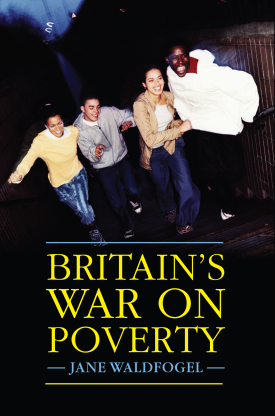
Britain's War on Poverty
About This Book
“[Waldfogel’s] carefully researched and balanced account demonstrates that committed governments can indeed implement social policies that improve the well-being of their citizens. Her very readable assessment of the British experiment also has relevance for other countries, especially the United States, and her excellent book deserves to be widely consulted.”
—POLITICAL SCIENCE QUARTERLY
“A developed country declaring a major war on poverty comes around once in a generation. People will want to know why they did it, how they went about it, but, even more crucially what the impact was on children. This book is the only one to cover all these dimensions and to do it with style. Britain’s War on Poverty isn’t about Britain—it’s about declaring war on poverty.”
—PAUL GREGG, University of Bristol
“America had a war on poverty and poverty won; the United Kingdom has waged the same war and is winning it by making steady progress against child poverty. Their child poverty rate is down by half from its starting point, and children are demonstrably better off based on polices they adopted and consistently financed and delivered. Why did the Brits do so much better than the Americans? This splendid book convincingly shows why and how a ‘true to its aims,’ well-financed, and persistent war on poverty can work in an Anglo- Saxon democracy. Jane Waldfogel shows how and why policy can make a difference against poverty if it is a high priority for a nation. Britain’s War on Poverty should be widely and carefully read by social policy analysts and advocates who seek a better future for America’s young children.”
—TIMOTHY M. SMEEDING, University of Wisconsin–Madison
“This timely volume tells the remarkable story of the British government’s attempt to end child poverty. Professor Waldfogel, who resides in the United Kingdom for several months every year, tells the story with color and passion, emphasizing the similarities and differences between anti-poverty policy in the United States and Britain. Perhaps most interesting and provocative are the lessons she draws from the British experience for a more sweeping commitment by America to greatly reduce the nation’s child poverty rate, which is now higher than it was in the 1970s. Scholars, advocates, and policymakers committed to reducing child poverty will find Britain’s War on Poverty packed with insights about how we should proceed.”
—RON HASKINS, Brookings Institution
In 1999, one in four British children lived in poverty—the third highest child poverty rate among industrialized countries. Five years later, the child poverty rate in Britain had fallen by more than half in absolute terms. How did the British government accomplish this and what can the United States learn from the British experience? Jane Waldfogel offers a sharp analysis of the New Labour government’s anti-poverty agenda, its dramatic early success and eventual stalled progress. Comparing Britain’s anti-poverty initiative to U.S. welfare reform, the book shows how the policies of both countries have affected child poverty, living standards, and well-being in low-income families and suggests next steps for future reforms.
Britain’s War on Poverty evaluates the three-pronged anti-poverty strategy employed by the British government and what these efforts accomplished. British reforms sought to promote work and make work pay, to increase financial support for families with children, and to invest in the health, early-life development, and education of children. The latter two features set the British reforms apart from the work-oriented U.S. welfare reforms, which did not specifically target income or program supports for children. Plagued by premature initiatives and what some experts called an overly ambitious agenda, the British reforms fell short of their intended goal but nevertheless significantly increased single-parent employment, raised incomes for low-income families, and improved child outcomes. Poverty has fallen, and the pattern of low-income family expenditures on child enrichment and healthy food has begun to converge with higher-income families.
As Waldfogel sees it, further success in reducing child poverty in Britain will rely on understanding who is poor and who is at highest risk. More than half of poor children live in families where at least one parent is working, followed by unemployed single- and two-parent homes, respectively. Poverty rates are also notably higher for children with disabled parents, large families, and for Pakistani and Bangladeshi children. Based on these demographics, Waldfogel argues that future reforms must, among other goals, raise working-family incomes, provide more work for single parents, and better engage high-risk racial and ethnic minority groups.
What can the United States learn from the British example? Britain’s War on Poverty is a primer in the triumphs and pitfalls of protracted policy. Notable differences distinguish the British and U.S. models, but Waldfogel asserts that a future U.S. poverty agenda must specifically address child poverty and the income inequality that helps create it. By any measurement and despite obstacles, Britain has significantly reduced child poverty. The book’s key lesson is that it can be done.
JANE WALDFOGEL is professor of social work and public affairs at the Columbia University School of Social Work and visiting professor at the Centre for Analysis of Social Exclusion at the London School of Economics and Political Science.
RSF Journal
View Book Series
Sign Up For Our Mailing List
Apply For Funding
Books
Old Assumptions, New Realities
Ensuring Economic Security for Working Families in the 21st Century
About This Book
“Old Assumptions, New Realities deserves the attention of welfare analysts and policy-makers on both sides of the Atlantic as one of the first publications to tackle the future of the American welfare state.”
—SOCIOLOGICAL REVIEW
“[A]n impressive display of imaginative policy analysis that is practical, fact-based, value-laden, and thoughtful. This book is a must-read for sociologists interested in the evolution of new social policies and interested publics who are concerned that too many Americans are facing economic and social catastrophe.”
—CONTEMPORARY SOCIOLOGY
“Old Assumptions, New Realities brings together an impressive set of scholars offering new perspectives drawn from a rich diversity of disciplines and methods. By highlighting the key assumptions that underlie the U.S. social welfare system and whether these assumptions are appropriate, this book offers important insights on fundamental questions for social policy and research.”
—MARIA CANCIAN, professor of public affairs and social work and research affiliate, the Institute for Research on Poverty, the University of Wisconsin–Madison
“Ambitious and bold, Old Assumptions, New Realities challenges the reader to think about the huge gap between the old assumptions underlying the American welfare state and the new economic and social realities in which American families and children live. The editors and authors also offer a cornucopia of practical good ideas to narrow the gap.”
—IRWIN GARFINKEL, Mitchell I. Ginsberg Professor of Contemporary Urban Problems and codirector of the Population Research Center, Columbia University
“Over the past few decades, changes in labor markets and public policies have cast American families into a new era of insecurity. For low-skilled workers, the erosion of wages and paths to advancement has been exacerbated by a growing mismatch between social protections and social needs. How should we understand the new challenges we face, and how can we meet them effectively? Old Assumptions, New Realities is essential reading for anyone who seeks thoughtful and creative answers to these questions. The leading scholars assembled here provide a lucid and compelling analysis of the problem and offer innovative ideas for reform. This is publicly engaged social science at its best—an important intervention in public debate that is rooted in the best available research.”
—JOE SOSS, Cowles Chair for the Study of Public Service at the University of Minnesota
The way Americans live and work has changed significantly since the creation of the Social Security Administration in 1935, but U.S. social welfare policy has failed to keep up with these changes. The model of the male breadwinner-led nuclear family has given way to diverse and often complex family structures, more women in the workplace, and nontraditional job arrangements. Old Assumptions, New Realities identifies the tensions between twentieth-century social policy and twenty-first-century realities for working Americans and offers promising new reforms for ensuring social and economic security.
Old Assumptions, New Realities focuses on policy solutions for today’s workers—particularly low-skilled workers and low-income families. Contributor Jacob Hacker makes strong and timely arguments for universal health insurance and universal 401(k) retirement accounts. Michael Stoll argues that job training and workforce development programs can mitigate the effects of declining wages caused by deindustrialization, technological changes, racial discrimination, and other forms of job displacement. Michael Sherraden maintains that wealth-building accounts for children—similar to state college savings plans—and universal and progressive savings accounts for workers can be invaluable strategies for all workers, including the poorest. Jody Heymann and Alison Earle underscore the potential for more extensive work-family policies to help the United States remain competitive in a globalized economy. Finally, Jodi Sandfort suggests that the United States can restructure the existing safety net via state-level reforms but only with a host of coordinated efforts, including better information to service providers, budget analyses, new funding sources, and oversight by intermediary service professionals.
Old Assumptions, New Realities picks up where current policies leave off by examining what’s not working, why, and how the safety net can be redesigned to work better. The book brings much-needed clarity to the process of creating viable policy solutions that benefit all working Americans.
ROBERT D. PLOTNICK is professor of public affairs and adjunct professor of economics at the University of Washington.
MARCIA K. MEYERS is associate professor of social work and public affairs at the University of Washington.
JENNIFER ROMICH is associate professor of social work at the University of Washington.
STEVEN RATHGEB SMITH is Nancy Bell Evans Professor of Public Affairs at the Daniel J. Evans School of Public Affairs, University of Washington.
A West Coast Poverty Center Volume
Download
RSF Journal
View Book Series
Sign Up For Our Mailing List
Apply For Funding
Books
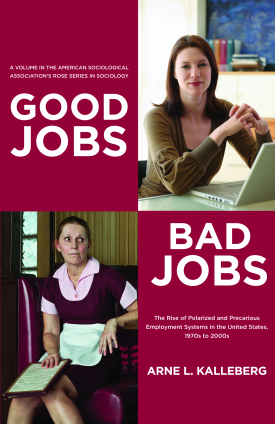
Good Jobs, Bad Jobs
The Rise of Polarized and Precarious Employment Systems in the United States, 1970s to 2000s
About This Book
A Volume in the American Sociological Association’s Rose Series in Sociology
Winner of the 2012 Academy of Management's George R. Terry Book Award
Winner of the 2013 Inequality, Poverty, and Mobility Outstanding Book Award Presented by the American Sociological Association's Section on Inequality, Poverty, and Mobility
"Arne Kalleberg has written the definitive volume on our precarious, polarized U.S. labor market. This engagingly written tour of the American workplace illuminates its subject matter beautifully."
-CHRIS TILLY, director, Institute for Research on Labor and Employment, UCLA
"Good Jobs, Bad Jobs powerfully documents the profound transformation that the U.S. labor market has undergone since the mid-1970s. In a lucid and compelling analysis, Arne L. Kalleberg exposes the complex dynamics driving the sharp polarization between 'good jobs' and 'bad jobs' as well as the accompanying decline in employment security that has affected workers at all levels. This is a thoughtful book that is essential reading for anyone interested in understanding the situation of workers in twenty-first- century America."
-RUTH MILKMAN, professor of sociology, CUNY Graduate Center and the Joseph S. Murphy Institute for Worker Education and Labor Studies
The economic boom of the 1990s veiled a grim reality: in addition to the growing gap between rich and poor, the gap between good and bad quality jobs was also expanding. The postwar prosperity of the mid-twentieth century had enabled millions of American workers to join the middle class, but as author Arne L. Kalleberg shows, by the 1970s this upward movement had slowed, in part due to the steady disappearance of secure, well-paying industrial jobs. Ever since, precarious employment has been on the rise—paying low wages, offering few benefits, and with virtually no long-term security. Today, the polarization between workers with higher skill levels and those with low skills and low wages is more entrenched than ever. Good Jobs, Bad Jobs traces this trend to large-scale transformations in the American labor market and the changing demographics of low-wage workers. Kalleberg draws on nearly four decades of survey data, as well as his own research, to evaluate trends in U.S. job quality and suggest ways to improve American labor market practices and social policies.
Good Jobs, Bad Jobs provides an insightful analysis of how and why precarious employment is gaining ground in the labor market and the role these developments have played in the decline of the middle class. Kalleberg shows that by the 1970s, government deregulation, global competition, and the rise of the service sector gained traction, while institutional protections for workers—such as unions and minimum-wage legislation—weakened. Together, these forces marked the end of postwar security for American workers. The composition of the labor force also changed significantly; the number of dual-earner families increased, as did the share of the workforce comprised of women, non-white, and immigrant workers. Of these groups, blacks, Latinos, and immigrants remain concentrated in the most precarious and low-quality jobs, with educational attainment being the leading indicator of who will earn the highest wages and experience the most job security and highest levels of autonomy and control over their jobs and schedules. Kalleberg demonstrates, however, that building a better safety net—increasing government responsibility for worker health care and retirement, as well as strengthening unions—can go a long way toward redressing the effects of today’s volatile labor market.
There is every reason to expect that the growth of precarious jobs—which already make up a significant share of the American job market—will continue. Good Jobs, Bad Jobs deftly shows that the decline in U.S. job quality is not the result of fluctuations in the business cycle, but rather the result of economic restructuring and the disappearance of institutional protections for workers. Only government, employers and labor working together on long-term strategies—including an expanded safety net, strengthened legal protections, and better training opportunities—can help reverse this trend.
ARNE L. KALLEBERG is Kenan Distinguished Professor of Sociology at the University of North Carolina at Chapel Hill.
RSF Journal
View Book Series
Sign Up For Our Mailing List
Apply For Funding
Books
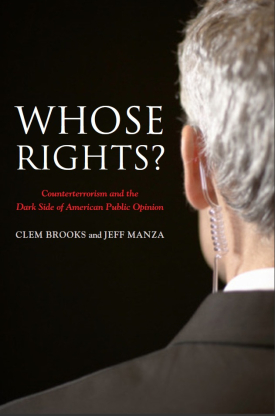
Whose Rights?
Counterterrorism and the Dark Side of American Public Opinion
About This Book
“Whose Rights? is a brilliant foray into the complex relationship between counter-terrorism and public opinion. Using a variety of analytic approaches, the authors demonstrate the compelling place of mass opinion in American foreign policy—dynamics that have still received little sustained attention given their import in a democracy. Anyone interested in the evolution of public policy and political activity related to counterterrorism should study the findings here, which will greatly accelerate our understanding of the war on terror.”
—SUSAN HERBST, president, University of Connecticut
“Anyone interested in American democracy and good and bad sides of public opinion needs to read this book. Whose Rights? will re-shape they we all think about the public and how democracies work.”
—JAMES N. DRUCKMAN, Payson S. Wild Professor of Political Science and faculty fellow at the Institute for Policy Research, Northwestern University
In the wake of the September 11 attacks, the U.S. government adopted a series of counterterrorism policies that radically altered the prevailing balance between civil liberties and security. These changes allowed for warrantless domestic surveillance, military commissions at Guantanamo Bay and even extralegal assassinations. Now, more than a decade after 9/11, these sharply contested measures appear poised to become lasting features of American government. What do Americans think about these policies? Where do they draw the line on what the government is allowed to do in the name of fighting terrorism? Drawing from a wealth of survey and experimental data, Whose Rights? explores the underlying sources of public attitudes toward the war on terror in a more detailed and comprehensive manner than has ever been attempted.
In an analysis that deftly deploys the tools of political science and psychology, Whose Rights? addresses a vexing puzzle: Why does the counterterrorism agenda persist even as 9/11 recedes in time and the threat from Al Qaeda wanes? Authors Clem Brooks and Jeff Manza provocatively argue that American opinion, despite traditionally showing strong support for civil liberties, exhibits a “dark side” that tolerates illiberal policies in the face of a threat. Surveillance of American citizens, heightened airport security, the Patriot Act and targeted assassinations enjoy broad support among Americans, and these preferences have remained largely stable over the past decade. There are, however, important variations: Waterboarding and torture receive notably low levels of support, and counterterrorism activities sanctioned by formal legislation, as opposed to covert operations, tend to draw more favor. To better evaluate these trends, Whose Rights? examines the concept of “threat-priming” and finds that getting people to think about the specter of terrorism bolsters anew their willingness to support coercive measures. A series of experimental surveys also yields fascinating insight into the impact of national identity cues. When respondents are primed to think that American citizens would be targeted by harsh counterterrorism policies, support declines significantly. On the other hand, groups such as Muslims, foreigners, and people of Middle Eastern background elicit particularly negative attitudes and increase support for counterterrorism measures. Under the right conditions, Brooks and Manza show, American support for counterterrorism activities can be propelled upward by simple reminders of past terrorism plots and communication about disliked external groups.
Whose Rights? convincingly argues that mass opinion plays a central role in the politics of contemporary counterterrorism policy. With their clarity and compelling evidence, Brooks and Manza offer much-needed insight into the policy responses to the defining conflict of our age and the psychological impact of terrorism.
CLEM BROOKS is professor of sociology at Indiana University, Bloomington.
JEFF MANZA is professor of sociology at New York University.